





The Government admits that it was informed of the increase in arrivals in Ceuta but not of an “exceptional” assault

The Government admits that it was informed of the increase in arrivals in Ceuta but not of an “exceptional” assault

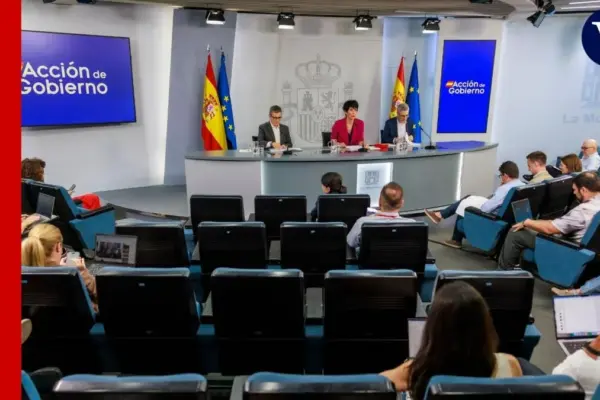
The Government’s solution to the open crisis in Ceuta still does not fit all the pieces. Neither the solemnity of a National Security Council nor the repeated proclamations that “Ceuta is today the heart of Spain” managed yesterday to hide the coordination difficulties that emerge within the coalition Government. Not only between PSOE and Sumar, regarding Morocco’s responsibility, but also within the very socialist core of the Executive.
Read Full News
Torres supports Marlaska's version regarding the absence of warning from the CNI about the Ceuta crisis

Torres supports Marlaska’s version regarding the absence of warning from the CNI about the Ceuta crisis

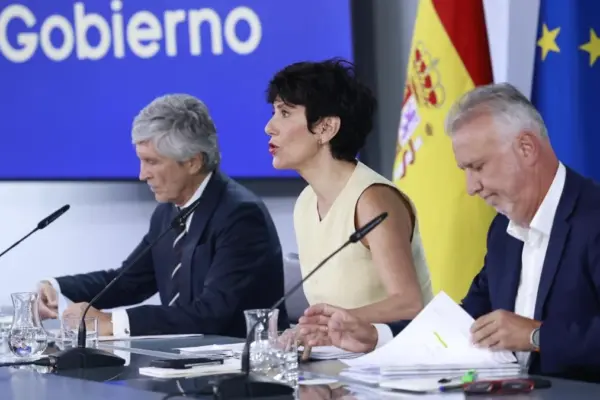
The Minister of Territorial Policy and Democratic Memory, Ángel Víctor Torres, who has been appointed as the highest authority in the unified command decreed in response to the Ceuta migration crisis, fully supports the version of his Interior counterpart, Minister Fernando Grande-Marlaska, regarding the lack of prior warnings before the border assault, a version that contradicts that offered by another government colleague, Defense Minister Margarita Robles, who on Tuesday stated that there had been prior communications from the CNI, although not sufficiently precise or urgent.

Read Full News
The Government hides behind technical criteria to justify that an Es-Alert was not sent for the Tarragona rains

The Government hides behind technical criteria to justify that an Es-Alert was not sent for the Tarragona rains

Why not send an ES-Alert during the heavy rains in Tarragona last weekend? That is the question behind the latest controversy surrounding the Generalitat Government upon their return from vacation. Those downpours caused 11 injuries – one critical and another serious -, flooded streets and building basements, as well as closed roads, interrupted Rodalies service, and evacuated campsites. According to Salvador Illa’s Executive, the alert to mobile phones was not sent because the emergency level was below the threshold required to use these mass warnings.

Read Full News
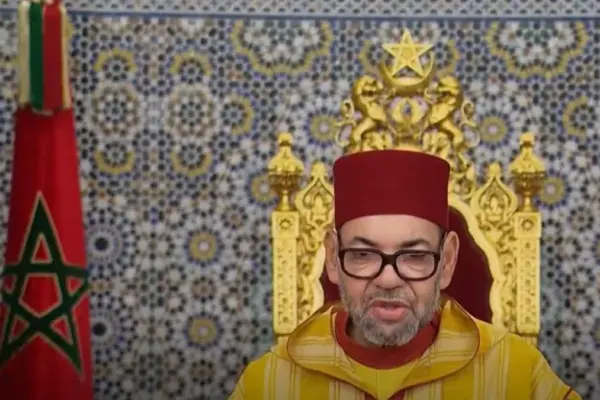
Another Moroccan minister calls to "liberate" Ceuta and Melilla before Mohamed VI at a religious event

Another Moroccan minister calls to “liberate” Ceuta and Melilla before Mohamed VI at a religious event

The Moroccan Minister of Islamic Affairs, Ahmed Toufiq, has once again raised Morocco’s claim over Ceuta and Melilla, doing so on the occasion of a religious festival presided over by King Mohammed VI, which was also attended by Crown Prince Moulay Hassan and Prime Minister Aziz Ajanuch. This is not the first time a minister from the Alaouite country has called to “liberate” these two Spanish autonomous cities: the Minister of Justice, Abdellatif Ouahbi, had already done so.

Read Full News
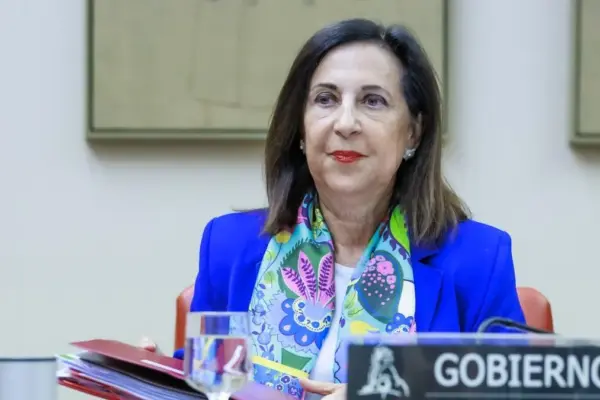
Robles points out that "interested actors" in destabilizing Spain have favored the crisis in Ceuta

Robles points out that “interested actors” in destabilizing Spain have favored the crisis in Ceuta

The Minister of Defense, Margarita Robles, using a report from the Defense Staff (EMAD), has attributed the arrival of more than 80,000 people in just 48 hours to Ceuta to a “self-management of individuals” who came “spontaneously” to the border attracted by messages on social networks warning of the lack of obstacles on the border perimeter. With this thesis, the Government focuses on the previous movements on social networks, which for Robles are “an essential instrument” of hybrid attacks thanks to disinformation campaigns. “Let’s not deceive ourselves. There are issues we will never know,” warned the Defense Minister about the origin of the assault, although she immediately pointed out that “interested actors” are using, or have even favored, this crisis with the “clear political purpose” of “destabilizing” Spain.

Read Full News
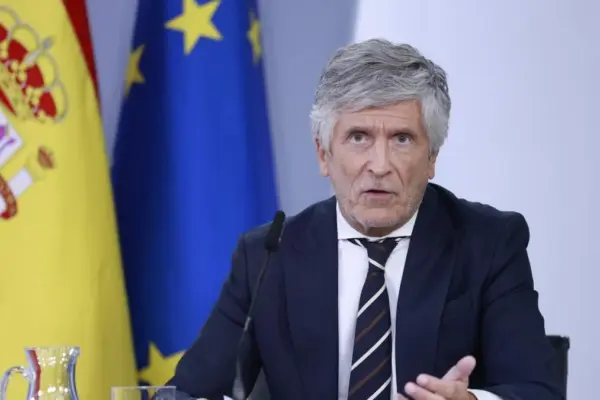
The Government promotes the reform of the immigration and asylum law after the crisis in Ceuta

The Government promotes the reform of the immigration and asylum law after the crisis in Ceuta

The Government has approved in its first Council of Ministers after the summer break two draft bills to reform the Spanish system of immigration and asylum and adapt it to the new European Pact on Migration and Asylum. The Minister of the Interior, Fernando Grande-Marlaska, presented both initiatives at the subsequent press conference as an attempt to combine an “agile, effective, and orderly” management of migratory flows with the maintenance of guarantees for migrants. The reform, he added, will also allow speeding up the processing of international protection applications and improving “the necessary management of our borders to guarantee security in our country.”

Read Full News
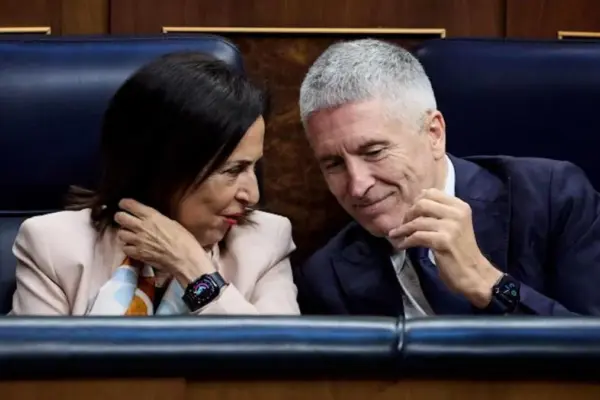
Defense and Interior present opposing versions regarding the warnings prior to the Ceuta crisis

Defense and Interior present opposing versions regarding the warnings prior to the Ceuta crisis

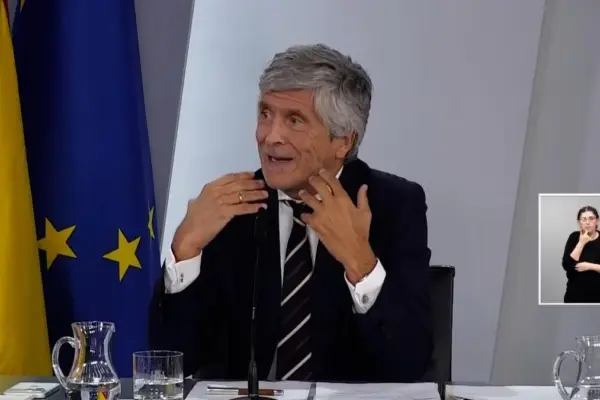
The Ceuta crisis has revealed contradictory criteria within the Government this Tuesday regarding the intelligence information available in the days prior to the massive entry of migrants on July 30 and 31. While the Minister of Defense, Margarita Robles, has assured in Congress that the 25 agents of the National Intelligence Center (CNI) stationed in the autonomous city have shared and analyzed with the State Security Forces and the Government Delegation the information they had gathered, Fernando Grande-Marlaska has maintained at La Moncloa that “there was no report indicating that on July 30 what finally happened was going to occur.”

Read Full News
Almost a month after the massive jump Ceuta will have a single authority from today

Almost a month after the massive jump Ceuta will have a single authority from today

Almost thirty days ago, when the Ceuta crisis broke out, the president of the autonomous city, Juan Jesús Vivas, requested the appointment of a single authority capable of managing all aspects of the humanitarian drama that he already sensed was going to devastate his city. Vivas’s request fell on deaf ears, among other reasons because the Government expected that the more than 70,000 people who crossed the El Tarajal fence would return the way they came. Minister Marlaska or Minister Albares limited themselves to not angering the Moroccan neighbor in the belief that if they kept the door open and Ceuta gave nothing to those who had entered without permission, the crisis would end. But it was not so.

Read Full News
The Government will establish a unified command led by Minister Torres to manage the Ceuta crisis

The Government will establish a unified command led by Minister Torres to manage the Ceuta crisis

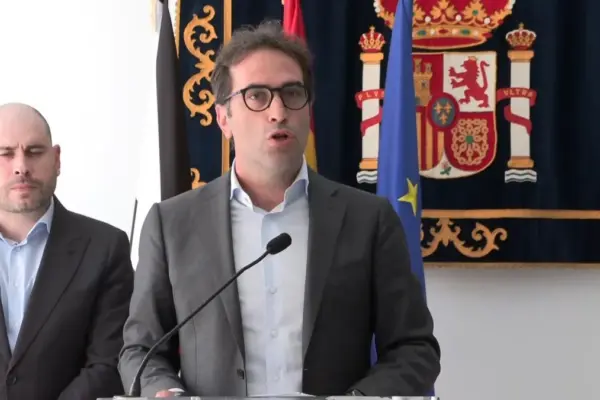
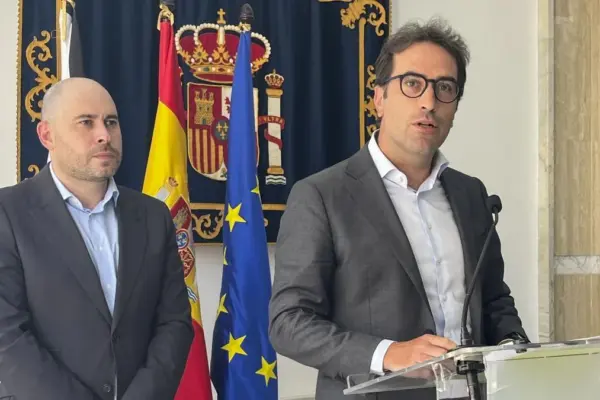
The First Vice President and Minister of Economy, Carlos Cuerpo, has announced two new decisions that the Government will take to try to alleviate the crisis that occurred in the autonomous city of Ceuta after the influx of immigrants from Morocco who crossed the border almost a month ago. On the one hand, the President of the Government, Pedro Sánchez, has convened a National Security Council in which a single command will be decreed in the hands of the Minister of Territorial Policy, Ángel Víctor Torres, who will be responsible for coordinating the crisis. And secondly, Cuerpo himself has offered the President of Ceuta, Juan Jesús Vivas, an extraordinary expansion of the Comprehensive Socioeconomic Development Plan of the City of Ceuta, designed in 2022, with the aim of addressing the economic consequences that this crisis is causing, especially in the commercial and tourist fabric of the city.

Read Full News