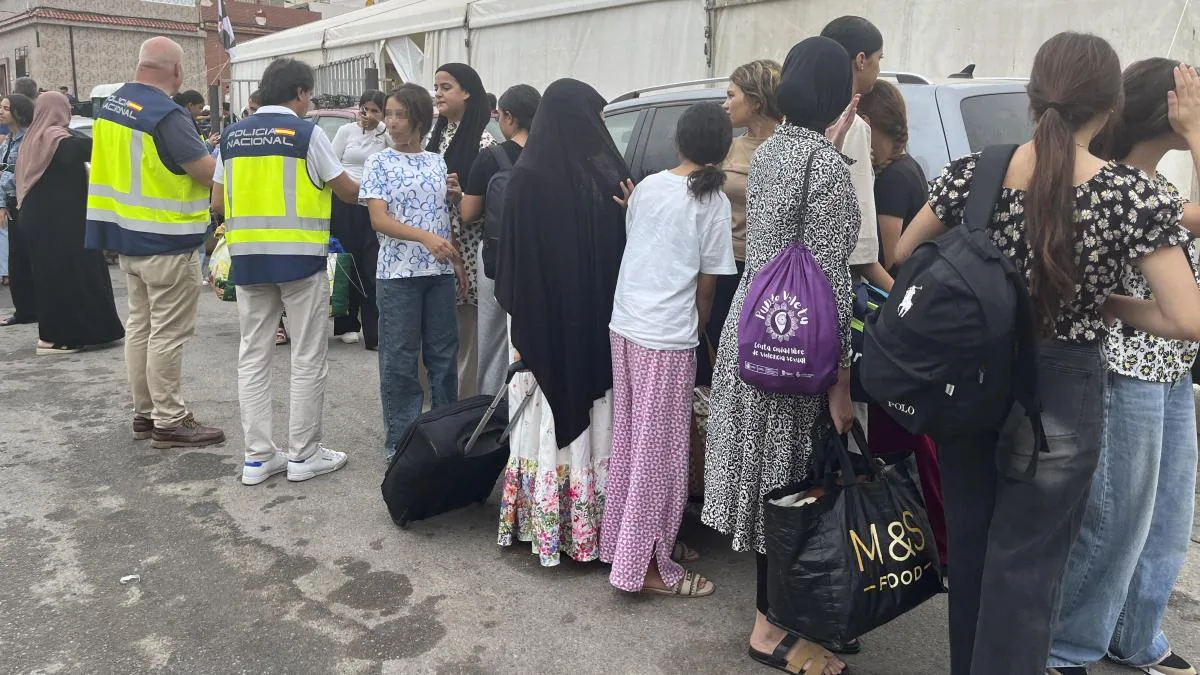
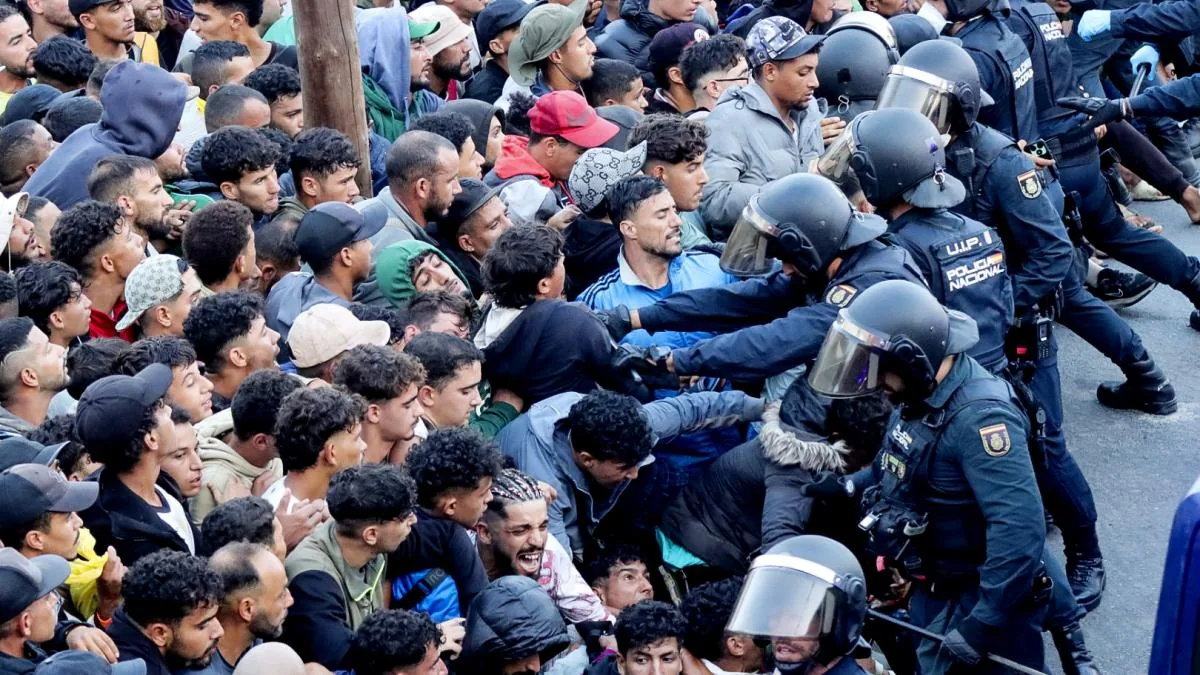
The First Vice President and Minister of Economy, Carlos Cuerpo, has announced two new decisions that the Government will take to try to alleviate the crisis that occurred in the autonomous city of Ceuta after the influx of immigrants from Morocco who crossed the border almost a month ago. On the one hand, the President of the Government, Pedro Sánchez, has convened a National Security Council in which a single command will be decreed in the hands of the Minister of Territorial Policy, Ángel Víctor Torres, who will be responsible for coordinating the crisis. And secondly, Cuerpo himself has offered the President of Ceuta, Juan Jesús Vivas, an extraordinary expansion of the Comprehensive Socioeconomic Development Plan of the City of Ceuta, designed in 2022, with the aim of addressing the economic consequences that this crisis is causing, especially in the commercial and tourist fabric of the city.
Read more London will help Kyiv manufacture long-range missiles amid Patriot shortages
In a statement from Ceuta, Cuerpo explained that the Government is in the “third phase” of the response to the crisis, focused on resolving the “repatriation” of immigrants, “properly accommodating minors” and addressing asylum requests, however, he pointed out the need to carry out this work individually, attending to the idiosyncrasy of each case.
This phase also includes the “importance that this crisis does not take a toll on the city” because “we are aware that the citizens of Ceuta are having a hard time.” In this task, the minister placed the two actions that the central Government will carry out in the coming hours. The Security Council that will meet this Tuesday at 9:00 a.m. will include the establishment of a single command that will fall into the hands of Minister Torres. The decision will be formalized in the Council of Ministers that will be held afterwards.
Torres will chair a committee of experts including the Ceuta president, the CNI, the Government delegate, and several ministers
Cuerpo justified the decision: “It has been requested by the president -Pedro Sánchez- and the city of Ceuta” with the aim of “strengthening coordination with all authorities.” This single command led by Minister Torres will be composed of “a specialized committee,” also including President Vivas, the CNI, the Government delegate in the city, and the ministers of the central Government with some responsibility in the Ceuta crisis.
Also read
Regarding the extraordinary expansion of Ceuta’s economic development plan, Cuerpo was not very specific. Without giving figures or deadlines, the minister assured that it will be necessary to establish contacts with the social and economic agents of the city to make an approximation of the needs, but he assured that the Government has been monitoring the economic consequences since the outbreak of the crisis through the evolution of economic activity and consumption.
Read more The PP demands the return of all migrants in Ceuta: “We are talking about return, not distribution”
In this regard, Cuerpo pointed out that although in the first week there was a sharp decline in activity, it has been progressively recovering, although merchants and the tourism sector have felt the consequences.
The Vice President of the Government justified the announced measures by the need to “strengthen security, manage returns, strengthen public projects and revitalize the economy” of the autonomous city. Cuerpo thus reaffirmed the “commitment -of the Government- to security and territorial sovereignty.” “Citizens must feel the State,” he concluded.
The 2022 economic development plan for Ceuta is endowed with 354 million euros, of which, according to Cuerpo, more than 180 million have been mobilized to date. This plan seeks to transform the local economy, improve digital and transport connectivity, and strengthen key areas such as education, health, commerce, and employment after previous crises. With its expansion, the Government wants to “go further” to “respond to the current exceptional situation.”
Read more Health and the communities agree to send 25,000 vaccines to Ceuta to face the migration crisis