We all do it even knowing that we are wasting time. We try to convince someone who holds opposing views to ours that they are wrong, that we are right. But no one ever changes their mind.
Read more Collboni announces the opening of affordable stores in New York
In the best case, as my mother used to say, we end up with nothing. In the worst, we become more dogmatic, more violent, and hostility grows. Whether God exists, whether Pedro Sánchez is the devil, whether the Palestinians or the Israelis… whatever. There is no way.
“As a general rule,” said William Hazlitt, a 19th-century writer, “there is no conversation worth having except between friends or those who agree on the same fundamental ideas about a matter.”
This is the conclusion that Canada and the European Union have finally reached regarding the United States. Attempts were made to reason, negotiate, make concessions, even flatter (“daddy,” that one called Trump), but nothing. As useless as a debate between Washington and Moscow about the merits of democracy or communism during the Cold War.
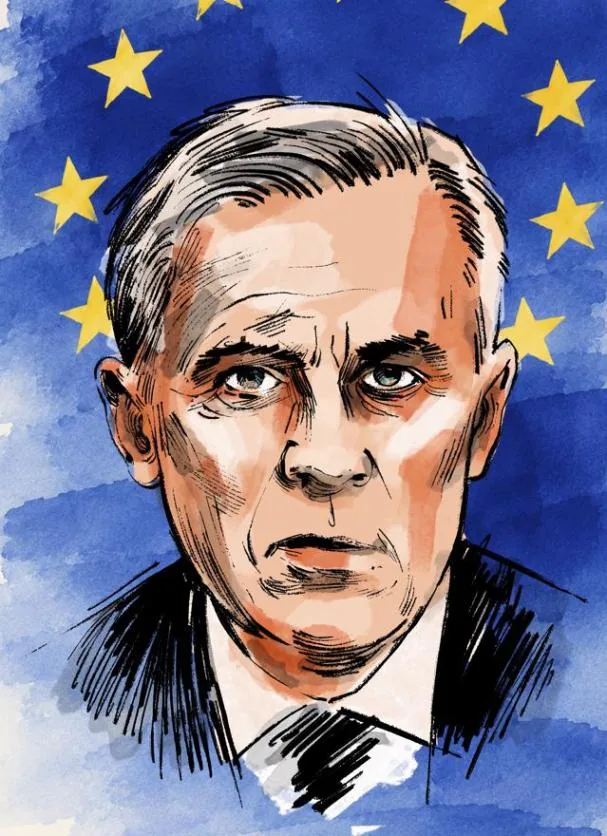
And a Cold War, or something very similar, is what we now see between the two new blocs, inconceivable in the pre-Trump era, that suddenly divide the world. One is led by Mark Carney, the Canadian prime minister, in the name of the democratic values he shares with Europeans; the other, Donald Trump, in the name of the authoritarian values he shares with Putin, Netanyahu, and the German neo-Nazis.
This week, the beginning of democratic resistance against the axis of evil was staged in the European Parliament. None of the 27 European countries represented had forgotten the speech Carney gave in January this year, in which he said: “Middle powers have the capacity to build a new order that incorporates our values… we must act together, because if we are not at the table, we are on the menu.”
That is why, and because of Canada’s increasingly defiant attitude towards the U.S., Carney was applauded when he entered the forum on Thursday, and again during his speech after the European parliamentarians gave the green light to the proposal that Canada should be incorporated as an “associate member” of the EU.
“We do not seek power to dominate others,” Carney declared. “On the contrary, we seek to strengthen our resilience so that no one can control our open markets, undermine our sovereignty, threaten our territorial integrity, or undermine our freedoms, our democracies, or our rule of law.”
Two new blocs divide the world: one led by Canadian Carney; the other, Trump
It was very clear who he was referring to. Even Trump understood it. “A hostile act!” he shouted. Ursula von der Leyen, the president of the European Commission, caught Carney’s courage and said the time had come “to urgently reimagine our alliances.”
Read more Moldova and Luxembourg denounce the illegal presence of drones amid escalating tensions with Russia
“Reimagine” meant ending the relationship of trust and friendship that had lasted with the United States since the end of World War II. “Urgently,” meaning there was not a minute to lose in the face of the rampant madness of the orange king. The leader of the free world is no longer the president of the United States but the prime minister of Canada. He is so not only because he is the smartest and clearest in his ideas of all the politicians defending the global democratic order against the nihilistic chaos preached by the lunatic in the Oval Office. Also because he is the bravest.
Canada has a lot to lose. Its economy depends much more on trade with the U.S. than Europe’s does. A defender of national sovereignty and that of each of his compatriots, with whose support he counts, Carney is risking it like almost no one else on the global political stage. The exception would be the Ukrainian president, Volodymyr Zelensky, who faces the Putin-Trump mafia with sweat, tears, and rivers of blood.
One way to mark the differences between the two blocs is precisely the unwavering political and military support for Ukraine from the one led by Carney. Which is also a way to refute the notion that the new alliance proposed between Canada and the European Union is a gesture lacking substance.
Franklin Delano Roosevelt, a U.S. president somewhat different from the current one, said the famous phrase: “We have nothing to fear but fear itself.” That is Carney’s motto. The warmth with which he was received in the European Parliament shows the Old Continent’s desire to overcome the timidity it has shown so far and make it its own.
In August last year, the EU responded to the tariffs imposed on it by Trump like a flock of lambs. An agreement was reached under which a 15 percent tariff would be applied to all EU exports to the United States, triple the previous average. In return, the United States would maintain a zero-tariff regime for its exports to the EU. Pathetic and humiliating.
That was a time when Europeans persisted in the idea that they could persuade Trump to change his mind. Which is the same as saying to change his way of being, his identity. The warm welcome to Canada into the European club shows the recognition that a scorpion will always be a scorpion, that killing, as the old fable says, “is its nature.” They also understood the truth of what Hazlitt said, that only a conversation worth having is possible between those who agree on the same fundamental ideas.
Paul Krugman, the New York Nobel laureate in Economics, quoted Machiavelli’s The Prince in a piece on Friday. The usual thing is to remember that phrase that says it is better for a leader to be feared than loved. But, Krugman reminds us, the idea was more complex. Machiavelli added: “A prince must inspire fear in such a way that, if he does not win love, he avoids arousing hatred.”
The European Union ends the relationship of trust and friendship with the United States
Trump, as Krugman says, generates hatred in the civilized world inhabited by Mark Carney, his European followers, and finally, as polls say, the majority of Americans. And as every autocrat should know, and many have discovered, hatred beats fear. “For now,” Krugman concludes, “let us cautiously celebrate the clear decline in the fear Trump inspires, both abroad and in his own country.”