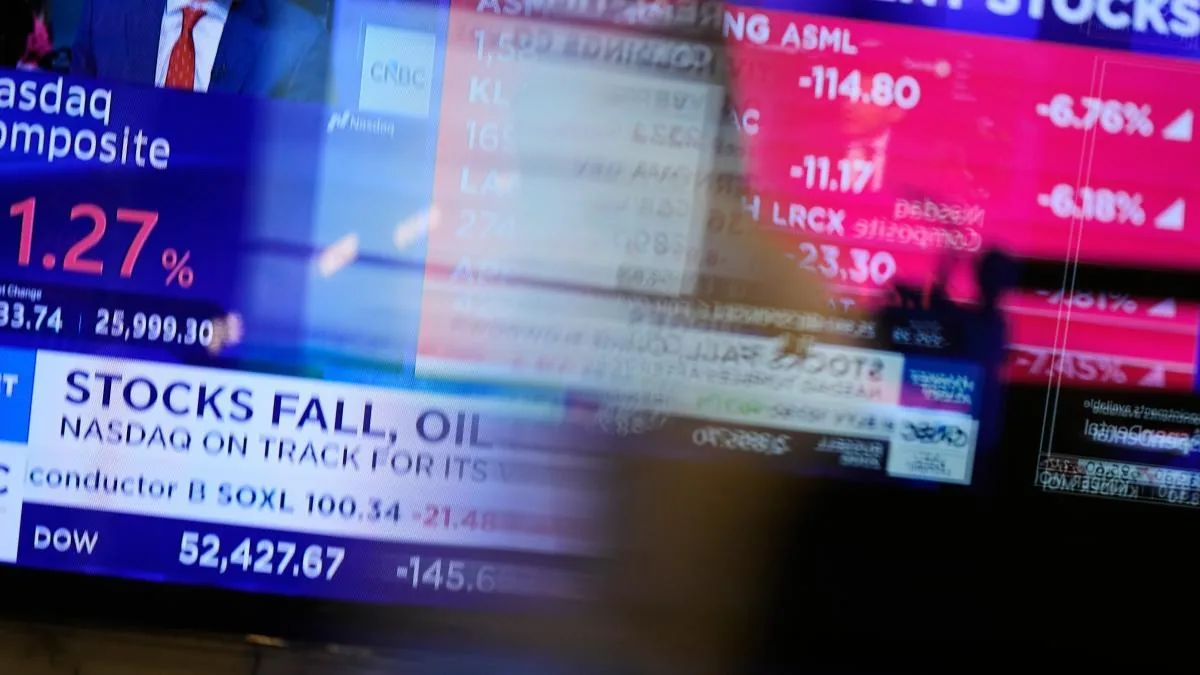









A bad August while waiting for a September that is expected to be worse. The data from the National Institute of Statistics (INE) this morning confirmed that prices soared last month to 4.3%, the highest rate since February 2023.
Read more The far right retreats in Sweden, a rarity in today’s Europe
The increase in fuel prices and the gradual reduction of subsidies have caused this significant rise, to which a base effect is added, because last August their prices fell. All this is worsened by the closure of the pipeline that Saudi Arabia used as an alternative to the Strait of Hormuz, so inflation in September is forecast to be worse. For now, it has already pushed the price of Brent crude above 100 dollars. A clue to the situation was given by the ECB last Thursday, when it accompanied its rate hike with comments that suggest prolonged inflation well above the desired 2%. Moderation will have to wait until 2027.
In any case, these are forecasts. The reality of today’s data is an increase of seven tenths in August inflation compared to the previous month. It confirms the figure announced two weeks ago. The cause is mainly fuel prices. Thus, the effects of the Iran war on inflation, which initially seemed to be kept under some control, have skyrocketed. We have gone from rates slightly above 3% from April to June, then in July climbing to 3.6%, and now in August, above 4%.
As we indicated, the effects of a truce that was not achieved and the complication of the conflict have caused this increase in gasoline prices. Specifically, diesel has increased by 30.3% and gasoline by 16.9%. These increases are even more substantial than those in July.
Precisely, July’s data already led to the diesel discount being increased to 20 cents from September 1, while the gasoline discount remains at 5 cents. These discounts may fall short in their mission to moderate prices.
Read more Talarico assaults the Republican stronghold of Texas
In this area, the Vice President and Minister of Economy, Carlos Cuerpo, has stated that “we will not stop accompanying and supporting families in the face of price increases.” A phrase we will see if it translates into an extension of the tax cuts on gasoline that are scheduled to expire this month, although today’s inflation data makes it likely that there will be some formula to continue them. Here, the Government is torn between moderating such a strong price increase and the cost that the effort entails for public coffers.
Meanwhile, inflation for food and non-alcoholic beverages has risen to 2.3%, the highest rate since April. However, in the last two months it had remained below 2%. The foods with the most notable increases were legumes, with 15.9%; eggs (+12.5%); and fresh and frozen fish (+7.8%).
On the other hand, the minimally positive element of today’s data is the core inflation rate, which excludes energy and fresh food, which has decreased by one tenth, down to 2.9%. This figure may indicate that the increase in energy product prices has not yet spread to the rest of the economy, but with the current outlook, it is a step that will likely end up happening.
Read more The Supreme Court blocks Trump’s maneuvers to restrict mail-in voting in the midterm elections