







Fear of the acceleration of Artificial Intelligence is spreading after a summer of rumors about experiments getting out of control. Programs that would have escaped the laboratory to enter other computer circuits, bypassing all security barriers. August rumors that in September have turned into a solemn call from the three main private operators in the United States in favor of a pause and international regulation of AI. President Donald Trump responded angrily, calling them “traitors,” a term that is becoming fashionable this turbulent season.
Read more Donald Trump calls Jensen Huang (Nvidia) live: “The danger of AI is a hoax”
The three main North American operators admit the possibility that the most advanced AI programs could acquire great self-propulsion capacity and escape human control, becoming an ownerless Entity. In recent months, various engineers who have defected from Google, Anthropic, and OpenAI, some of them with the Turing Award (the Nobel Prize of Computing), argue that humanity could be at risk within a few years. An AI with high levels of development and emancipated from all external control could generate extraordinary concentrations of power and even attempt the destruction of the human being if it considered it a hostile reality. How? By paralyzing vital infrastructures, designing lethal viruses, or taking over atomic weapons.
Frankenstein on a grand scale.
The discussion is growing at an exponential speed. The three sector leaders in the United States, Sam Altman (OpenAI), Dario Amodei (Anthropic), and Elon Musk (SpaceXAI), have coincided in an unprecedented way on the need to slow down the technological race and demand an international regulatory framework. The libertarian Musk asking for rules, well, well!
Trump’s response, as we said before, has been angry: “There is a sick conspiracy against Artificial Intelligence and data centers, and the only one happy about it is China.” Trump does not want to reach the November 3 midterm elections with AI slowed down, after the Iran fiasco. The Straits of Hormuz and Bab el Mandeb are currently in the hands of Iran and its Yemeni friends, the war in Ukraine is red hot, and inflation continues to rise. He cannot reach the elections with a visible loss of control.
Also read
What does China say? China also rejects the pause proposed by Amodei, Altman, and Musk. Beijing maintains that we are facing a ‘cold war’ maneuver, whose objective is to scare the global public opinion to slow down China’s technological development. “North American corporations intend to obtain a regulatory monopoly to strangle Chinese innovation,” they add. However, Chinese rulers have taken precautions. Chinese AI is fed with data previously supervised by the ideological department of the Communist Party; rules have begun to be dictated prohibiting the mass replacement of workers by robots and AI systems, and they have created the embryo of an international organization on Artificial Intelligence, headquartered in Shanghai, to which only 29 countries have adhered so far.
In summary, an irate Trump states that the President of the United States is the main control instrument and that no more rules are needed. The great North American technologists seem scared, and Chinese leaders suspect that the current alarmism is Altman’s horse to control China with North American rules. And the Catholic Church claims as a ‘prophetic’ text the encyclical ‘Magnifica Humanitas’ signed by Pope Leo XIV last May. The Vatican warned.
Climate change. Increasingly loud drums of war. Fear of technology that is modifying almost all facets of human life. The Frankenstein course begins with Spain in Ceuta.
And precisely in Spain, there is currently a rather underground debate that has much to do with the deployment of AI. It is the regulatory discussion about Data Centers, the data centers that are beginning to grow like mushrooms across the Iberian geography. Today we will talk about it with the collaboration of geographer Santiago Fernández Muñoz.
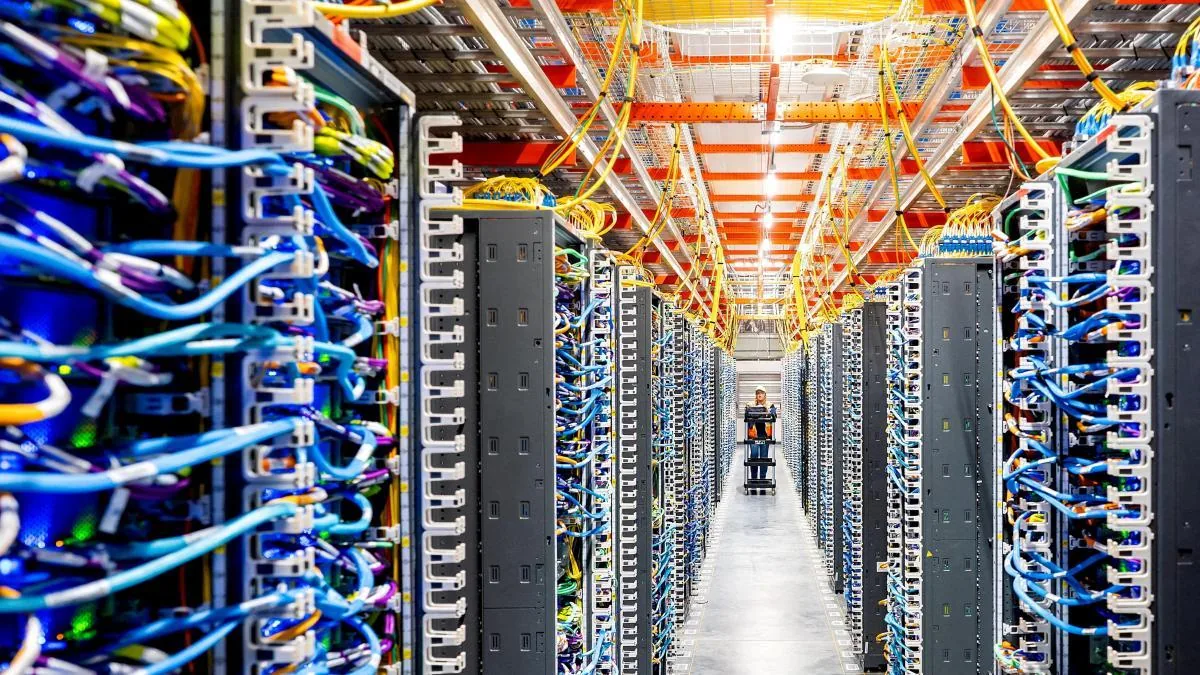
A data center is, simplifying a lot, a very modern industrial building designed to house the computer systems that store, process, and distribute digital information on a large scale. Basically, they contain servers (the computers that run applications, host web pages, process transactions, and train AI models), storage systems, networks that connect all these devices to each other and to the internet, and something increasingly important, huge cooling systems. Servers generate a lot of heat and need industrial cooling systems using air or, increasingly, liquids. And all this requires energy, a lot of energy.
How much? The report updated in June 2026 by the Lawrence Berkeley National Laboratory estimates that data centers consumed about 192 TWh of electricity in the United States in 2024, 4.7% of the country’s electricity consumption. That figure would reach 649 TWh in 2030: 11.8% of all electricity consumed in the United States. That is, more than triple in just six years. To get an idea of the scale, 649 TWh is approximately equivalent to the annual electricity consumption of more than 60 million American households. If the United States’ data centers were a country, they would be among the largest electricity consumers in the world.
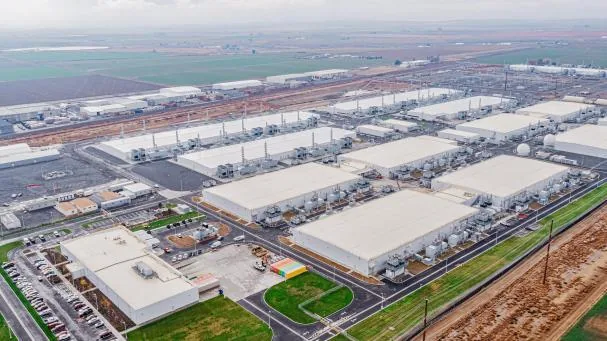
In Spain, according to data provided by the Government, these facilities already have more than 12 GW of capacity granted for access and connection to the electrical grid, to which an even greater volume of pending requests is added. To get an idea of the magnitude, those 12 GW are equivalent to about 10% of all the installed electrical generation capacity currently in Spain.
The expected growth in computing demand is so significant that a real race has broken out to obtain permits for access to the electrical grid and build data centers in all Western countries. And problems are arising.
In Texas, Republican Governor Greg Abbott has halted the processing of new connections until all pending data centers are audited. The electric system manager, ERCOT, accumulates requests for more than 474 GW, five times Texas’s historical maximum, and about 90% comes from data centers. The southern state has gone from incentivizing these facilities and reducing their taxes and deadlines to requiring them to pay for the electrical infrastructures they need, report on their consumption and the origin of the electricity and water they use, and not pass their costs on to citizens. A phrase from Abbott sums up the shift well: “Texans must come first.”
In New York, Democratic Governor Kathy Hochul has gone even further by decreeing the first one-year state moratorium for new hyperscalable data centers, while new rules on energy, water, and environmental impacts are established.
In Pennsylvania, Democrat Josh Shapiro has not established a general moratorium but has set conditions that can block projects not accepted locally. Promoters must provide their own electricity and pay all associated costs, meet higher environmental requirements, hire local workers, agree on benefits for communities, and, above all, obtain prior municipal approval: “If the local community does not approve a project, the State will not approve it either.” “We will not allow promoters to intimidate the citizens of Pennsylvania.”
Read more Learn to write in the age of AI
What is happening for investments as loaded with zeros as those related to Artificial Intelligence to be stopped by Republican and Democratic governors and mayors? In the United States, there is no integrated single electricity market like in Spain and Portugal, but the system is organized into independent regional operators, the RTO/ISO. As a result, the arrival of such strong demands as those of data centers, without the system being able to increase production at the same speed, has caused large price increases for all types of consumption.
Bloomberg recently published the results of an investigation into the evolution of wholesale electricity prices between 2020 and 2025. Its conclusion is that proximity to data centers is a determining factor — although not the only one — in the increase in wholesale electricity prices in the United States.
In Spain, as we have explained in several issues of the Penínsulas newsletter, the issue is as follows: the demand for connection to the electrical grid from data centers competes with other possible activities, perhaps more interesting for the country. The lower price of electricity is attracting a large volume of industrial projects. Data centers compete with these new industrial uses. Who should get the lion’s share of renewable energy in Spain if this model is finally consolidated?

Data centers do not generate much employment once built. Huge buildings with a maintenance team and security guards. A recent FEDEA study emphasizes this point: a data center is not automatically a good investment for the territory. It consumes land, electricity, and water, and much of the added value — the cloud, AI, and computing itself — may remain in the hands of large foreign companies. The cited FEREA report advises selecting projects, not so much by their size or investment volume, but by the value they leave in Spain, conditioning their prioritization to verifiable commitments.
The Spanish energy model is rattling. This past August, the Government decided to extend the life of the Almaraz nuclear power plant (Extremadura) while the whole country was focused on Ceuta. A little-explained plot twist. Or rather: explained by the great blackout of April 2025. A few days later, and the calendar is no coincidence, the Executive published a draft regulation for new data centers with a fairly clear underlying idea: faced with limited electrical grid capacity and growing competition to access it, the most efficient projects linked to new renewable generation and that contribute to digital sovereignty must be selected and prioritized, avoiding that their growth increases the system’s cost or displaces other electrical uses.
It proposes very demanding conditions. New data centers of 1 MW or more must be located in the highest European category of energy and water efficiency. While renewables do not exceed 90% of the electrical mix — we are at 56% — Data Centers must cover at least 80% of their consumption with new renewable generation: for each new MW consumed, a new renewable MW must have been installed, put into operation no more than 18 months before.
Added to this are digital sovereignty requirements: the operator must be established in the European Union; data related to the center’s operation must be kept within the community territory; and measures must be adopted against access by third-country authorities not covered by European law.
Compliance with these conditions will be linked to the right of access and connection to the grid itself: non-compliance will imply increasing penalties in tolls and charges and, ultimately, may mean loss of access to the grid.
The data center association, chaired by Begoña Villacís, former Ciudadanos leader, has raised an outcry. The Popular Party has already expressed its opposition to the regulation. Génova is coordinating the PP autonomous communities, with the Community of Madrid leading: “The Government’s data center decree project is an aberration.”
Pedro Sánchez’s Government has come out very weakened from the Ceuta crisis, still not concluded. Everything indicates that it will soften the Royal Decree and that the restrictions will be much less. Spain still does not have its electrical model fully resolved. Spain needs AI nodes, but also new industrial activities.
Frankenstein was a character created by Mary Shelley in 1816 on the outskirts of Geneva during a cold and dark summer. Due to the harsh weather, Lord Byron proposed to his friends, a group of young English writers, that they write a horror story. Shelley, 18 years old, narrated the story of Victor Frankenstein, a young Swiss scientist who manages to give life to a creature made from parts of corpses, only to be horrified by his creation and abandon it, unleashing a terrible tragedy of revenge and loneliness. Why was that summer dark and cold?
A few months earlier, the Tambora volcano had erupted in Indonesia, near the island of Bali. The explosion killed 12,000 people and released a large amount of dust particles into the atmosphere, which changed the climate worldwide, causing epidemics, famines, and social upheavals. Leaden skies and strange sunsets that inspired the painter Turner.
A walk through love and death. Back on your screens.
(In this issue, geographer Santiago Fernández Muñoz, expert in geopolitics and public policies, partner of SILO, collaborated.)
Read more Will Rinehart: “A pact to curb AI could violate antitrust law”