Morocco probes, its allies punish

Morocco probes, its allies punish

The Kingdom of Morocco has two great allies – the United States and Israel –, two great enemies – Algeria and the Polisario Front – and a tradition: testing Spain at very well-chosen moments in order to verify our limits and simultaneously display its power. To the tableau must be added the day chosen by Rabat for the show of force of sending, as if nothing, about 50,000 young people to a Spanish city of 83,000 inhabitants: the celebration of the ascension to the throne of Mohamed VI, whose public appearance on Thursday revealed his poor health, which fosters and anticipates underground struggles in the Majzén, the opaque elite that forms the court and takes its name from the royal residence in Rabat.

Read Full News
More than 25,000 migrants return to Morocco, although arrivals to Ceuta continue trickling in

More than 25,000 migrants return to Morocco, although arrivals to Ceuta continue trickling in

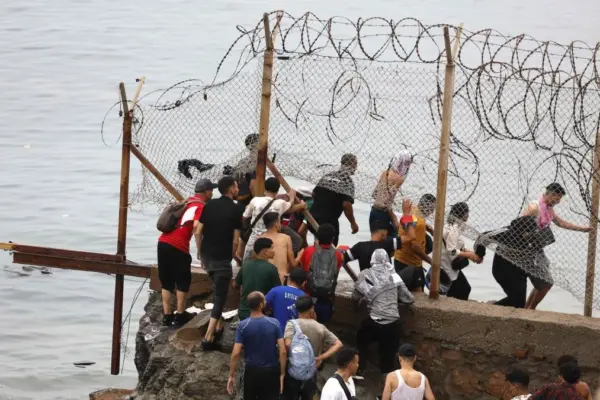
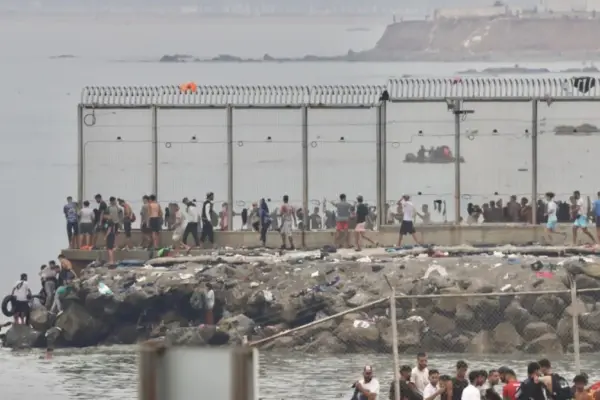
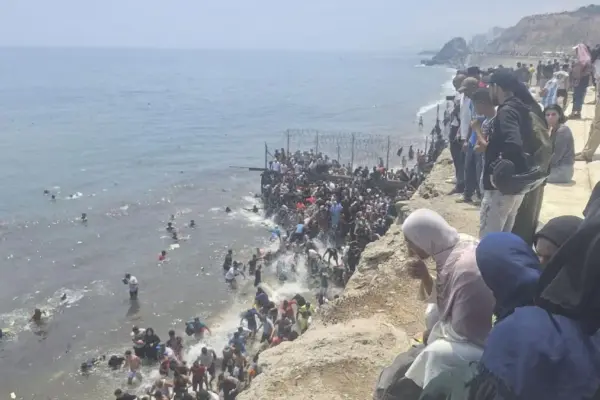
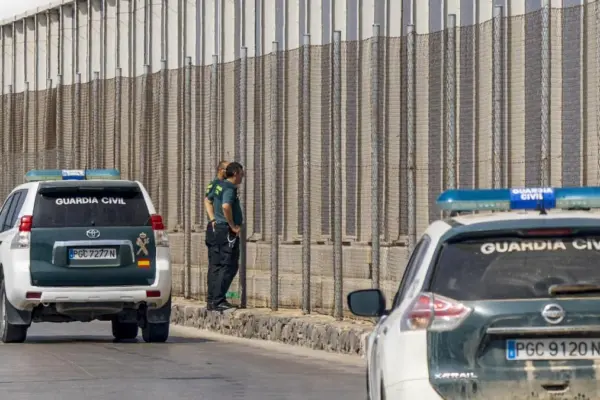
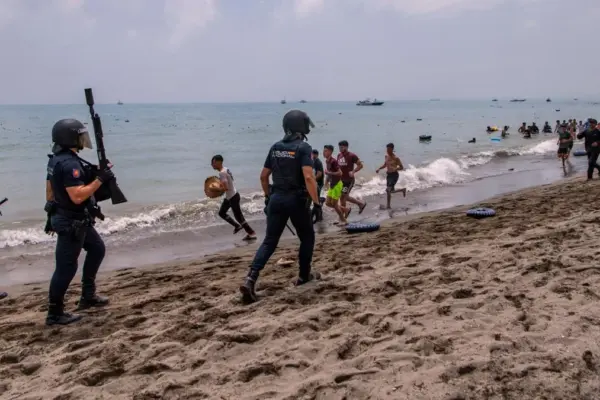
Thousands of the more than 40,000 immigrants who entered Ceuta irregularly yesterday, due to Morocco’s permissiveness, have begun returning to their country throughout the morning of this Friday, after realizing that the autonomous city, completely overwhelmed, does not have the capacity to respond to them. The same point where they arrived by swimming or on foot, the El Tarajal border breakwater, has become an open entry gate, because the flow of entries does not stop despite the military deployment, and an exit, through which to leave Spain, once it has been confirmed that they have nowhere to eat or sleep.

Read Full News
Sánchez condemns the “violation of Spain's territorial integrity”: “We defend Ceuta like the M-30”

Sánchez condemns the “violation of Spain’s territorial integrity”: “We defend Ceuta like the M-30”

“The State is here. We defend security and coexistence in Ceuta as we would defend it on the perimeter of the M-30 in Madrid. We are all one,” said the Prime Minister, Pedro Sánchez, on Friday during the appearance he made from the Palace of the Assembly of Ceuta, alongside the Minister of the Interior, Fernando Grande-Marlaska, after a meeting with the commanders of the State security forces at the Tarajal border, and also holding a meeting with the president of the autonomous city, Juan Jesús Vivas.

Read Full News
The Government accuses “criminal mafias” and denies a pull effect from the regularization of immigrants

The Government accuses “criminal mafias” and denies a pull effect from the regularization of immigrants

The migration crisis that has erupted again in Ceuta, this time with a flood of more than 40,000 people according to initial estimates, and already with about twenty deaths, “has its origin in an interpretation of the Supreme Court’s decision, which prohibits the return of people who enter by swimming, which has been exploited by mafias and criminal organizations to take advantage of the extreme vulnerability of migrants.”

Read Full News
Ceuta, overwhelmed after the entry of more than 40,000 migrants: half of its population

Ceuta, overwhelmed after the entry of more than 40,000 migrants: half of its population

Ceuta is, this Friday, many cities in one, after yesterday, in a matter of hours, thousands of Moroccans – the vast majority young, but also families – crossed the breakwater of El Tarajal to set foot on Spanish territory. The autonomous city looks like a dawn at any music festival, with hundreds of youngsters lying on the grass in parks or on the beach sand, sleeping in swimwear, with no more luggage to protect than some plastic bags. It also looks like a besieged city, with Army vehicles patrolling back and forth, giving a warlike tint to the biggest bilateral migration crisis between Spain and Morocco since 2021. Another face is that of a city running at half capacity, like on a holiday, with neighbors in their homes, and their bars and shops closed: yesterday afternoon they decided to pull down the shutters amid the uncertainty generated by the massive entry that could shatter any previous statistics.


Read Full News
A Supreme Court ruling causes an influx of migrants in Ceuta and forces the activation of the Army

A Supreme Court ruling causes an influx of migrants in Ceuta and forces the activation of the Army

The Supreme Court ruled on July 8 that “hot returns” are not allowed for migrants intercepted at sea who attempt to enter the cities of Ceuta and Melilla by swimming. A few weeks later, the autonomous city has been experiencing a massive influx, for days now, of thousands of migrants, mostly Moroccan, many of them swimming. The Ministry of the Interior rules out that the Alaouite authorities have ceased to carry out their surveillance functions. Yesterday, the 30th, was Throne Day in Morocco.

Read Full News