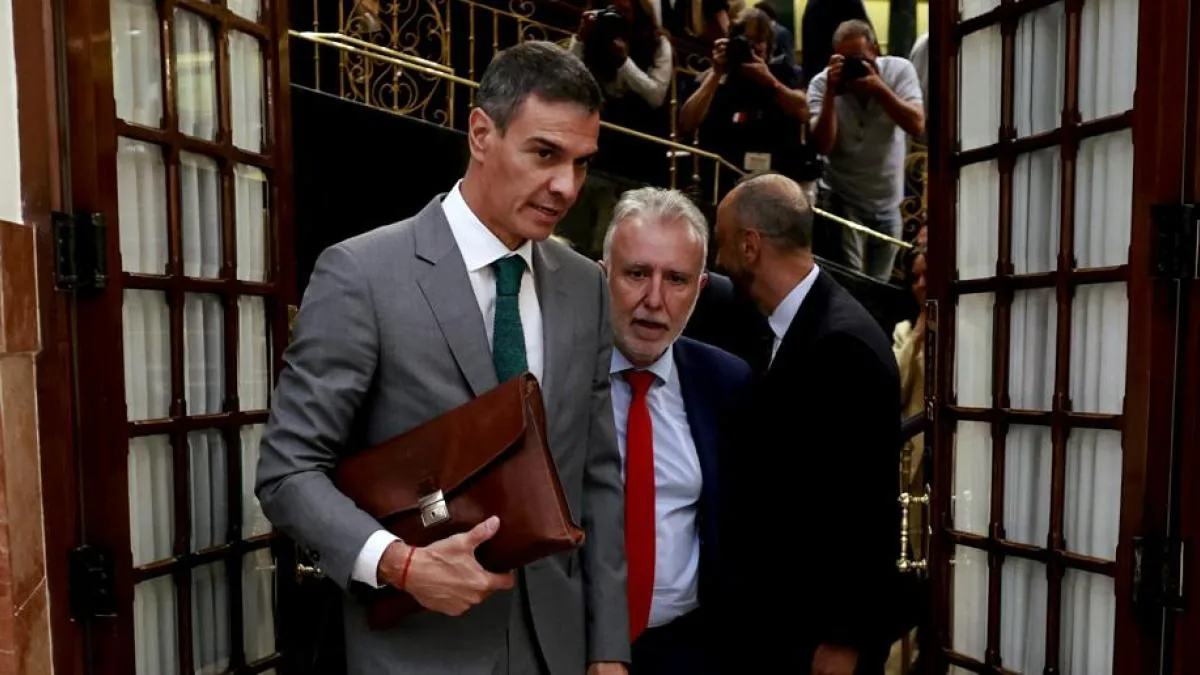








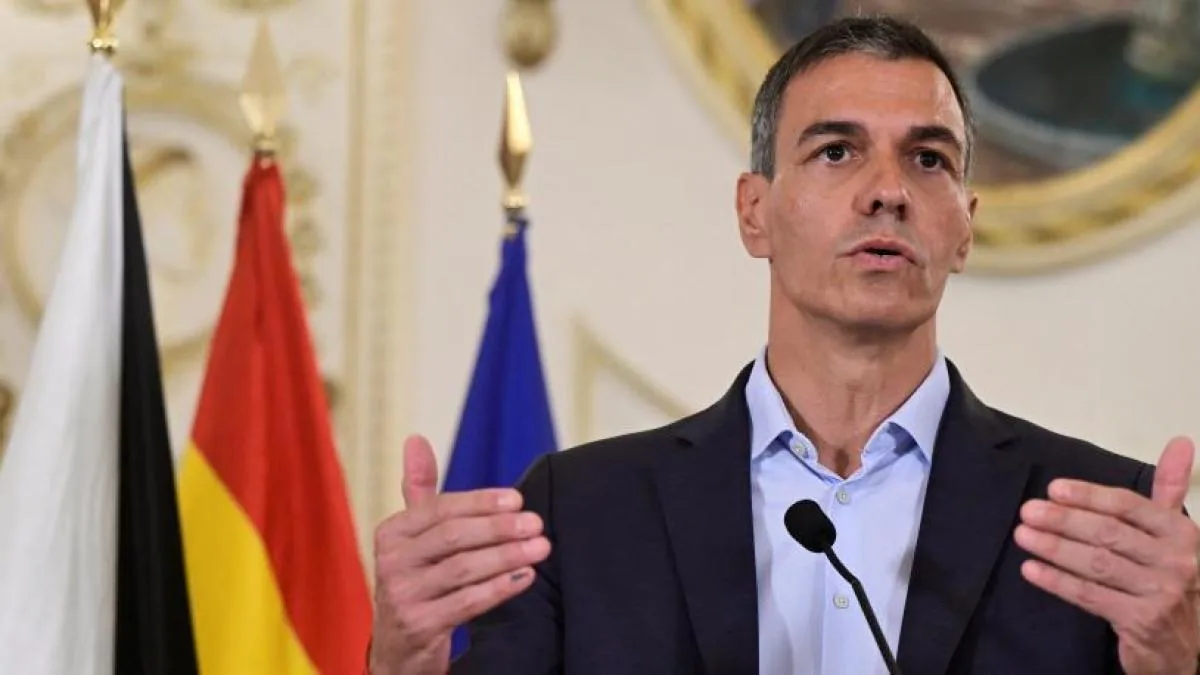
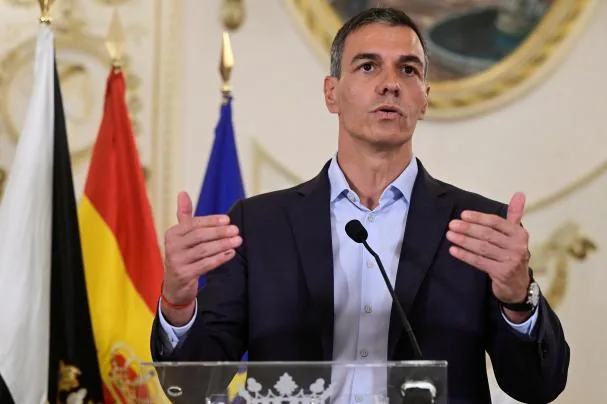
“The State is here. We defend security and coexistence in Ceuta as we would defend it at the perimeter of the M-30 in Madrid. We are all one,” said the Prime Minister, Pedro Sánchez, this Friday during the press conference held at the Palace of the Assembly of Ceuta, alongside the Minister of the Interior, Fernando Grande-Marlaska, after a meeting with the commanders of the State security forces at the Tarajal border, and also holding a meeting with the president of the autonomous city, Juan Jesús Vivas.
Read more Sánchez visits Ceuta amid migration crisis
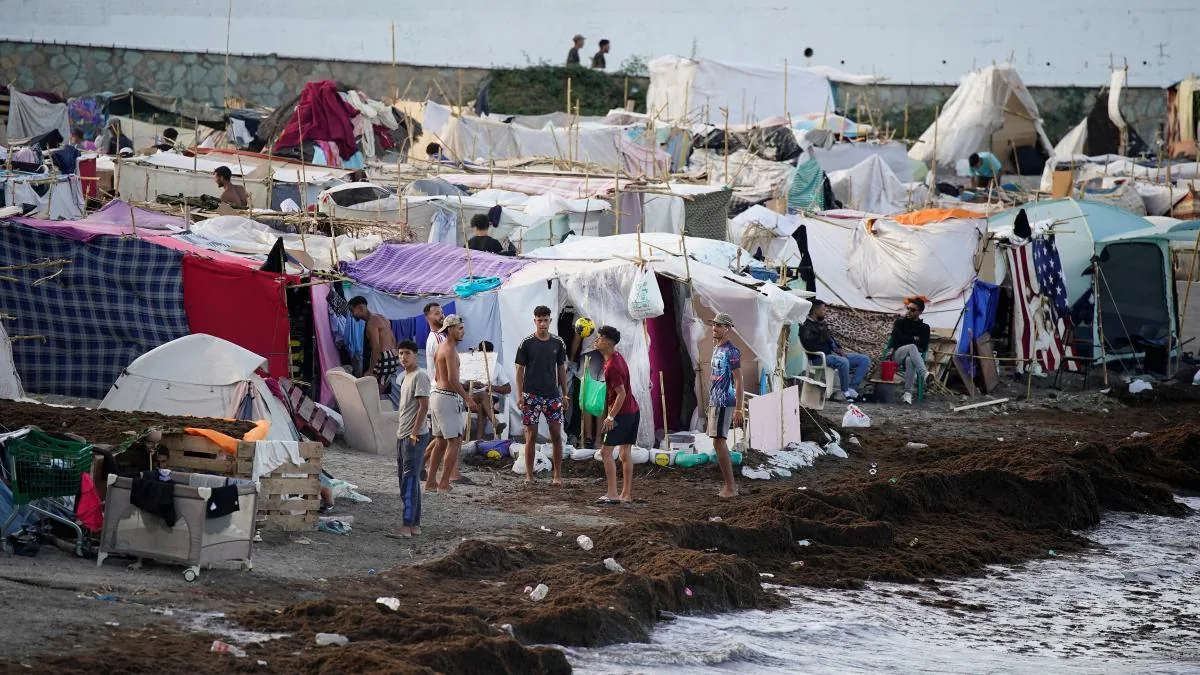
More than 25,000 of the nearly 50,000 migrants who entered Ceuta irregularly on Thursday have already returned to Morocco this Friday
Sánchez first denounced “the violation and attack on the territorial integrity of Spain,” following the influx of about 50,000 irregular migrants who, according to government figures, entered Ceuta irregularly from Morocco on Thursday, which also caused the death of about twenty people trying to swim to the autonomous city. The government has reported, however, that during the morning of this Friday more than 25,000 of these people have already voluntarily returned to Morocco. “Ceuta is a Spanish city, and what happened yesterday deserves all our reproach and all our condemnation, at the strongest possible level of rejection,” emphasized the head of government.
“The government will use all the levers and resources of the State to guarantee the security of the citizens of Ceuta, and of course also coexistence in the autonomous city,” he pledged.
The president highlighted that, from the dialogue held with Moroccan authorities, responsibility for this human avalanche lies with an “interested interpretation that the mafias trafficking in human beings have made of a Supreme Court ruling which says that repatriations at the border do not apply to those who enter our territory by swimming, by sea, because it is considered that there is no physical border, as there is on land.”
“This interpretation of the Supreme Court ruling has spread like wildfire in recent hours through the networks of mafias trafficking in human beings and has caused an avalanche of the scale we experienced yesterday,” he insisted. Because he stressed that this episode “breaks the trend of reduction of irregular immigration flows” to Spain that had been recorded, with a 36% drop so far this year.
Sánchez pointed out that, faced with this situation, the government has reacted with an immediate increase in the forces of the Civil Guard and National Police, with the deployment also of the Army and Navy, to “guarantee the peace and security” of the residents of Ceuta. At the same time, and while it is studied whether legislative reforms are necessary, the government will temporarily deploy a network of buoys on the Tarajal breakwater, in compliance with the Supreme Court ruling, to “create a physical containment barrier,” at least visually, so that from an administrative point of view the repatriation at the border of irregular migrants can be facilitated.
The Prime Minister, in any case, thanked Morocco for its cooperation to expedite “as soon as possible” the repatriations of these people who have entered Spain irregularly. “Moroccan authorities are willing to cooperate to speed up the repatriations of citizens of their country,” he stressed. For now, the Minister of the Interior, Fernando Grande-Marlaska, will remain in Ceuta for a few days to personally attend, on site, to the evolution of this crisis.
“We have told Morocco that we need to speed up and give a much stronger response to what happened. But the dialogue during yesterday with the Moroccan authorities was constant, fluid and very reasonable, unlike what happened in 2021,” warned Sánchez, referring to the last major migration crisis that occurred in Ceuta, as a result of Rabat’s anger over the hospitalization in Logroño of the leader of the Polisario Front, Brahim Gali. “We hope that this cooperation will intensify and allow repatriations to be expedited in the coming hours and days to restore normality,” he trusted.
Read more Ceuta, overwhelmed after the entry of more than 40,000 migrants: half of its population