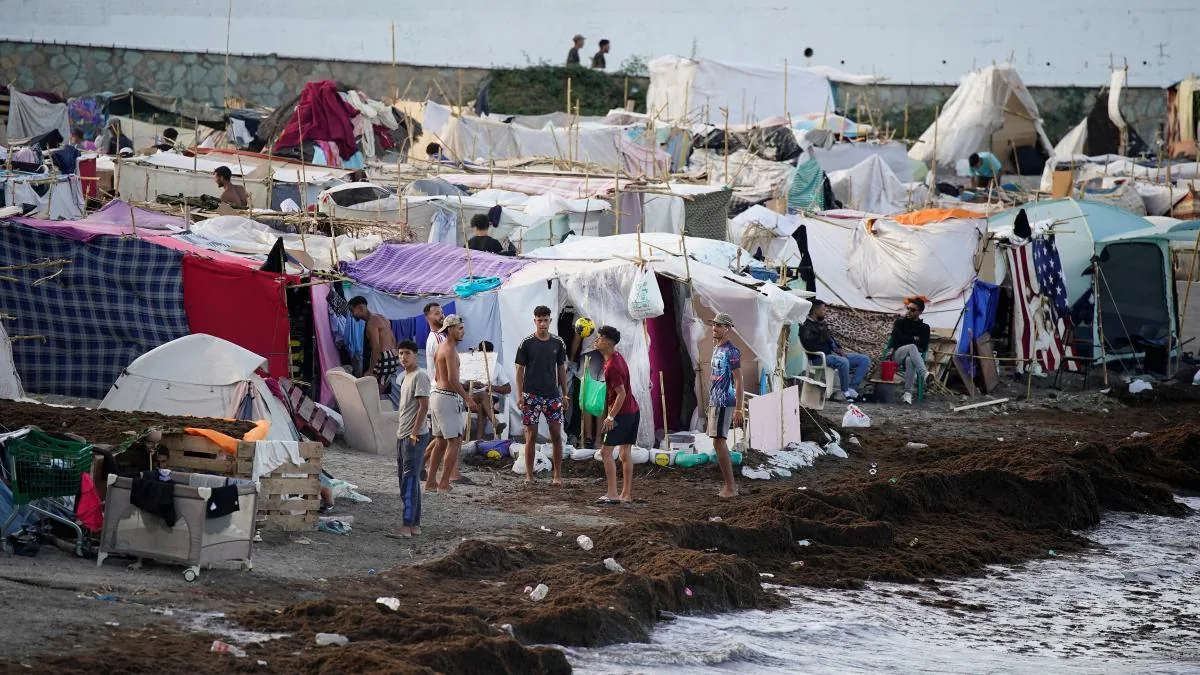








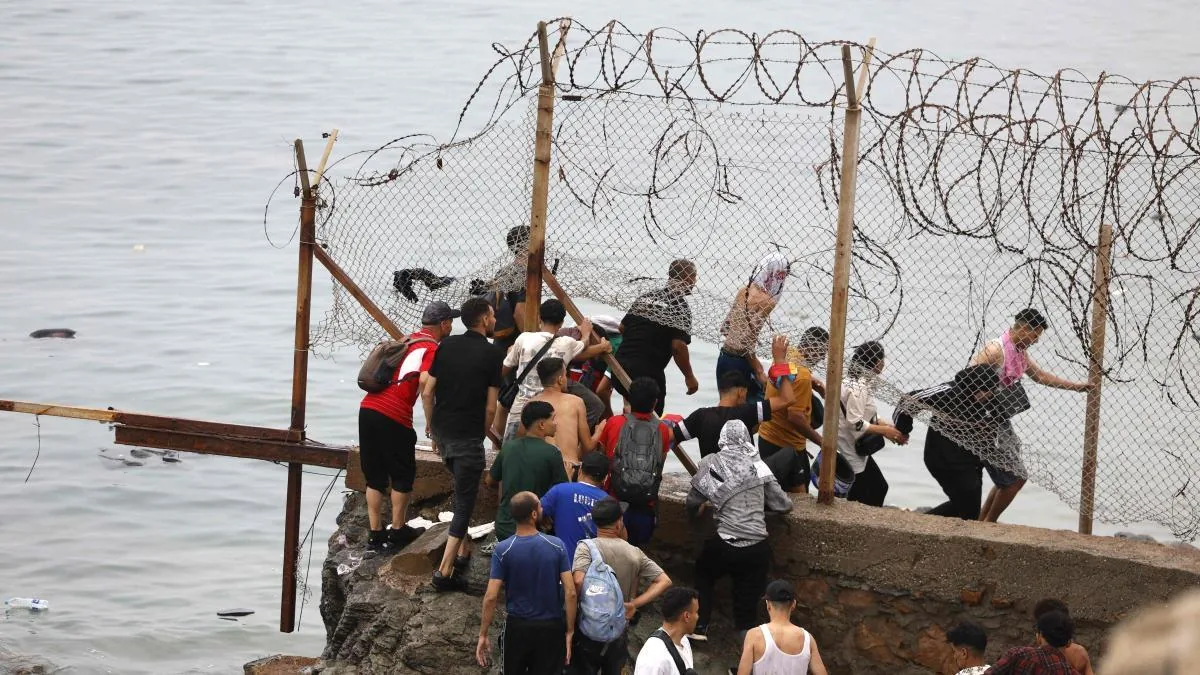
Thousands of the more than 40,000 immigrants who irregularly entered Ceuta yesterday, due to Morocco’s permissiveness, have begun returning to their country throughout the morning of this Friday, after realizing that the autonomous city, completely overwhelmed, has no capacity to respond to them. The same point where they arrived by swimming or on foot, the El Tarajal border breakwater, has become an open entry gate, because the trickle of entries does not stop despite the military deployment, and an exit, through which to leave Spain, once it has been confirmed that they have nowhere to eat or sleep.
Read more Sánchez condemns the “violation of Spain’s territorial integrity”: “We defend Ceuta like the M-30”
At the border, shouts of “puta Morocco” from the young people arriving on floaters have crossed with others of “see you later, Spain” from those leaving resignedly, in a line. The Ministry of the Interior has estimated 25,000 departures by 1:00 p.m. compared to 50,000 entries since yesterday.
Also read
The dozens of groups of immigrants who spent the night, lying in parks in the city center, have been moving towards the outskirts, heading to the breakwater, as the morning progressed. The joy of the early hours has given way to frustration.
Amina is one of the few women who crossed among the tumult of men. She does not want to be photographed because she has just accepted that she has to return to her country, where she says she has no future. She has spent her whole life doing sports, so swimming for an hour was no challenge. After spending the night outdoors, since the CETI is overwhelmed, she saw that early in the day it was impossible to access supermarkets to buy something to eat. Merchants have been closing their shutters since yesterday afternoon, fearing looting.
The column returning to Morocco, which runs parallel to the shore, is continuous. According to the department led by Fernando Grande-Marlaska, departures from Ceuta are occurring at a rate of 150 people per minute. In the end, soldiers from the Army, stationed in the area since yesterday, have indicated the exit door to them.
Read more Sánchez visits Ceuta amid migration crisis
Karim, who says he turned 18 last month, does not speak Spanish, but the mobile phone translator helps him express that he was deceived, that he was convinced that stepping on Spain would get him permits. He is not the only one in his group wearing the red shirt of the Spanish national team. Omar, who has the name Lamine Yamal on his back, also received chains of WhatsApp messages encouraging crossing to Spain, due to the supposed porosity of the border. Now they are starting the long journey back. They are not from Castillejos, although it is in this city, a few kilometers from the border, where they gathered encouraged by social networks.
All departures, according to the Interior Ministry, are voluntary. The agents deployed in the streets, both from the National Police and the Civil Guard, control traffic, city access, and respond to migrants’ questions, but there are no violent incidents. Although videos of disturbances in shops are also being spread on social networks.
Mahir, who is not yet of legal age, says he thought it would be “easier” to reach the peninsula. He says he had planned to notify his relatives, with whom he has not yet contacted, once he crossed the Strait. He assumes that “this time, it won’t be,” but he “does not doubt” that he will try again. In his country, “no work, no money.”