The Government avoids blaming Rabat and directs criticism at the opposition and other EU countries

The Government avoids blaming Rabat and directs criticism at the opposition and other EU countries

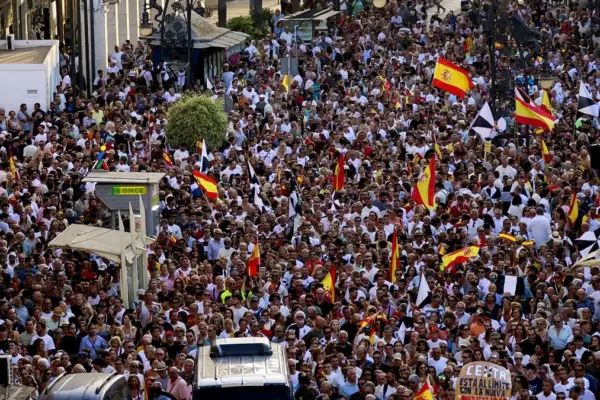
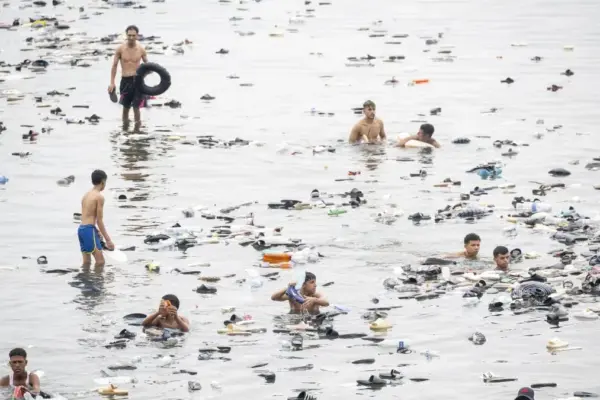
The Government has avoided in recent days blaming Morocco for the migratory avalanche that took place in Ceuta last week. This Monday it went a step further by having kind words about the “collaboration” of the neighboring country in the return of “the vast majority” of the people who crossed the border through the El Tarajal breakwater to Moroccan soil between Thursday and Friday, although there is no unanimity and that message is not conveyed the same way from all ministries. For now, rather than looking south, the criticisms are directed both at the opposition parties –PP and Vox– and at other European Union member states –especially Italy– that have questioned Spain’s role in this whole matter and that tomorrow Tuesday will address the issue in an extraordinary meeting of the community interior ministers. And at the “reactionary international” that according to the Government spread “lies and false news.”

Read More
France warns of a political nature in the letter from the 22 EU countries regarding the Ceuta crisis

France warns of a political nature in the letter from the 22 EU countries regarding the Ceuta crisis

The French government was one of the members of the European Union that did not sign the letter that censured Spain’s immigrant regularization policy and linked that strategy to the crisis that occurred this weekend in Ceuta. The letter had been promoted by the far-right government of Giorgia Meloni and by other European countries such as Germany.

Read More
Feijóo reproaches Sánchez for not demanding explanations from Morocco for the “occupation” of Ceuta

Feijóo reproaches Sánchez for not demanding explanations from Morocco for the “occupation” of Ceuta

Alberto Núñez Feijóo has taken a further step in his criticisms of Pedro Sánchez over the entry of 50,000 immigrants from the Maghreb country into Ceuta. In this regard, the leader of the PP has reproached the Prime Minister for not having asked Morocco for explanations about the “premeditated occupation” and “the breach of Spain’s territorial integrity.”

Read More
Morocco shakes off responsibility for the Ceuta crisis and attributes it to misinformation and mafias

Morocco shakes off responsibility for the Ceuta crisis and attributes it to misinformation and mafias

The Ministry of the Interior of Morocco shook off any responsibility on Sunday night for the massive entry of migrants last week in Ceuta through the Tarajal breakwater and attributed the crisis to a combination of factors: both to the mafias that traffic in people and to the misinformation on social networks following a Supreme Court ruling from early July.

Read More
Meloni takes advantage of the Ceuta crisis to push her migration agenda

Meloni takes advantage of the Ceuta crisis to push her migration agenda

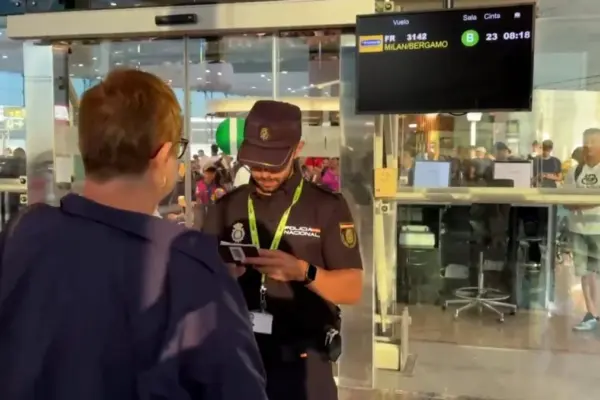
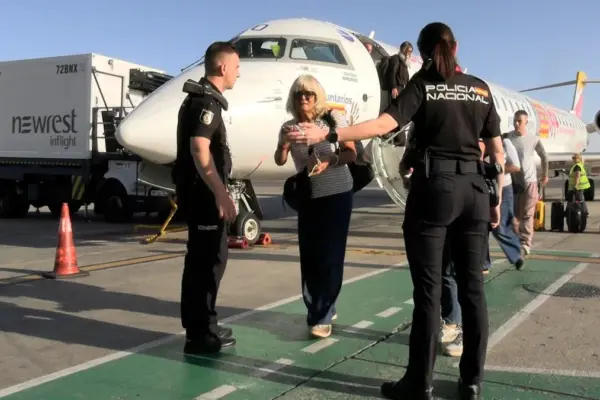
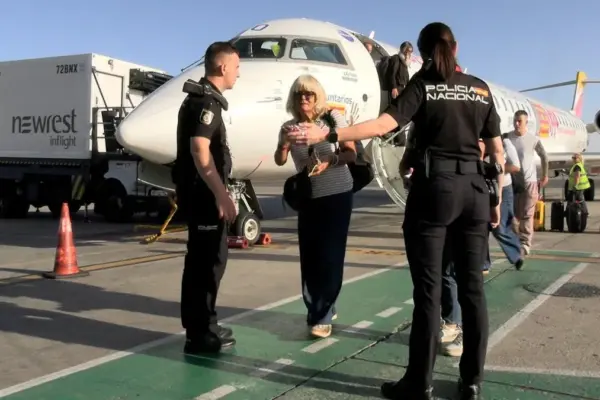
The Ceuta crisis has become an opportunity for Giorgia Meloni to try to impose her migration agenda in Europe. The Italian right celebrates the “success of the diplomatic initiative” for having placed the strengthening of borders at the center of the European debate. But, at the same time, in Palazzo Chigi there is a much more immediate fear: that Spain will respond with reciprocal measures, introducing controls for travelers coming from Italy. In the middle of August, when hundreds of thousands of Italians spend their holidays in Spain, that decision could translate into long lines at airports and ports and end up exposing the essentially symbolic – or, as the Italian opposition denounces, “populist” – nature of the temporary suspension of Schengen decreed by Rome.

Read More
Ceuta accelerates the return of migrants with suspected illegal expulsions

Ceuta accelerates the return of migrants with suspected illegal expulsions

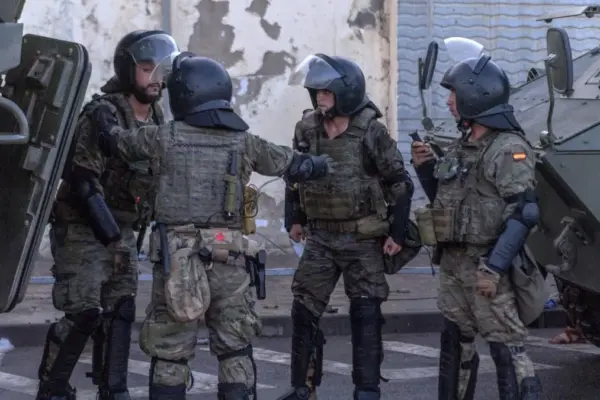
On the esplanade of Loma Margarita in Ceuta, near what will be the city’s sole military base, about twenty legionnaires surrounded around fifty immigrants yesterday at noon, who had previously been herded there in groups. Sitting in the shade, wearing the same swimsuit they had on four days ago when they jumped from Morocco to Spain, they waited for instructions from the legionnaires to board a bus that would take them to the border to supposedly return voluntarily to their country. “You,” “you,” “you,” a soldier shouted, as a way of distributing return tickets, with no other criteria than the appearance of the young men. Meanwhile, on the other side of the street, a member of the Ceuta association Elín closely watches the scene because they have detected that among the bagged youths there are many minors and three Sudanese: neither group can be summarily expelled by law. The bus fills up without them. And the loud clap of a legionnaire gives them the green light to get up and leave. Even if only to continue wandering around the outskirts of the city, until they are detained again.

Read More