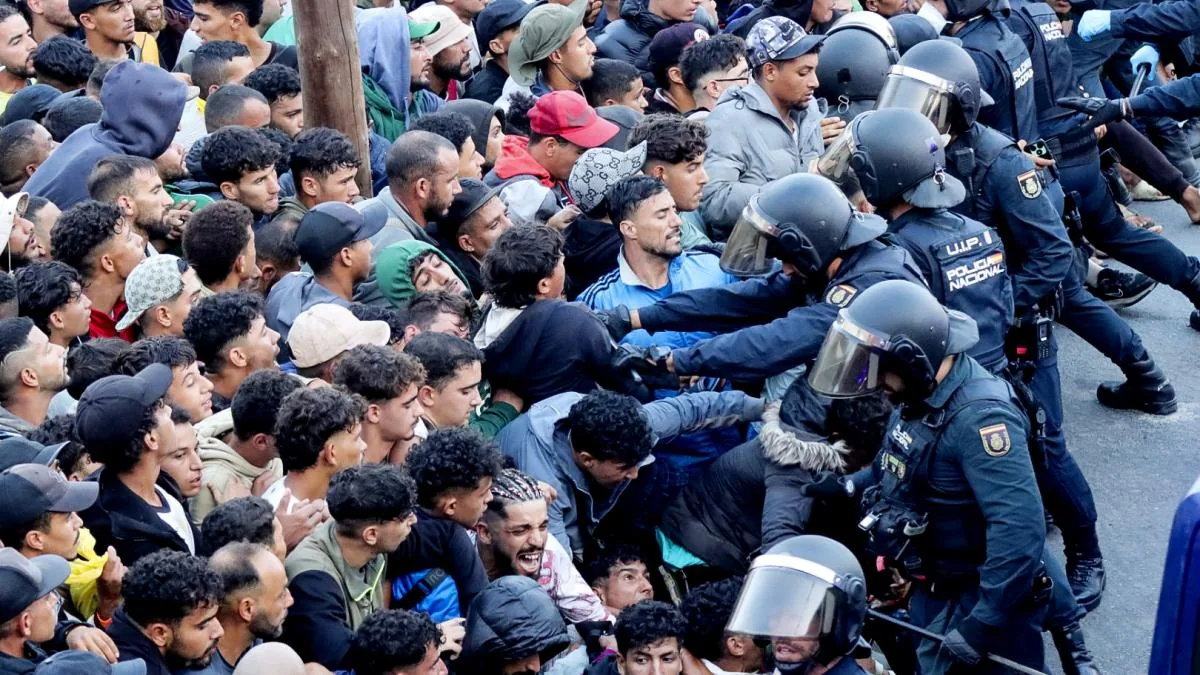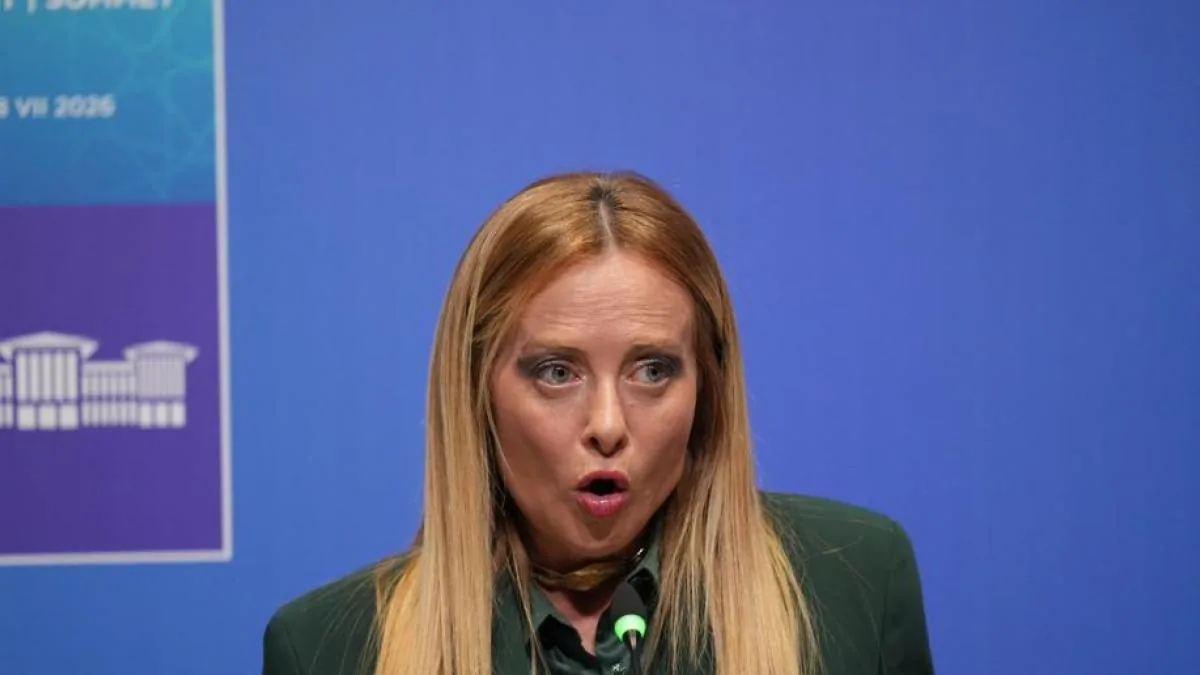
The Ceuta crisis has become an opportunity for Giorgia Meloni to try to impose her migration agenda in Europe. The Italian right celebrates the “success of the diplomatic initiative” for having placed border reinforcement at the center of the European debate. But, at the same time, in Palazzo Chigi there is a much more immediate fear: that Spain will respond with reciprocal measures, introducing controls for travelers coming from Italy. In the middle of August, when hundreds of thousands of Italians spend their holidays in Spain, that decision could translate into long lines at airports and ports and end up exposing the essentially symbolic – or, as the Italian opposition denounces, “populist” – nature of the temporary suspension of Schengen decreed by Rome.
Read more Ceuta accelerates the return of migrants with suspected illegal expulsions
Relations between Madrid and Rome are also going through one of their coldest moments in recent years. So far, there has been no political contact between the two governments. The only exception was a message sent by the Italian Interior Minister, Matteo Piantedosi, to his Spanish counterpart, Fernando Grande-Marlaska, after a failed attempt at a phone conversation, to explain the details of the temporary reintroduction of border controls.
The real goal of Rome is to promote the creation of migrant centers in North Africa
In reality, during the first two days of the measure’s implementation, hardly anything has changed at the Italian airports and ports connected with Spain. Security forces are limited to carrying out selective checks aimed, according to the Interior Ministry, at “third-country nationals.”
The harshest criticisms, however, have come from the police unions themselves. In a letter addressed to the Interior Ministry, SIULP described the measure as “illogical and unsustainable.” The government does not rule out introducing changes to the decree or even reducing its scope, as long as this cannot be interpreted as a political correction.
Italy is considering ending Schengen restrictions without staging a correction
But beyond the debate on Schengen, in Rome they consider that the real battle will now be fought in Brussels. For Meloni, the Ceuta crisis represents above all an opportunity to accelerate the shift in European migration policy. The meeting of ministers was requested following a letter promoted by Italy and Denmark and supported by a broad group of member states. Meloni’s goal is to take advantage of this moment to promote the creation of return centers for immigrants in third countries, financed by the European Union and following the model that Italy tried to develop in Albania.
Read more Ariana Grande will step away from the spotlight after her tour due to «constant public scrutiny»
That model has not yet yielded the expected results: the centers have entailed a high economic cost and remain practically empty. However, the philosophy that inspires it has already been incorporated into the European Pact on Migration and Asylum, which foresees the possibility of developing cooperation mechanisms with third countries to manage part of the migration procedures outside the territory of the Union. The problem, they admit in Rome, is that the transition from theory to practice can take years. Meloni intends to take advantage of the moment to accelerate that process. The letter sent on Saturday was born within a group of countries, led by Italy and Denmark, that usually coordinate their positions before European Council meetings and maintain a particularly hard line on migration. Among its members is Germany, which, despite Chancellor Friedrich Merz’s more cautious tone, decided to support the initiative. France, on the other hand, did not sign the letter.
Firmness towards Spain also seeks to curb the rise of the far-right general Roberto Vannacci
Meanwhile, the leaders of Brothers of Italy celebrate these hours as a political victory. Allied media even highlight the Spotify playlist that the Spanish president, Pedro Sánchez, published during his holidays in Lanzarote, accompanying it with attacks on the socialist leader. The position of the moderate sectors of the government coalition is much more uncomfortable.
The prime minister also has domestic political reasons to maintain the standoff with Spain. Meloni is trying to contain the rise of her new competitor on the right, General Roberto Vannacci, who has further hardened the discourse on immigration and aims to dispute part of the more radical electorate. In that context, showing firmness has also become a message directed at the Italian electorate.
Read more The difficult climate pact