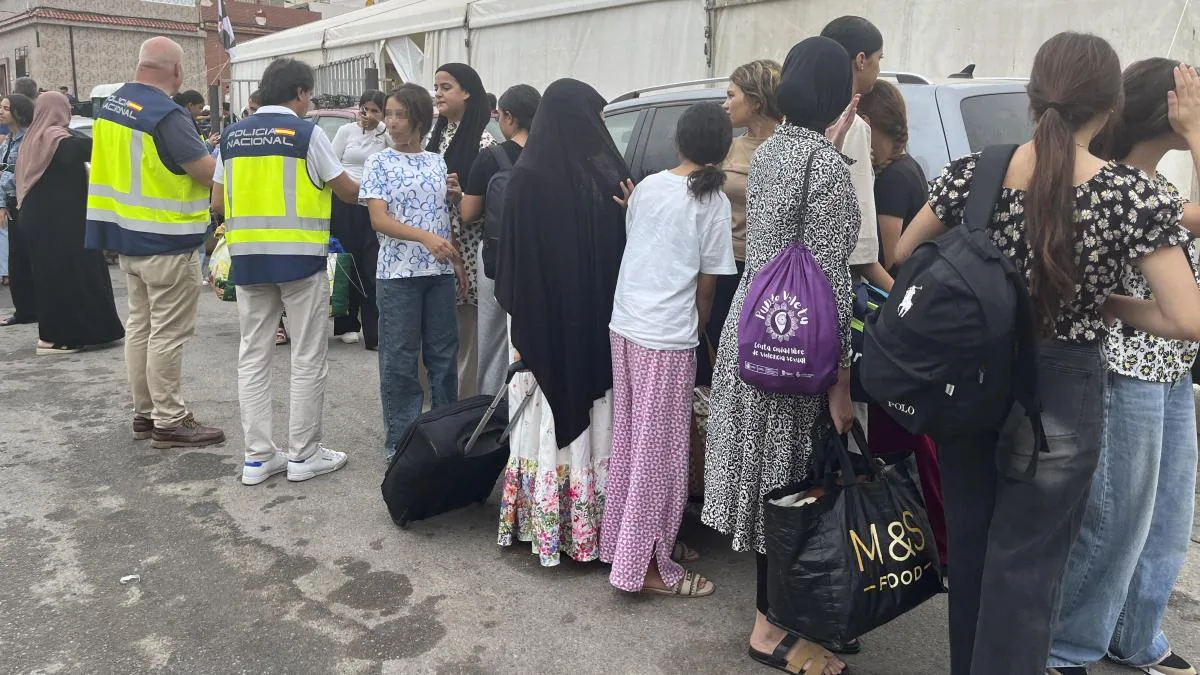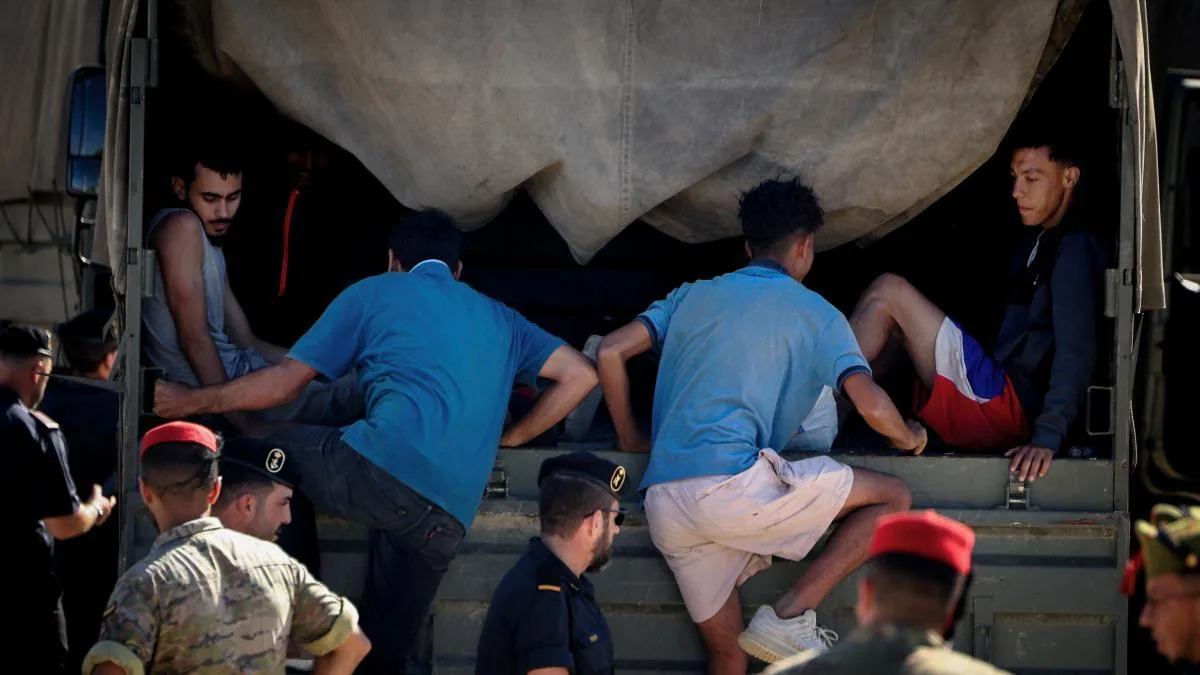
On the esplanade of Loma Margarita in Ceuta, near what will be the city’s sole military base, about twenty legionnaires surrounded around fifty immigrants yesterday at noon, who had previously been herded there in groups. Sitting in the shade, wearing the same swimsuit they used four days ago to jump from Morocco to Spain, they awaited instructions from the legionnaires to board a bus that would take them to the border to supposedly return voluntarily to their country. “You,” “you,” “you,” a soldier shouted, as a way to distribute return tickets, with no other criteria than the appearance of the young men. Meanwhile, across the street, a member of the Ceuta association Elín closely observed the scene because they detected that among the bagged youths there were many minors and three Sudanese: neither group, by law, can be summarily expelled. The bus filled up without them. And the loud slap of a legionnaire gave them the green light to get up and leave. Even if only to continue wandering around the outskirts of the city until they are detained again.
Read more Ariana Grande will step away from the spotlight after her tour due to «constant public scrutiny»
Hundreds of migrants are now being taken in police cars or military buses to the border
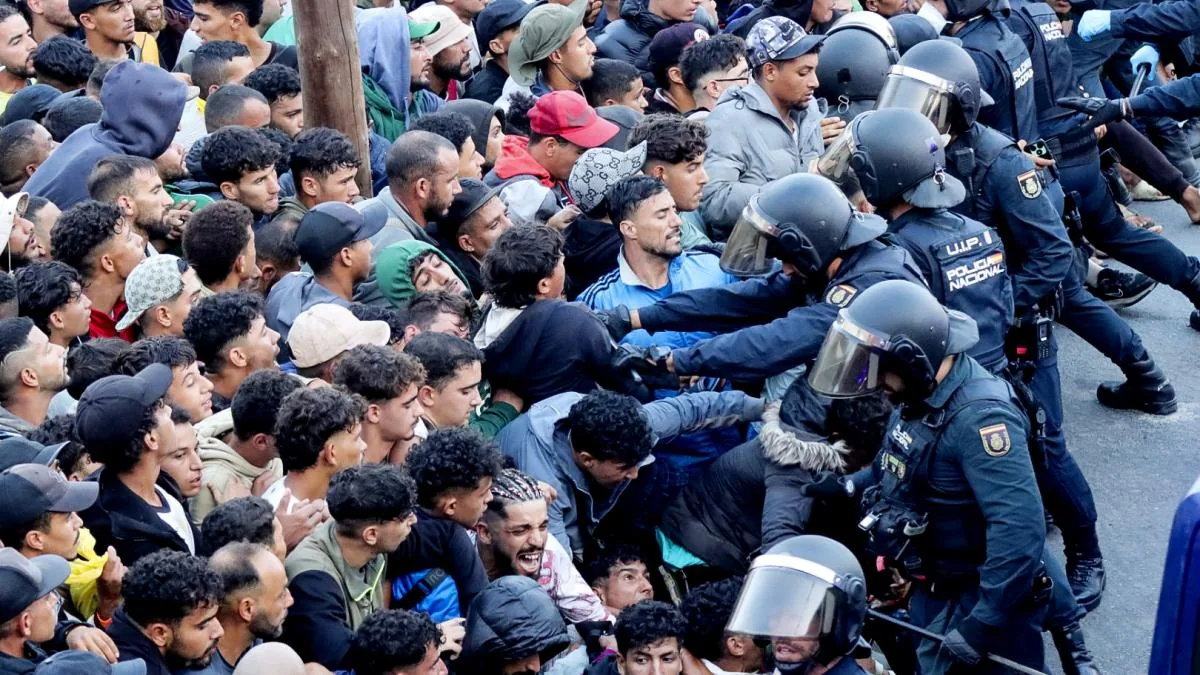
The government has accelerated the return to Morocco of the hundreds of immigrants who last week entered en masse through the El Tarajal border breakwater, which claimed the lives of 72 people, according to the latest figures from the Ministry of the Interior, although the president of Ceuta raises the number to 88. Meanwhile, Morocco acknowledged yesterday that about 40,000 people reached the border heading to Ceuta and another 1,135 to Melilla and admitted 11 deaths on its territory, ten of them by drowning. After a constant line along the seafront marked the return path during the two days following the mass crossing, yesterday the young people were taken in vehicles of the Ceuta Local Police and military buses to the border. According to the Government Delegation, all these returns remain voluntary, like the more than 50,000 that have already occurred, of people who, after long nights exposed to the elements in the city, with great difficulty accessing food or water, have realized that staying in Ceuta is not viable.
Interior raises the number of bodies recovered from the sea to 72, but the Ceuta president already speaks of 88 dead
The Ministry of the Interior provided detailed updates on those leaving Spain. However, now no one dares to give the number of migrants who might still remain in the autonomous city. But a tour of the outskirts is enough to estimate that there are hundreds. Perhaps thousands.
On Benítez Beach, in the northern bay of Ceuta, adjacent to the Poniente dock, dozens of immigrants have been crowded since Thursday dawn. They slipped in among the Moroccan crowd, encouraged by social networks. Ahmed and Mohamed, 26 and 18 years old, were born in Gaza, so they have the right to seek international protection. They show their Palestinian passport, in which they keep small bills and the receipt of having requested entry to the Temporary Stay Center for Immigrants (CETI). Neither one nor the other, they lament, helps them: with the money they cannot buy because merchants are denying them entry and the reception center is completely overwhelmed. “I don’t want to sleep, I want to work,” he repeats over and over when he sees the recorder on, so that his cry of despair is heard.
Read more The difficult climate pact
Two Yemenis, Musleh, 33, and Mahmoud, 35, listen to the conversation; they also want to denounce the abandonment they feel. The entrenched civil war in their country is sufficient reason to seek international protection. The first still wears the wetsuit with which he jumped into the water at dawn and heard “many cries for help at sea” that still echo in his head. He says he has gone four days without eating. And he doesn’t know how much longer he can endure this fast. After several days collecting testimonies, Musleh is the first person to refer to the Supreme Court ruling that determined that hot returns of immigrants intercepted at sea are not allowed. They had been in Rabat for three months, along with a dozen other Yemenis, waiting for the moment to jump to Spain. Now, they don’t know how much longer they can stay in that corner of the beach, where, according to police sources, mafias are already approaching to offer clandestine transfers to the Peninsula.
From the Elín association, the oldest in the autonomous city, they explain that Sudanese, Yemenis, Malians, or Palestinians who have not returned to Morocco, where they are persecuted, have the right to be assisted by the State as potential asylum seekers. However, they fear that expulsions without guarantees will occur, in the groups in which Moroccans are being returned. “They state that they would rather die of hunger than return to Morocco,” says a spokesperson for the human rights association. “In exceptional situations, like what happened in 2021,” they recall, “guarantees are not respected, proceeding with expulsions regardless of profile, without any kind of dialogue,” denounce Elín, which is documenting the violations.
Read more The eternal indecision of Trump on Iran