“Will we wake up to air raid sirens tonight?” asks a Jerusalemite to his friend in a café in downtown Jerusalem. “I’ve already made plans. If war comes, let it come; I try not to worry too much,” replies the other, without looking up from his coffee. The scene sums up the mood of a population that no longer reacts to Donald Trump’s threats against Iran: they have heard them too many times.
Read more Atlàntida closes its record edition with a tribute to Alexandre Desplat and the triumph of ‘Lionel’
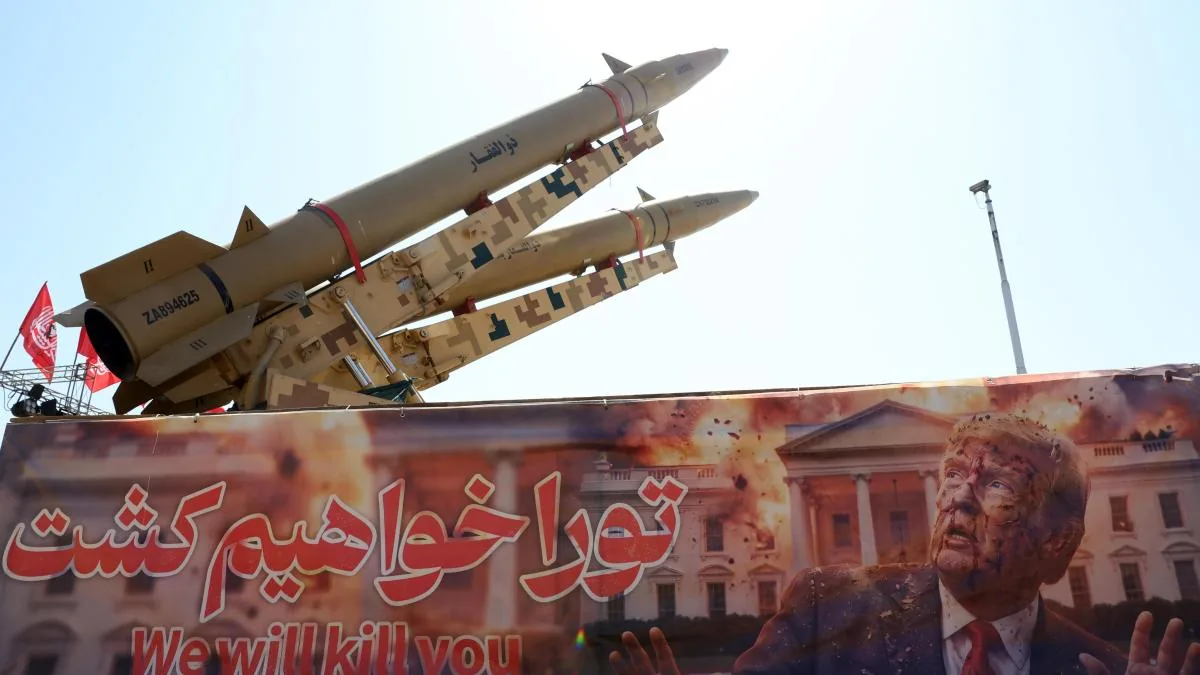
The U.S. president again announced on Saturday that the United States was postponing a new attack against Iran, provided that a deal is reached “quickly” to end Iran’s nuclear ambitions and reopen the Strait of Hormuz. It is at least the tenth reversal since the war began on February 28.
On the social network Truth Social, Trump said that Iran and other countries in the region had asked him for time to close a pact that would lead to the “immediate, complete, and total” reopening of the strait and the end of “the Iranian nuclear threat.” “I have agreed to cancel the attack, subject to being able to reach an agreement quickly,” he wrote, without specifying which countries had requested it. The message came after a call with Saudi Crown Prince Mohammed bin Salman, who urged to “prioritize dialogue” to reduce regional tension.
Tehran, however, denied hours later having asked for anything. The Mehr agency called Trump’s version a “new lie” and assured that the Iranian armed forces are “on maximum alert and prepared for any eventuality.” Semi-official media like Kayhan openly mocked the president, stating that “he has backed down once again, after a week of bluster and threats.”
Israeli Energy Minister Eli Cohen wanted to make it clear that the possible truce does not change Israel’s stance: “With or without an agreement, and regardless of any external commitment, if Iran tries to resume its nuclear program or advance its ballistic missile industry, we will act and attack.” Trump’s own announcement, in fact, does not mention either the nuclear program or the missile program, the two targets that Washington and Tel Aviv set at the start of the war.
Read more Six dead and 30 injured in a collision between a bus and a motorhome in Italy
Behind the back-and-forth, according to several reports published in recent weeks, there is a less epic reason than diplomacy: the shortage of interceptors. The head of the U.S. European Command, General Alexus Grynkewich, warned the Pentagon that without a new naval destroyer, Washington will have to choose between defending its own territory or Israel’s against Iranian missiles. According to The Washington Post, the U.S. has already fired about 300 interceptors to protect Israel during the war, compared to 190 launched by the Israeli Army itself, including more than 200 THAAD missiles, half of the Pentagon’s total arsenal. “Israel is not capable of fighting and winning wars on its own, but no one knows it, because they never see the backstage,” summarized a U.S. official quoted by the newspaper.
Added to this is the escalation at sea: Yemeni Houthis have begun threatening the Bab el-Mandeb Strait, and this weekend two incidents were reported off the coast of Oman, one of them with a projectile that damaged the engine room of an oil tanker.
While negotiations—led by Jared Kushner, Steve Witkoff, and Marco Rubio—continue without visible results, the price of oil has already risen 24% since the April ceasefire was broken. For analysts consulted by Reuters, it will continue to rise. For the Jerusalemites in the café, however, the only certainty is that if there are no missiles tomorrow, they will go to the square.
At least 18 dead in Israeli attacks in Gaza despite ceasefire
Israel bombed Gaza for the second consecutive day on Sunday, killing at least 18 Palestinians, according to medical sources, despite Donald Trump’s announcement of a decisive breakthrough to implement the ceasefire. Since dawn, the Israeli air force struck Gaza City, Deir al-Balah, and Khan Yunis, in the worst daily death toll in weeks. Among the attacks, a married couple and their 9-year-old son died in Mawasi; another couple, along with their son, died in a bombing in an apartment in Gaza City. The Israeli Army stated that one of the attacks in Deir al-Balah targeted two commanders of Hamas’s elite Nukhba force. Since October, at least 1,230 Palestinians have died in Israeli attacks during the truce, compared to four Israeli soldiers.