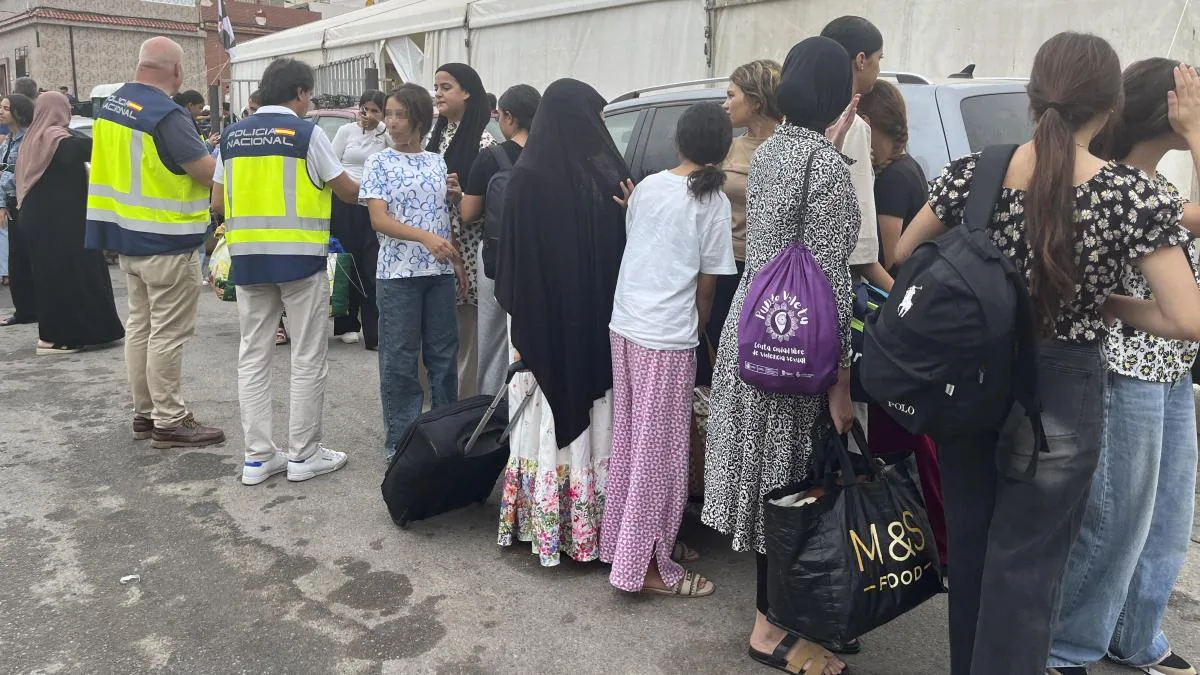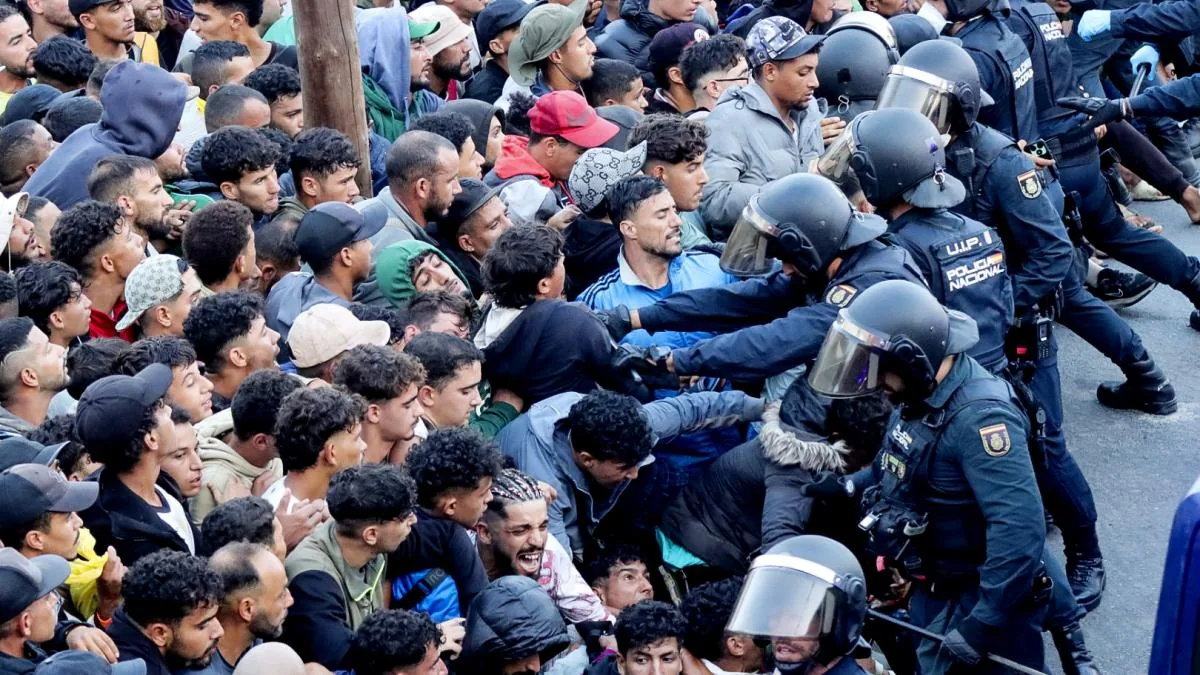
The Moroccan Ministry of the Interior shook off any responsibility on Sunday night for the massive entry of migrants last week in Ceuta through the Tarajal breakwater and attributed the crisis to a combination of factors: both the mafias that traffic people and the misinformation on social networks following a Supreme Court ruling from early July.
Read more D-Day becomes a World Heritage Site
In a statement published by the Moroccan agency MAP, Rabat defined itself as a “reliable” partner and pointed out that the influx of migrants was not the result “neither of spontaneous circumstances nor of circumstantial factors,” but the result of “the malicious exploitation of the digital space and the activity of human trafficking networks” along with “the promotion of misleading information and misinterpretations that accompanied the recent decisions issued by the Spanish judicial authorities.”
A message that was also shared this Monday by the Minister of Foreign Affairs, European Union and Cooperation, José Manuel Albares, during an interview on RTVE. “There was unusual activity on social networks that amplified and distorted the Supreme Court ruling,” Albares maintained, who described Morocco as a “reliable” partner and highlighted its “collaboration” in the return of all those people to Moroccan soil.
In fact, he stated that the “vast majority of people who crossed the border” have already returned. According to Albares, Morocco “from the first moment” offered “its collaboration to try to prevent that flow of people and, above all, so that they would return immediately as is happening.” Likewise, the Foreign Affairs minister guaranteed that “up to the last one” who crossed the border will return to Morocco and accused other European governments as well as PP and Vox of “disloyalty.”
Read more Peace seeps into Russia’s elections
Additionally, the Moroccan government pointed out that 11 people had died in its waters, most drowned trying to swim into Spanish territory, and estimated that 40,000 people participated in the crossing, a figure lower than that handled by the Spanish authorities. On the other hand, it adds that entry to Melilla was prevented for 1,135 people.
The statement reiterates that Morocco is committed to fighting illegal migration and calls for sharing the burden that migration management entails. In that sense, it concludes that Morocco “will continue to be, as its partners expect, a reliable and responsible partner, committed to strengthening international cooperation and coordination in the fight against irregular migration and human trafficking.”
Read more The final decision of Vinícius and Real Madrid tests their loyalty