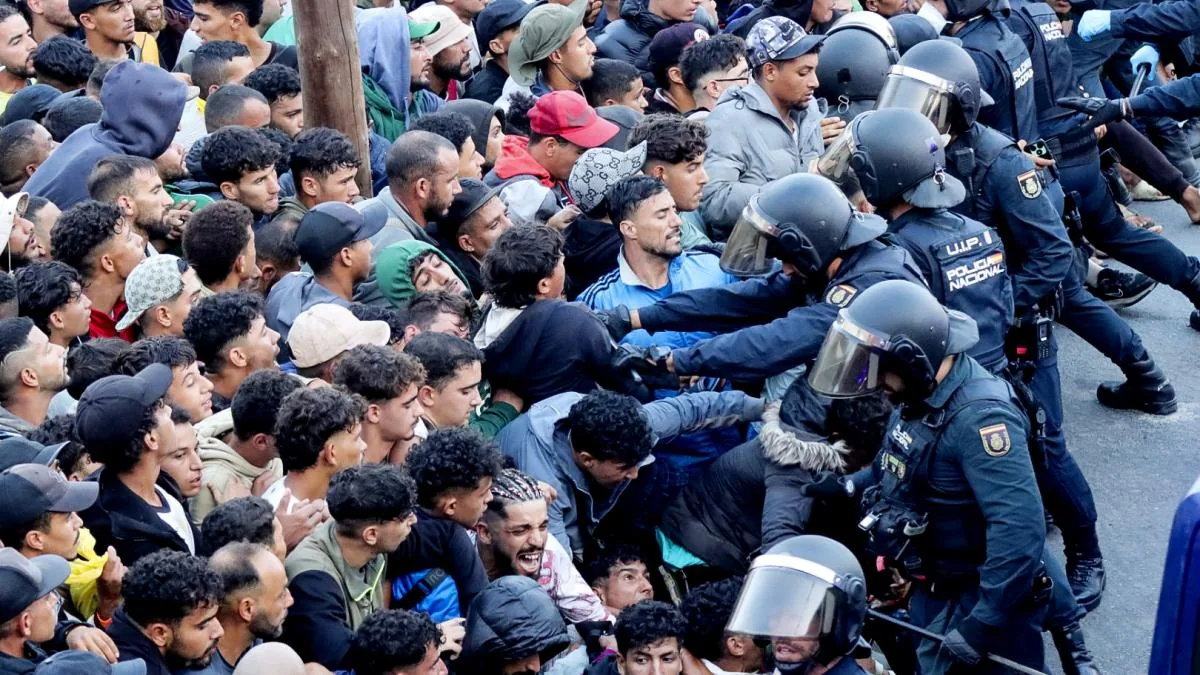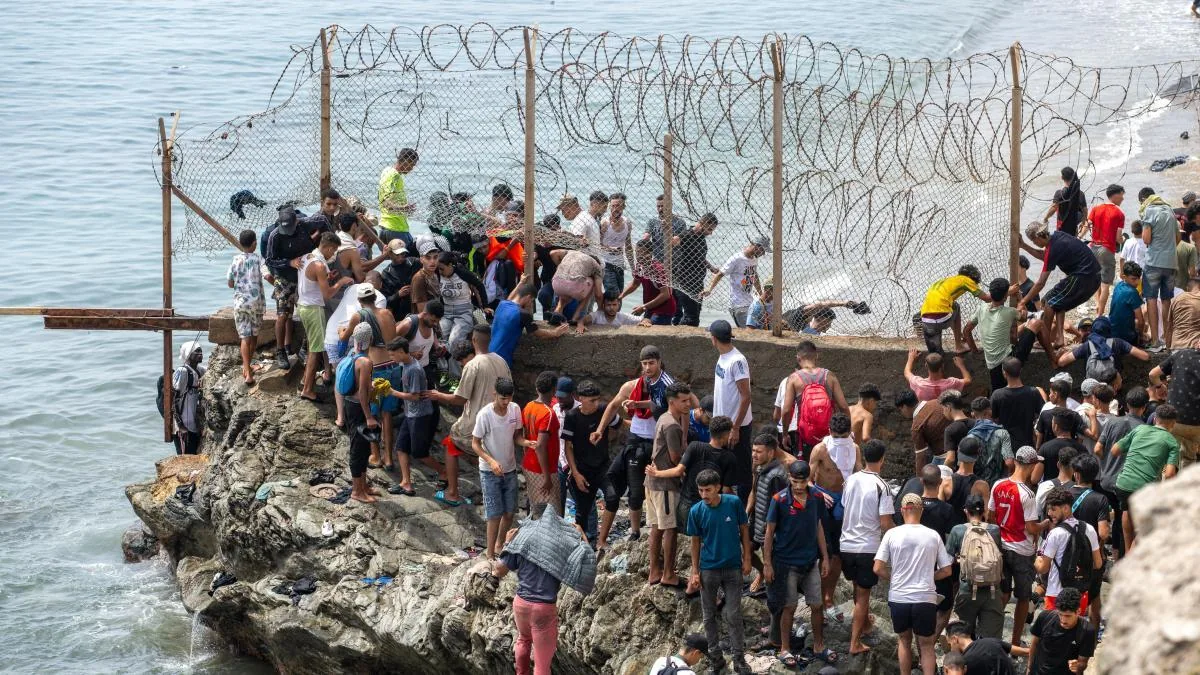
The French government was one of the members of the European Union that did not sign the letter that censured Spain’s immigrant regularization policy and linked that strategy to the crisis that occurred this weekend in Ceuta. The letter had been promoted by the far-right government of Giorgia Meloni and by other European countries such as Germany.
Read more Flick on the striker: “I have total confidence in Deco. We know we have to do something”
French diplomatic sources have explained this position today and defended their actions in which they offered help to their southern neighbor amid the crisis in the African city, a response based on “solidarity and efficiency.”
The ministers of the 27 countries of the Union will meet tomorrow to address this crisis and the request from Italy and Denmark to suspend the Schengen area for flights coming from Spain.
These sources highlight the important role played by the Moroccan authorities which has helped reduce the impact of the human avalanche that occurred in Ceuta and to a much lesser extent in Melilla.
They also state that France did not adhere to the letter signed by 22 member states because it considers it to have an essentially political character and sought to instrumentalize the situation in Ceuta to censure the Spanish government’s migration policy without solving the problem in cooperation with Morocco.
Read more Robles demands Morocco investigate the Ceuta crisis and defends intelligence services
These sources also recall that although Ceuta is part of European territory, it has a different status within the Schengen system and that, consequently, entries and exits from this territory, to or from the continent, are subject to greater controls than internal borders.
However, French authorities have increased traffic control measures at border posts with Spain, which does not at all mean a suspension of the Schengen area as proposed by the Italian government of Giorgia Meloni.
Finally, these diplomatic sources recall that incidents like the one in Ceuta have occurred in other regions of the continent such as the border with Belarus or the Italian island of Lampedusa, where in all those cases European governments offered a solidarity response within the Union’s common space.
Read more AstraZeneca and Bristol Myers Squibb are studying a $400 billion merger