War and the change of an era begin with a helmet thrown on the ground. When in January 2025, the rebel group M23 invaded the city of Goma, in the east of the Democratic Republic of Congo, Congolese army soldiers abandoned their uniforms and helmets in their chaotic flight. Without equipment that could betray them, there was less chance of being shot in the temple. The fear lasted for weeks: the military material remained scattered in the streets – no one wanted to pick them up and be mistaken for a soldier – and it became the symbol of a sustained change of times.
Read more France warns of a political nature in the letter from the 22 EU countries regarding the Ceuta crisis
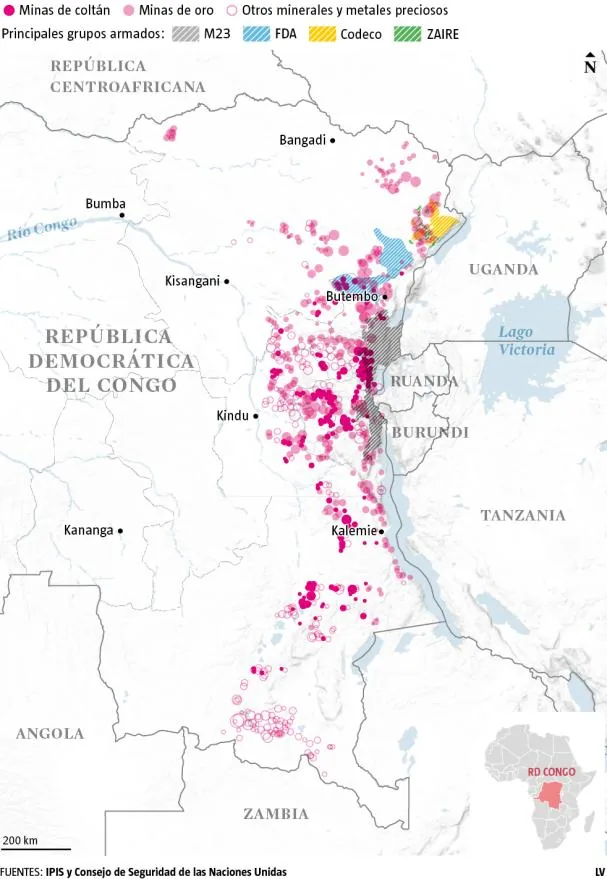
Fiston Beni, a young man in his thirties in charge of a grocery store facing Lake Kivu, dressed as a futurologist to explain to this journalist what was going to happen. “These will not leave, M23 has better weapons. I see it impossible that they can be driven out,” he said. Fiston was right. Since then, despite peace negotiations in Doha or Washington, the group supported by Rwanda, shaped like a next-generation army, has consolidated its invasion: it has doubled its presence in a territory equivalent to half of Catalonia and has established a parallel state with the creation of its own administration, migration and customs posts, electricity, water and garbage collection providers, an alternative financial system to circumvent sanctions, and the appointment of governors, mayors, and even its own judges and police.
Researcher Yale Ford, from the think tank Critical Threats , speaks of a before and after. “The comprehensive state-building project of M23 represents a significant change compared to previous insurgencies backed by Rwanda.” A group of United Nations experts confirmed a few days ago the new de facto state, built in a climate of terror, with summary executions, arbitrary detentions, and censorship.
But such a robust presence is not explained by the official claims of M23, which asks for protection for Congolese Tutsis or the neutralization of an armed group founded by perpetrators of the 1994 genocide, nor by Rwanda’s will to create a security perimeter on its borders. The war being fought in eastern Congo is explained by money: since the M23 movement reemerged five years ago, it has used violence to control key points to exploit the extraordinary mineral wealth of the region. Although the area is rich in diamonds and gold, there is one mineral indispensable to understanding the resurgence of violence that causes more than a hundred civilian deaths each day: coltan.
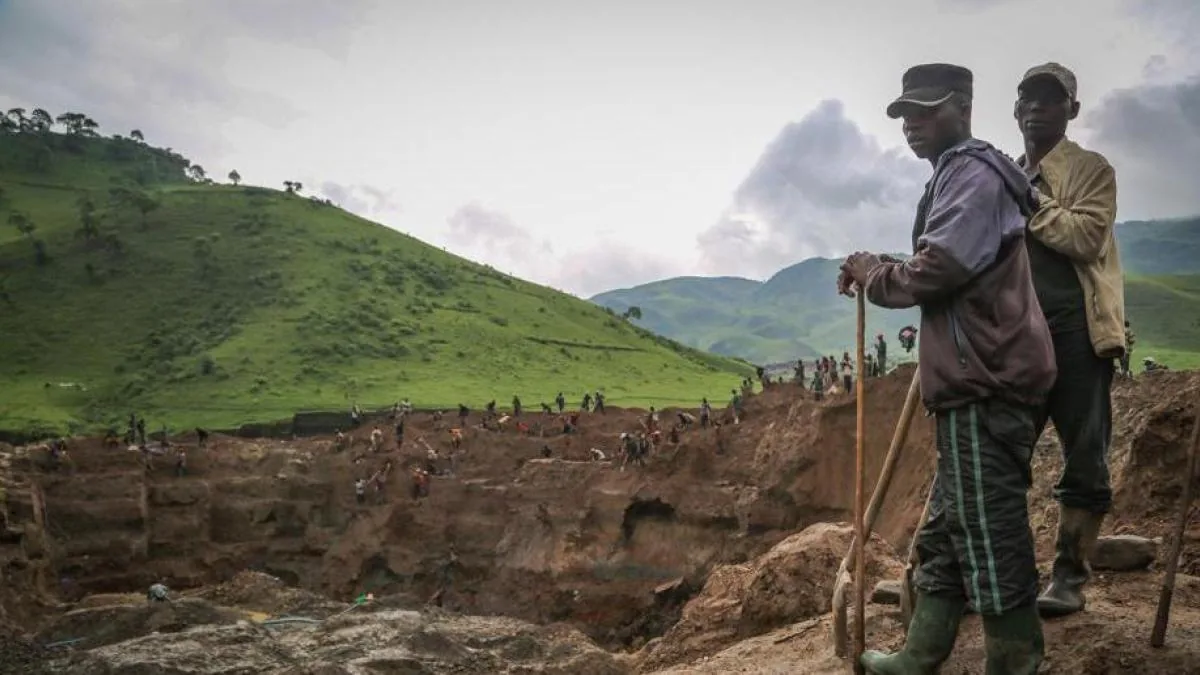
There is also an essential place: the Rubaya mine, which the group has controlled since April 2024, and houses between 15 and 20% of the world’s reserves of a mineral indispensable in mobile phones, computers, and other electronic devices.
The Kigali government has multiplied the sale of coltan to China from mines like Rubaya, in rebel hands
An investigation by the organization Global Witness points to the magnitude of the plundering by M23, which controls the entire supply chain, such as charging fees or tolls on roads that carry the mineral across the border, the so-called Grand Barrière , towards neighboring Rwanda and from there to the ports of Mombasa and Dar es Salaam. The smuggled coltan is then sold to China, Kazakhstan, and Thailand and, once refined, ends up in products from companies like Windows, Toyota, Amazon, Sony, or Nvidia.
Read more Flick on the striker: “I have total confidence in Deco. We know we have to do something”
The M23-Rwanda connection is direct. According to GW, in just one year, 1,400 tons of coltan have been extracted from Rubaya, which gives M23 a monthly profit of 800,000 dollars. Since the armed group governs the mines in the area – it also controls gold and illegal logging – Rwanda’s coltan exports have multiplied by 2.5 and agreements between Kigali and Beijing have skyrocketed, with a 45% increase in coltan purchases from its Rwandan partner.
In reality, the Rubaya mine is just the tip of the iceberg of a directed plundering that the establishment of a parallel state allows to refine and expand to more minerals, such as cobalt, key for electric car batteries, or uranium from mines in the southeast of the country that uses clandestine channels of the border controlled by M23.
Neither Rubaya nor the rebel invasion are exceptions in Congo’s history. The Congolese curse lies in the fact that throughout history it has had the natural resources that the global economy demanded. First, it was human beings. When the discovery of America led to the establishment of large plantations, the demand for strong muscles was met by sending millions of slaves, many from the Congolese area, in inhumane conditions to the New World. Years later, with the ruthless Belgian King Leopold II leading the pillage, it was rubber, vital for tires and electrical installations in Europe. In the industrial era and World Wars of the 20th century, when the demand for armaments grew, the global economy turned to Congolese copper and uranium. The abuse continued. After colonization and the assassination of politicians seeking change like Patrice Lumumba, the situation worsened: Mobutu’s dictatorship and the Congolese wars of the late 90s led to chaos ideal for the plundering of gold, diamonds, and other riches.
M23, supported by Rwanda, already controls a mineral-rich territory equivalent to half of Catalonia
That disorder, which continues to this day, embraced the digital era, with the rise in demand for tantalum or coltan, and now opens the door to an energy transition, eager for Congo’s cobalt, with half of the world’s reserves.
There is one last aspect to understand the Congolese curse: neglect. Last year, only 27% of the funds needed to address its humanitarian crisis were obtained, the lowest figure in ten years. The world has grown tired of Congo. A decade ago, the international community sent 55 dollars per Congolese in need of aid. Today the figure does not reach 33.
Read more Robles demands Morocco investigate the Ceuta crisis and defends intelligence services