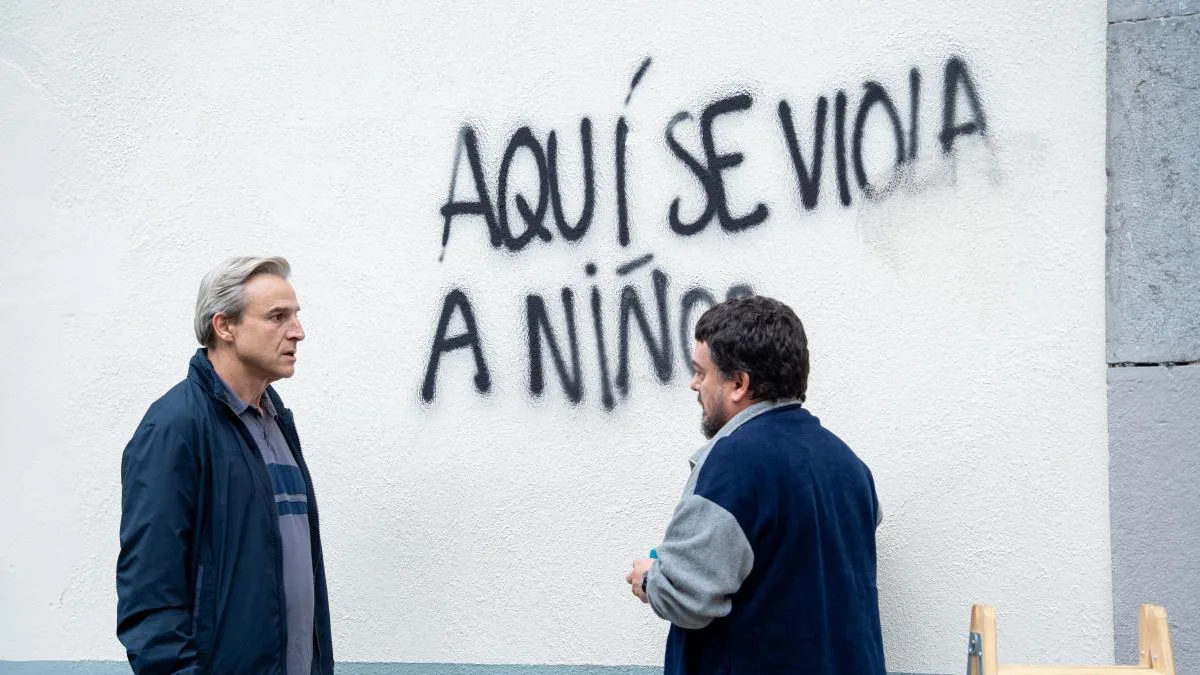
After Los domingos, comes La luz, which will light up cinemas next Friday. If the first film, by Alauda Ruiz de Azúa, showed from different points of view the reasons that can push a modern-day teenager to shut herself away in a cloistered monastery, the no less extraordinary film by Fernando Franco, director of great films like La herida or La consagración de la primavera, tells us about a priest, masterfully played by Alberto San Juan, trapped by his past as a sexual abuser.
Read more A snake intrudes among the bathers at Platja de Palma de Mallorca
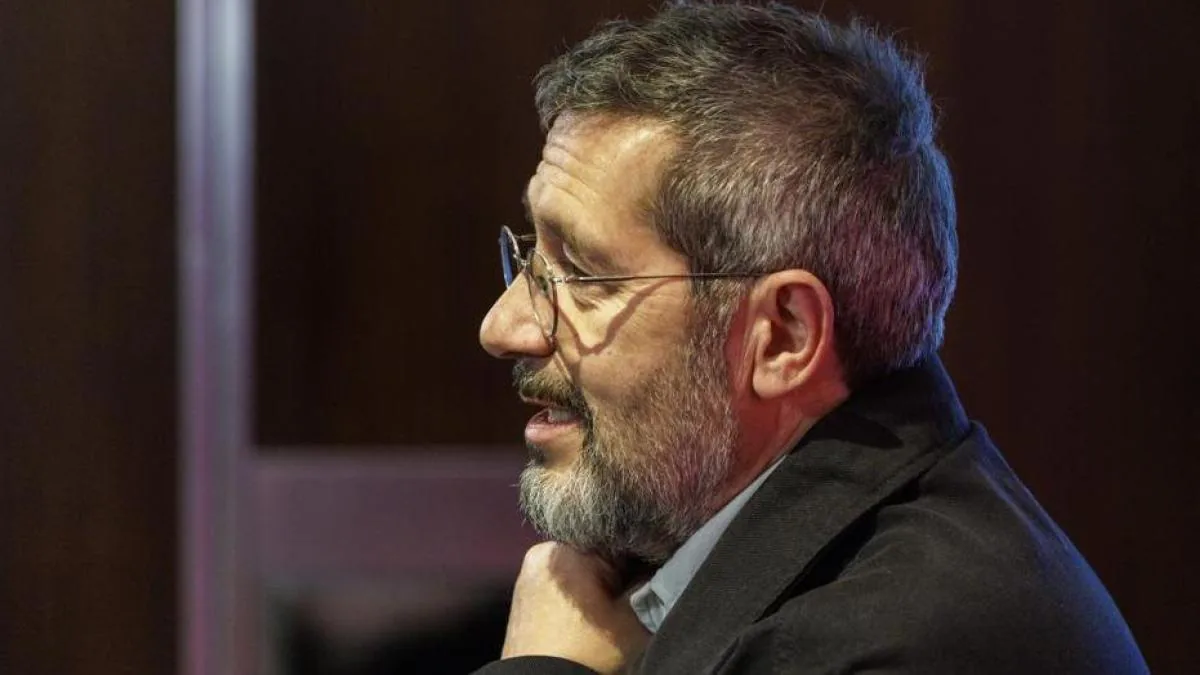
“Both films are very respectful of the Catholic faith,” comments the Madrid-born actor, “but in both, the Church is observed as an institution so that each viewer can draw their own conclusions.” In La luz, the pedophile priest evolves towards what appears to be genuine repentance. “I prepared the character from that perspective. But once the film was finished, not all viewers who have already seen it perceive sincere repentance. Each one interprets it differently, and that is because Fernando, like Alauda, is not a director who likes to give closed answers. They prefer to share questions with the audience.”
One of the film’s many successes is that San Juan does not portray Manuel, the wayward priest, as if he were a villain: “To commit a monstrosity, you don’t need a monster.” It is difficult to feel compassion for confessed pedophiles who appear in documentaries like Albert Solé’s Examen de conciencia, and even less to see them through the innocent eyes of children when they approached them. “In many testimonies of those abused by priests as children, it is reiterated that the figure of the priest, whether a camp counselor, spiritual advisor, or history teacher in a religious school, represented protection, and also transmitted the word of God, so whatever he did could not be bad. Even if he was putting his hand between your legs. This generates a lot of confusion in the victims, with an average age of eight or nine years, who wondered why they suffer if it can’t be bad, since they have been chosen by a representative of God.”
To commit a monstrosity, you don’t need a monster”
One might ask if they are sick, because if they were, they would need a cure and our compassion. For San Juan, in any case, celibacy acts as an aggravating factor: “Sexuality constitutes us in a substantial way. If we cannot live it freely, that intoxicates and sickens us.”
Then there is impunity: “The system of cover-up encourages crime. If an abusive priest, when discovered, is only transferred to another diocese, where perhaps he can continue doing the same thing, he thinks that his superiors protect him and that even God doesn’t see it as so bad. The combination of repression and impunity can generate the most terrifying impulses, and for that, you don’t need a monster or a psychopath. Just someone who stops seeing the other, even a small child, as a human being, but rather as someone at the service of their darkest impulses.”
Read more Ferrero, about Carlos Alcaraz: “With me, he wouldn’t have bought a 9 million yacht”
Embodying a character with these characteristics can take its toll: “Making a film where you appear in every sequence and the weight of the story rests on you is already mentally and physically exhausting. If it’s also a drama, even more so. And if you have to delve into your darkest parts, into your own feelings of shame, guilt, fear, well, it’s not the most pleasant. When I made the film, instead of going out to party at night with my colleagues and disconnecting, I would go to my room to read the Bible and continue watching documentaries. I finished the shoot in a state of sadness and with a very strong slump, something that had never happened to me before. It left me affected for a long time.”
When I made the film, instead of going out to party at night with my colleagues and disconnecting, I would go to my room to read the Bible”
The sacrifice has been worth it, as San Juan imbues that parish priest, who evolves from “hunter hunted” to repentance, with infinite nuances. “That journey is one of the most interesting things that can be observed in a human being. He is someone who has committed a very profound and utterly irreparable harm. What does he do in the face of that reality? How does he live with it? Can he keep it hidden and not be affected by it? Once he fails to keep it hidden, how does he react? What does he do about it?”
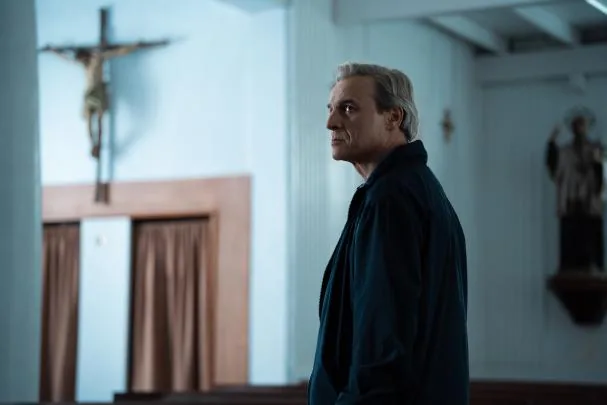
At the discussion during one of the first screenings in Seville, “one of the spectators stood up and confessed that he had been abused at fifteen. He said that La luz had deeply moved him and prompted him to say it right there. I believe it is a film that the episcopal conference should take very seriously and that it should be seen within its sphere. Just as they have shown Los domingos in convents and religious schools, La luz should also be screened in parishes and seminaries. It is a debate that was already open, but La luz can amplify it, and perhaps, in the future, there will be a priest speaking about all this from within.”
Manuel is a utopian character, as cinematically plausible as he is difficult to find in the real world, as he “calls on his colleagues for anyone who has committed a reprehensible act, whether by action or cover-up, to step forward and confess. He doesn’t even point fingers at anyone. He could, but he doesn’t. It would be wonderful if it happened in reality. That it has never existed does not mean that it cannot come to exist. If we thought that what we haven’t seen yet will never happen, there would be no room for hope.” After all, nothing contradicts the values of Christianity more than pedophilia: “Jesus Christ walked with the apostles, but above all with children.”
Read more Rosalía suspends the LUX Tour due to a “family emergency”