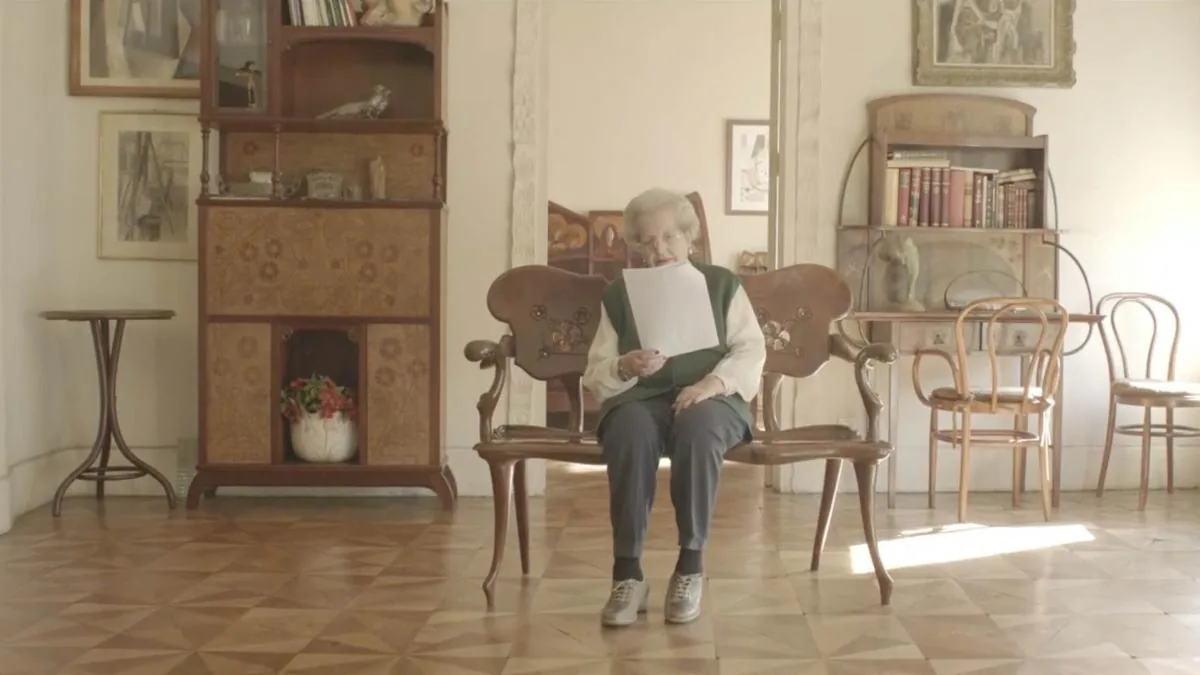
For decades, Carmen Burgos-Bosch opened the doors of her apartment in La Pedrera to the curious, architects, scholars, and admirers of Antoni Gaudí. She showed them the undulating ceilings, pointed out details that went unnoticed by others, and shared anecdotes of a life spent among some of the most celebrated forms of modern architecture.
Read more The most exclusive houses in Mallorca, owned by artists and creatives, from Sybilla to James Costos
That unique experience is the starting point of Living with Gaudí, Pablo Burgos-Bosch’s documentary which will have a special screening today, July 23, at 8:15 PM at the Verdi cinemas in Barcelona. The film, originally presented on March 9, 2020, in the La Pedrera auditorium, just three days before the country went into COVID lockdown, saw its run cut short when festivals, venues, and cultural activities abruptly closed.
“It was the last event held in Barcelona before everything stopped,” the director recalls for this newspaper. “The reception was enthusiastic, but the pandemic left the film in a limbo from which it never fully recovered.” Paradoxically, years later Netflix added it to its catalog in more than forty European countries, although it cannot be seen in Spain.
Today’s special session at the Verdi will feature a presentation by the director
The story began in a much more intimate way. Burgos-Bosch was then working as an advertising creative and starting to write scripts when he asked his aunt for permission to set up for a few hours in her La Pedrera apartment and work there. Carmen had just been widowed and had plenty of space in the home she had shared for decades with her husband.
“Working there was something very special,” the filmmaker recalls. “You saw how the lights changed, how they bounced off the walls, the curves of the ceilings…”. In that setting, he began to write a fiction set in the building. But reality ended up prevailing over the script.
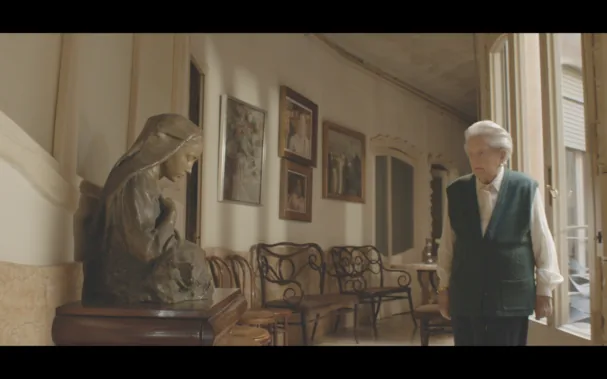
One day, Carmen returned from the doctor with a devastating diagnosis: a neurodegenerative disease that would eventually rob her of her memory and speech. It was then that Burgos-Bosch understood that the story he had to tell was not the one he was imagining, but the one right in front of him.
“I suggested making a documentary about her memories in La Pedrera,” he explains. The initial response was negative. “She told me it was already too late.” However, a few hours later she returned with a folder full of clippings, documents, and notes accumulated over the years. “She told me: ‘Get to work’.”
Read more Is it possible to replace the UN? The decline of global institutions
Read also
That decision allowed an exceptional testimony to be preserved. Because, beyond the universal fascination Gaudí awakens, it has rarely been explored what it’s truly like to live inside one of his creations. La Pedrera is today one of Barcelona’s most visited monuments, but it was born as a house. And for decades it was, simply, the home of families who lived their daily lives there.
That is precisely the approach that differentiates Living with Gaudí from other works dedicated to the architect. “I wanted to do something more human,” Burgos-Bosch points out. “Not just show the work from the outside, but ask myself what living inside a work of art can bring to a person. What it leaves them with, what mark it imprints on their life.”
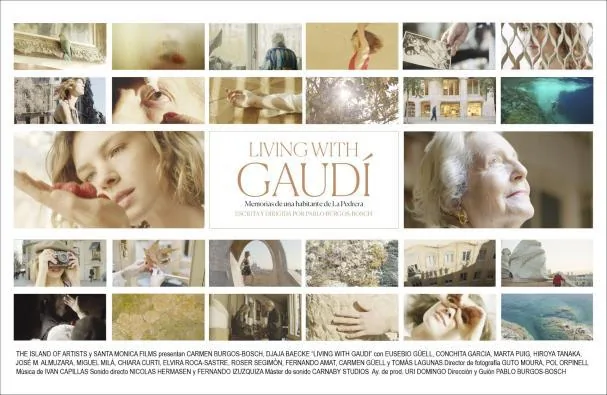
The film also incorporates the perspectives of experts, family members, and Gaudí scholars, but its emotional center always remains with Carmen. The director remembers her as a tireless hostess and a natural storyteller. During the filming, which lasted for years due to lack of funding, she looked forward to each day with enthusiasm. “When we finished, she would ask me: ‘What time are you coming back tomorrow?’. She had a great time. In front of the camera, she was extraordinary.”
Carmen passed away three years ago, when the disease had already advanced irreversibly. The documentary has thus become more than just a film about architecture. It is also an archive of the memory of a woman who dedicated a good part of her life to safeguarding and transmitting Gaudí’s everyday legacy.
For Burgos-Bosch, the project was also a way to approach the architect from a less monumental and more emotional perspective. “Gaudí always tried to convey something greater than the work itself,” he reflects. “Everything is full of symbols, of meanings. I also wanted the film to reach people’s hearts and leave a message.”
Perhaps that is why it is especially fitting that Living with Gaudí resurfaces now, in the midst of Gaudí Year, after having remained for years in a kind of hiatus. After all, the film speaks precisely of that: the importance of preserving what time threatens to erase. The memories of a woman, the secret life of a house, and the unrepeatable experience of inhabiting, day after day, the interior of a masterpiece.
Read more Repsol multiplies its profits by 3.7 in the first half to 2,201 million