It is not an exaggeration to say that almost everything happens in Mallorca. Because, as photographer Ricardo Labougle observes, the largest of the Balearic Islands “is almost like a continent.” The truth is that the island has mountains that are covered in snow in winter and turquoise beaches that are just as good as those in the Caribbean. In addition to cliffs, bays, capes, valleys, plains, tiny villages, and cities as splendid as Palma. But above all, Mallorca, as Labougle points out, “possesses an exceptional cultural richness, the result of a legacy of centuries of invasions and different inhabitants. It has always been the richest and most important of the archipelago, and its architectural identity is a world apart: Palma, dominated by its great Gothic cathedral. The feudal ‘possessions’. The monasteries, such as Valldemossa and Lluc. The gardens… The feeling is that the entire Mediterranean has passed through there,” explains the photographer in a telephone conversation with Magazine.
Read more Is it possible to replace the UN? The decline of global institutions
Labougle has been photographing interiors around the world for more than 25 years. Born in Buenos Aires and based in Spain for decades, he is considered one of the essential figures in this field. A profession in which, as he says, he started almost by chance: “First I studied Business, although while I was doing my degree I also studied photography, which always interested me.” His aesthetic background came from his environment: “My mother was an antique dealer and also decorated, and I worked with her while I was studying. I started by taking portraits, but suddenly, I had to photograph a house for an Argentine magazine…”
These were his beginnings, which, in 1996, transformed into a great opportunity when he made his first collaboration with The World of Interiors magazine. “This changed the way I looked at things,” he recalls, “I discovered that a house could be treated almost like a person, that furniture and objects, with light and framing, could tell a story beyond the space itself. And that it was almost not even necessary to photograph its owners, because they are in every piece of furniture, in every detail, in every book… Photographing the house is enough.” The World of Interiors, he adds, always championed photographing authentic homes: “It was never a magazine that brought in furniture for props, not even flowers. What we photographed was what was there. For my career, starting very early with The World of Interiors and discovering that passion for authenticity has been fundamental.”
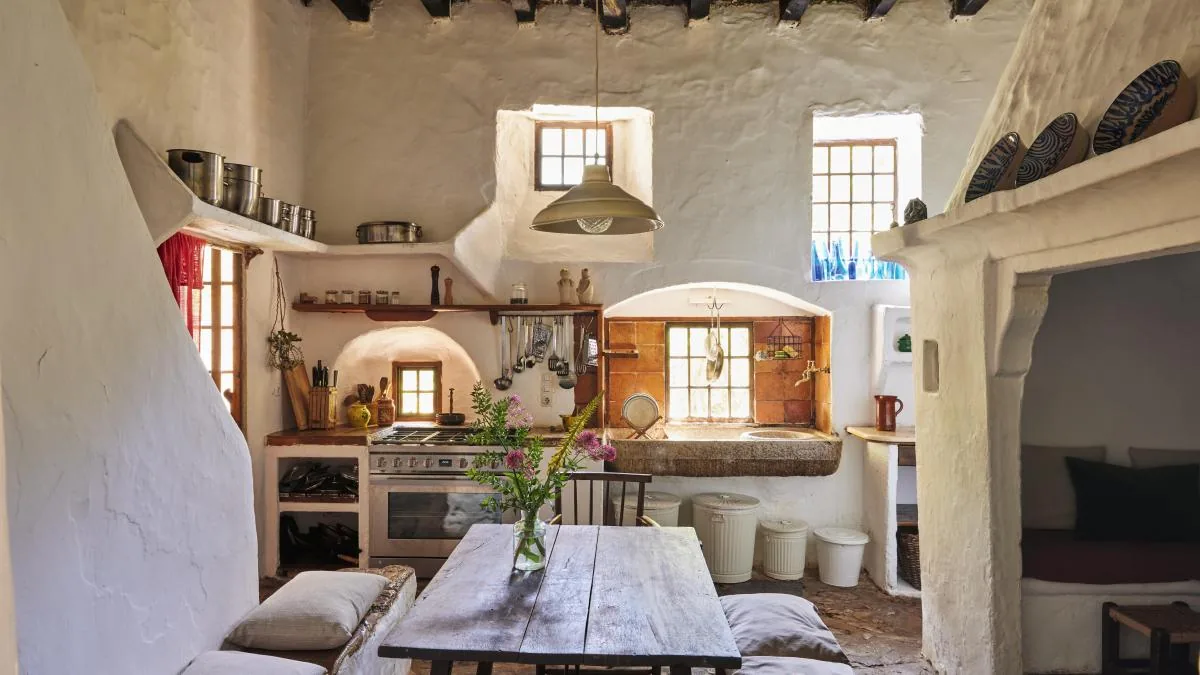
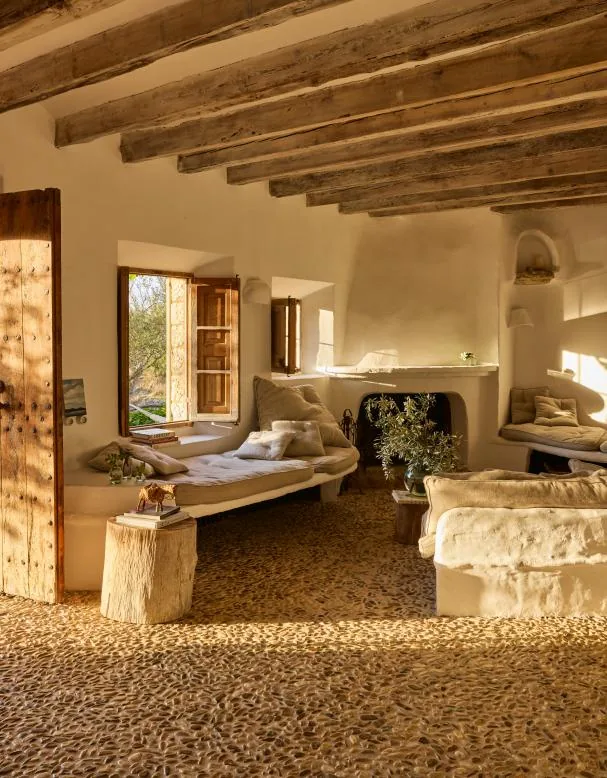
This passion is palpable in his latest book, Inside Mallorca, published by Vendome Press with a prologue by Isabel López-Quesada. This renowned decorator is a friend of the photographer and the creator of one of the seventeen houses featured in the book, photographed without the help of stylists or props. Many have been inaccessible until now, but their owners have opened their doors to Labougle. In part because some have been his friends for years. Like designer Sybilla, owner of Son Rullán, a country house with views of the Mediterranean in the Serra de Tramontana, near Deià, which is one of the author’s favorites. In the 14th century, it was a Templar monastery and today it is an oasis of good taste, respecting the traditional elements of Mallorcan vernacular architecture, such as whitewashed walls, built-in furniture, and river stone floors. “It’s a gem. I think it was a pioneering restoration in connecting the essence of Mallorca and the idea of the land and its organic forms to the interiors. In a way, many new decorators and architects draw inspiration from this house,” says Labougle.
Read more Repsol multiplies its profits by 3.7 in the first half to 2,201 million
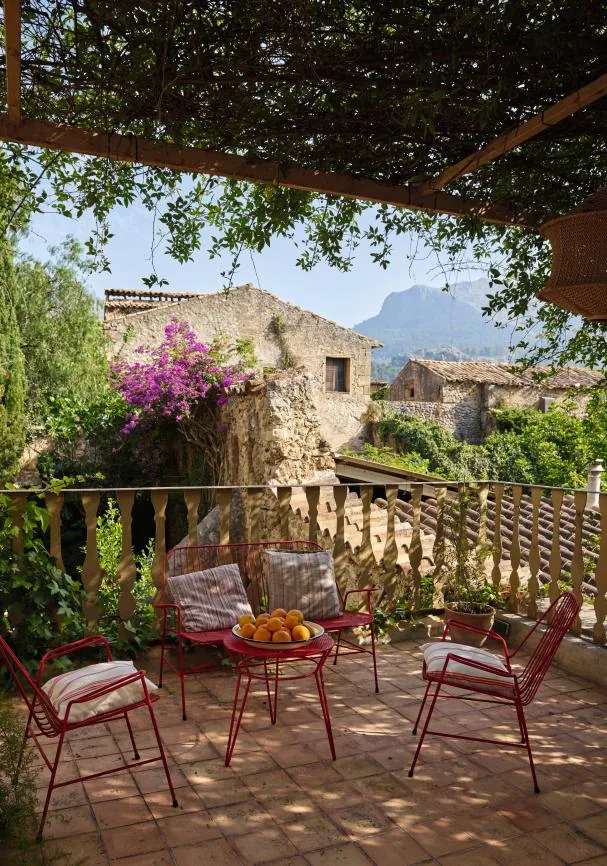
French designer Alexandre de Betak was invited to Son Rullán by Sybilla and was so fascinated by the place that he acquired a property in the same area. He was not the only one; Labougle recounts that Jorge Luis Borges said Mallorca was a place “similar to happiness,” and this appeal not only seduces hordes of tourists but also a select cast of cosmopolitan figures who have settled here. This is a more discreet and certainly more sophisticated invasion, with hosts who have made the island even more fashionable; such as former US Ambassador to Spain, James Costos, and his husband, decorator Michael S. Smith. Their spectacular X’arbet estate combines Spanish, Italian, and French influences with a touch of the East Coast. It has hosted personalities such as their great friend, Michelle Obama.
The home of art dealers Hans and Caroline Neuendorf also opens its doors to artists with residency programs. Designed by architects John Pawson and Claudio Silvestrin, and with evocations of Barragán, it is a powerful demonstration of the power of minimalism. “To take the photos, I had the privilege of spending two days there. I didn’t know I could live so comfortably and happily in such an empty house; I liked it very much,” says Labougle.
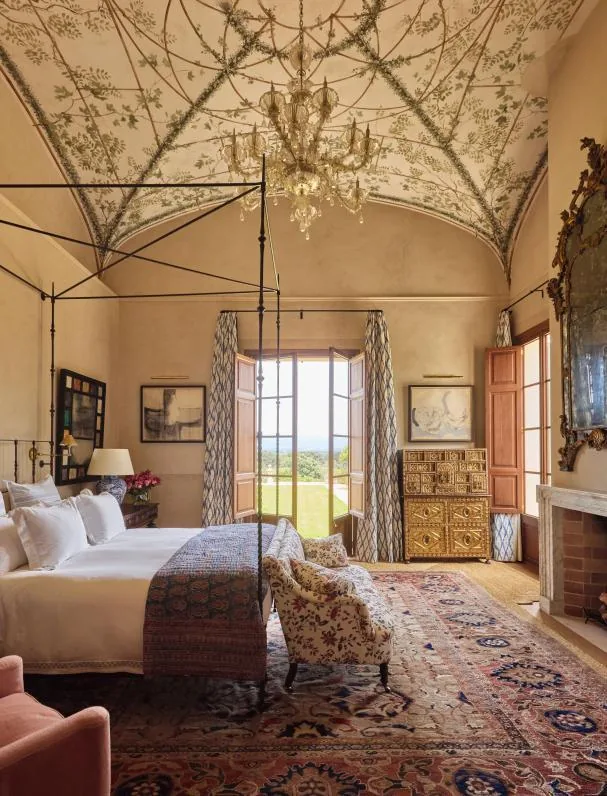
The mansion has nothing to do with another of the photographer’s favorites, the idyllic Can Dionis, the cozy residence of gallery owner Marta Moriarty with a lush garden. Nor with some of the historic ‘possessions’ – the Mallorcan country houses – that also appear in the book. Some are almost castles, like Defla (“oleander” in Arabic), the impressive walled estate of the Counts of Spain in Sineu. Or Sa Bastida, meticulously restored by architect Luis Laplace. Not to mention Son Berga Nou, which the family of María Zaforteza, Countess of Deleytosa, has owned for two centuries. Of course, the book also features houses overlooking the sea: facing the crystalline bay of Formentor, on the Costa de los Pinos, and in the Serra de Tramontana, where the home of photographer Francesco Venturi and model Celia Forner is located. In their own way, each of these houses reflects Labougle’s idea of luxury: “Living surrounded by nature, silence, and views, but especially, by beautiful things that have accompanied you throughout your life.”
Read more Carissa Véliz, philosopher: “Privacy is a form of power, and we are giving it up”