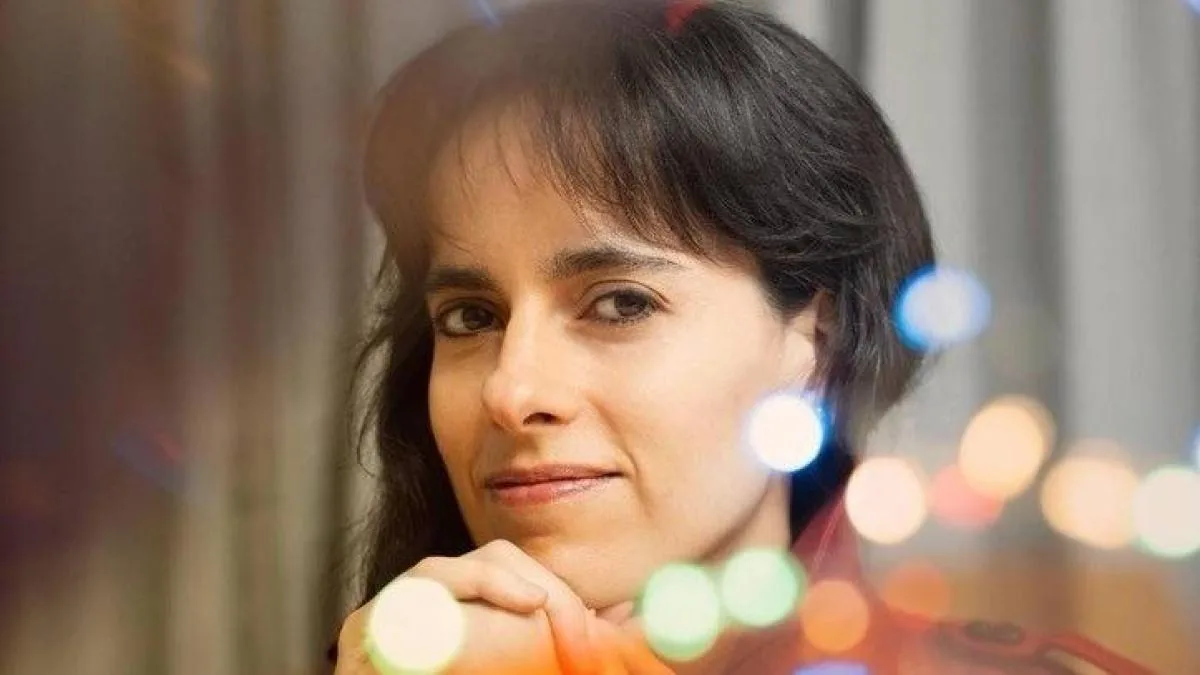
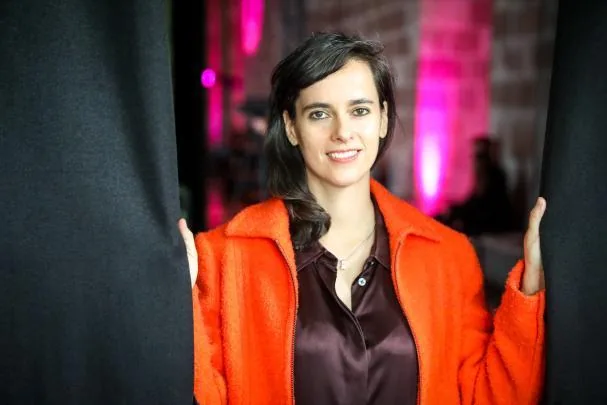
Mexican Carissa Véliz, a professor at the Institute for Ethics in AI and a member of Hertford College at the University of Oxford, has gone from anonymity to being world-renowned. Since Privacy is Power (Debate) was praised by The Economist as one of the best essays of the year, Véliz has become a reference in everything related to digital surveillance. She now collaborates with The New York Times, The Guardian, The Independent, and Nature, among other media.
Read more The phenomenon of men’s choirs to create healthy masculinity
According to this granddaughter of Spanish exiles, protecting privacy means thinking twice before sharing anything, not publishing photos of other people without first asking for their consent, opting for “dumb” devices instead of smart ones whenever possible (“a smart kettle does not necessarily represent an improvement over a traditional one and does pose a risk,” she warns), and stopping the use of Google as the main browser.
I would start by using respectful apps: Signal instead of WhatsApp; DuckDuckGo instead of Google; Proton Mail, not Gmail
Carissa Véliz
Philosopher and privacy expert
Until recently, the British prided themselves on not wanting anyone to look through the keyhole (the “an Englishman’s home is his castle” or “an Englishman’s home is his castle”, could be translated as British irritation at snooping). You, who reside in Oxford, how much of that legendary British discretion would you say remains?
Very little remains! I’m also not sure how deeply rooted this sentiment was or if it was sincere. For a long time, there was also the legend of spies and Agent 007. Before the advent of digital technology, England was one of the first countries to give up its privacy in exchange for the illusion of security that the installation of street cameras brought, something that is also very English. I am disappointed and concerned by the recent custom of placing cameras inside bars, shops, etc., as if they were banks.
You point out that many teenagers cannot even imagine what it’s like to live with privacy. Enlighten them…
It’s a feeling of freedom, of relaxation, of doing things for yourself because no one is watching you; it’s an opportunity for authenticity and to live in the moment.
Read also
Right now, we are conversing, at your suggestion, via Signal, a free messaging application that does not sell personal data. What makes it different from WhatsApp?
WhatsApp is owned by Meta, a company whose business model is based on surveillance, which is why it tries to collect any metadata. For example, who you message, how many times a day you do it, how long your interactions are, and other very revealing information, whereas Signal only collects two pieces of data: your phone number and the last time you connected.
Which surveillance technologies should we fear most? Facial recognition? Personal assistants like Alexa? Robot vacuum cleaners like Roomba?
Firstly, any type of data collection that steals anonymity: it doesn’t matter much if you are being identified by your face, by the way you walk, or by your heart rate. Secondly, I would place technologies designed to obtain the largest possible number of data by making encryption irrelevant, as artificial intelligence agents are doing now, for example. Perhaps the Roomba vacuum cleaner would not fall into either of these two categories, but it is not a technology I recommend because it collects much more data than necessary.
Where should one start to protect privacy?
By downloading respectful applications: instead of using WhatsApp, switch to Signal; instead of using Google as a browser, opt for DuckDuckGo or Qwant; instead of Gmail, stick with Proton Mail and that kind of thing.
You maintain that privacy is a form of power. How do you explain this to students?
In my classes, I explain that privacy protects us, precisely, from potential abuses of power, because the more someone knows about you, the more vulnerable you are.
In Germany, the memory of the Stasi is still fresh, which makes citizens take privacy much more seriously than in other countries
Carissa Véliz
Philosopher and privacy expert
How do you lead by example? Do you have a smartphone, make calls via Zoom, or are you present on any social media?
It’s not about making everything black or white. Of course, I use Zoom when I have no other choice, even if I don’t like it! People would be surprised by the great effect that making small changes for privacy has, even if you’re not perfect. It’s a bit like you can be vegan, if you wish. But… even if you’re not vegan and consume less meat, that already has an effect.
Read more European punishment to the Venice Biennale
You studied Philosophy at the University of Salamanca, where there is a saying that ‘what nature does not give, Salamanca does not lend.’ That is to say, attending one of Europe’s oldest universities is useless if one is not intelligent. Taking that idea to the collective level: would you say that if a society does not culturally value privacy, no data protection law, however sophisticated, will be able to ‘lend’ it to them later?
Yes, completely. Culture not only determines which laws we base ourselves on but also how we put them into practice. There are countries where, on paper, privacy laws are quite good, but when you observe what happens in reality, it is very disappointing. And also the opposite: there are countries where the laws are theoretically worse but have a stronger culture behind them.
Which countries are you referring to?
An example could be Mexico, a country that theoretically has a good law to protect privacy but, in reality, it doesn’t amount to much, and I would say the same for England. An example of the opposite is Germany, whose laws go beyond the European data protection regulation due to its culture and a hypothesis that seems quite plausible to me: the memory of the Stasi (the feared secret police of the former German Democratic Republic) is still fresh, which makes Germans take privacy much more seriously than other countries.
What do you think those who pull the strings of technology are recommending to their offspring regarding privacy?
Much more privacy than they give to other people’s children. In the high echelons of power, the privacy of teenagers and children is very strictly controlled. In Silicon Valley, it is still very fashionable to send children to schools where screens are not used.
When they ask if we have enough freedom to change the future, the right answer is: do we have an alternative?
Carissa Véliz
Philosopher and privacy expert
A few years ago, Facebook founder Mark Zuckerberg insinuated that protecting privacy had ceased to be a “social norm” because, thank God, we had “evolved”…
It doesn’t seem like Zuckerberg was very sincere, as he bought the four houses around his own to have much greater privacy. To make money, Zuckerberg is willing to say whatever is necessary and change his mind as many times as needed, depending on who is in charge in the U.S. It’s important to remember that Zuckerberg’s company emerged after stealing Harvard’s database to classify women based on whether they were attractive or not.
The vast majority of the population is so committed to digitalization that they don’t give a damn about how much bad can be said about it. Why, then, should we protect privacy?
Because without it, there is no democracy. Not protecting privacy means others know your diet, how much money you earn, your education level, your sexual preferences, your political leanings, or your fears, and all of that is used to know what makes you vulnerable so it can be exploited.
You title your latest book Prophecy (Debate) to warn that the place astrologers occupied in antiquity is now occupied by algorithms. Dare to make a prophecy: when do you predict that blind faith in AI will give way to a more critical view?
I won’t! I’m anti-oracles! In any case, it’s something that depends on us: when we want to be well-informed, when we want to take more responsibility for our democracies, then we will have a more critical view. You ask me if this will ever happen, and I answer that history is wonderfully unpredictable.
In “Prophecy” you also recall that in the Middle Ages, it was the court jester who had the privilege of speaking truths for which others had been punished. How would you like to bid farewell to our readers with a sense of humor?
I would like to say goodbye with a couple of comments. The first is that we often take too seriously things said by people who are clearly missing a screw. Secondly, when someone asks if we have enough freedom to change the future, the right answer is: do we have an alternative?
Read more The fat man and the wise monkeys