





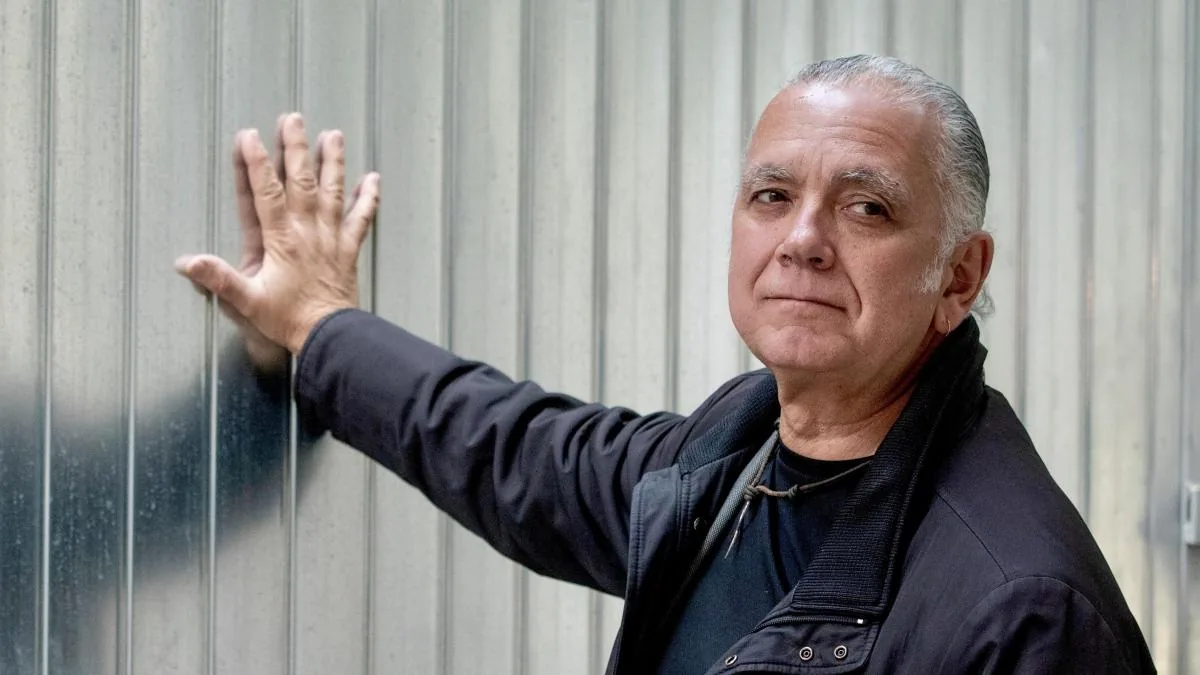
Juan Ramón Lucas answers the phone from the car, on the way to Asturias, the place he returns to whenever he can. At 67 years old, he gets up again between two and two-thirty in the morning to take charge of the mornings at Radio Nacional de España. He accepted the task as a personal challenge, fifteen years after having reached the best audiences of the program. The price is the schedule, the fatigue, and the distance from his people; the reward, he assures, remains the daily pleasure of doing radio and his audience.
Read more B., the great secret of Freddie Mercury
The conversation starts from the profession and delves into what a long career leaves written in the footnotes: the time he did not dedicate to his children, love after 22 years with Sandra Ibarra, hearing loss, and the need to live with one’s own limits. Lucas understands age as a combination of experience and curiosity and advocates dialogue with those in their twenties: “That bond requires openness from both sides: that senior people are capable of letting themselves be taught and that young people understand that we can also teach them.”
At 67 years old and after more than four decades of career, you have returned to the mornings of Radio Nacional de España, one of the most demanding jobs in radio. What led you to accept such a challenge at this point in your life?
Because I still really enjoy doing radio and wanted to take on one last personal challenge: to finish my career on a high note. Fifteen years ago, we reached audiences on Las Mañanas de RNE that had never been achieved before. Returning allows me to try to steer them again before retiring. It’s another country, another society, and another world, but why not try? The price is terrible hours, being less with my people, and being away from Asturias. The daily pleasure of doing radio and the possibility of contributing to the growth of public radio, even though audiences move very slowly, compensate for it.
What do you think you can offer today that you couldn’t offer at 40 years old?
More experience, more serenity, more life. The more life you are capable of living and assimilating, the more life you can share. It’s like someone who insists on falling in love with someone without being in love with themselves; you can’t give what you don’t have.
As you get older, what have you stopped caring about and what have you started caring about much more?
I don’t care at all what people think of me. Before, I worried about judgments; now, I don’t. The only one that matters to me is the audience’s. If I don’t manage to increase Radio Nacional’s audience, the attempt won’t have been successful, but that doesn’t mean I have failed. Other people’s criticism only interests me when it’s intelligent because you learn from it. Now I care much more about health and physical vigor. Mentally I feel more consistent, but physically these fifteen years show. I have always done sports and sought nature, and that helps, but wear and tear is inevitable.
How do you prepare your body and mind, at 67 years old, to get up early and sustain a live program?
As a journalist, being aware that it’s a hard job but very important, you’re in the prime time of radio. Physically, by sleeping. If you don’t discipline yourself to sleep, you feel worse and don’t have the necessary spirit to face what awaits you.
What time do you go to bed to start the live broadcast at six in the morning?
At eight in the evening. I get up between two and two-thirty, try to take a nap, and meditate every day. Meditation rests the mind and body because the brain enters a state very close to sleep. I also do sports and try not to disconnect from nature. On my days off, going to Asturias or the sea is disconnecting from everything else.
I have always done sports and sought nature, and that helps, but wear and tear [with age] is inevitable
Juan Ramón Lucas
In a profession like journalism, which constantly privileges the new, have you felt that people looked at you differently because of your age?
Yes, of course. But I can’t control that. I am the age I am and I don’t want to back down. I am a 67-year-old man who does radio alongside people in their twenties.
Age brings experience, but the audiovisual world has changed radically. How do you prevent that experience from becoming rigidity?
There is something my generation must know how to do: have experience, but also critical spirit and desire to learn. I know well an audiovisual world that almost no longer exists; if I tried to impose that knowledge above what young people, technology, or social networks can bring me, I would be wrong. Camarón de la Isla wouldn’t have changed flamenco without knowing it deeply, but also without understanding that he had to take it in another direction and innovate. Applying experience without stopping learning, that is the formula.
What does bringing senior professionals and young people in their twenties together in the same team contribute to radio?
That bond requires openness from both sides: that senior people let themselves be taught and that young people understand that, although we come from another era, we can also teach and that experience contributes a lot. I have formed teams that work like this and it’s much more fun.
Also read
You have acknowledged that you didn’t live your three children’s childhood as closely as you would have liked. Is that one of the big prices you have paid for your career?
I am relatively satisfied with the life I have lived, but that is my drop of bitterness. I can’t complain, although it weighs on me. I also don’t blame the profession for my personal failures; the fundamental responsibility is mine, not the job’s.
Read more The gastronomic festival that turns Andorra into a brand story
Looking back, what would you say to the young Juan Ramón who had just had his first daughter?
Not to get distracted, that what matters is your people. Learning to love yourself and to love those who love and need you is essential. We usually know what matters if we listen to and attend to our intuition. I would say: “Spend more time with your daughter. Fight for your profession, but don’t look for excuses in it not to be with her.”
After 22 years with Sandra Ibarra, what have you learned about love?
That a relationship continues to be built 22 years later and that it must be based on trust. It’s not a straight line; it’s life itself, with good moments, bad moments, and disagreements. We have stayed together because we have known how to listen, understand, and let the other live, and because the initial enthusiasm gives way to serene closeness. There have been moments of “this is over,” but we have always found something to hold on to and have fallen in love again.
To the Juan Ramón who had just had his first daughter, I would say to fight for his profession, but not to look for excuses in it not to be with her
Juan Ramón Lucas
Your commitment to the Sandra Ibarra Foundation has brought you closer to people who have survived cancer. What have they taught you about fragility and the will to live?
Above all, to value life. As Sandra says: “Give me health, I’ll take care of the rest.” Those who don’t have health teach you the most beautiful part of the human condition and also the fragility of life. Their example and Sandra’s drive, who appears delicate but is extremely strong, have taught me the value of the present, solidarity, and science.
You have also said that you lost much of the hearing in your left ear. For someone who has lived by listening to others, how did you accept that limitation?
I never fully accepted it until, at Sandra’s insistence, I put on a hearing aid and became aware of what I was missing. It’s another life lesson: when you think things have no remedy, something can appear that proves you wrong. Resigning yourself is accepting the condition when you have already lost; giving up is the step before losing. You might not lose if you don’t give up.
You practice endurance sports, walk barefoot, and bathe in almost icy water. What do you seek by subjecting your body to these demands?
They have a double aspect: they help me resist better, but above all, they provide me with a connection with myself and with nature. Bathing in a river at two degrees in winter brings me closer to my body. Pushing myself a little, walking barefoot, and being with animals, now with horses, has enriched me emotionally and has been very good for me.
Although you were born in Madrid, you were raised in Asturias and return there whenever you can. What do you find in that landscape as you get older?
Right now I’m heading there and I love Asturias. But I also enjoy the desert, in Fuerteventura or Almería. A desert moves you by its immensity, just as a mountain does by its majesty, and both teach your own limits. In Asturias I learn, live, and feel, but I enjoy any place where I connect with nature. It’s not just the beauty of the landscape, but feeling connected with the whole.
In this stage of your life, horses have become a way to reconnect with nature. What project do you have related to them?
Sandra, my wife, and I are already working on a project that we want to continue developing in the future. We seek to create experiences in which the horse is a gateway to nature and helps people reconnect with the world we come from. We also want to promote a relationship with the animal based on trust, not discipline.
Bathing in a river at two degrees in winter brings me closer to my body and being with animals, now with horses, has enriched me emotionally
Juan Ramón Lucas
You also directed and presented the videopodcast Sr. Wolf. What did you find in that format?
It was a very gratifying experience that I hope to recover when I finish my stage at Radio Nacional.
Will you know when the time has come to retire?
I don’t know. If the public throws me out, I will leave. Anyway, I see myself in Asturias, with the horses, writing far from the urban environment and enjoying the silence. That doesn’t mean completely abandoning my profession; I could recover a project like Sr. Wolf, which allows me to do what I like without the responsibility of a daily appointment.
To finish, you would say that the passage of time is worth it when…
You have control over it and the real ability to manage it. Time is life. Benjamin Franklin said time is money; José Luis Sampedro said no, time is life.
Read more The Andic family strengthens its holding company and boosts dividends


