









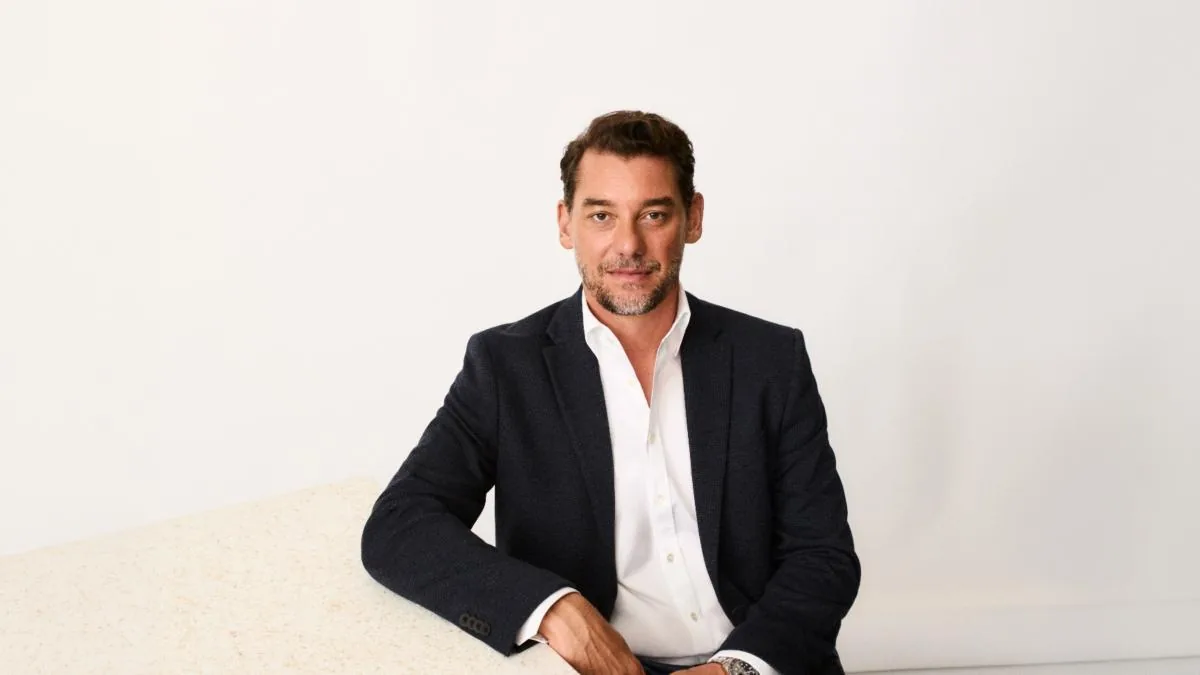
Although Mango is the cornerstone of the Andic family empire, real estate and financial investments are gaining increasing weight. In the last two years, the siblings Jonathan, Judith, and Sarah Andic Raig, heirs of the founder of the fashion firm, Isak Andic, have strengthened the structure of their family office and have taken a turn in the dividend policy of the companies they control.
Read more Sílvia Catà: “We come from turbulent years, a natural and non-traumatic succession is needed”
The latest balance sheet of their holding company, Punta Na SA, recently published in the commercial registry, reflects this change in strategy by the three heirs, with a significantly higher level of activity than in previous years. Investment in 2025 grew by more than 300% annually, reaching 235 million euros, mainly due to the purchase of Mango’s logistics center in Lliçà d’Amunt, which the company previously occupied under a lease, for 170 million euros, and the commercial premises of the Prada store on Paseo de Gràcia, which they acquired after paying 25 million.
Isak Andic’s heirs diversify businesses beyond Mango: real estate and venture capital
At the same time, debt grew to 261 million, an increase of 112%, while turnover reached 62.8 million (+25%). Most of this comes from rents of premises occupied by Mango stores and other operators, which amounted to 58 million euros. In total, the Andic family obtained a profit of 32.5 million with Punta Na last year, compared to 10.7 million in 2024.
An important change in dividend policy is also observed. After a decade without distributing funds, except for two years, the three Andic siblings have shot the dividend to a record 61.7 million, 49 million charged to reserves and the rest to 2025 profits. The money has been transferred to the parent company of the entire family conglomerate, Punta Na Holding, through which they control the holding company and
95% of Mango. Jonathan Andic chairs the parent company, while Judith and Sara Andic serve as vice presidents. The eldest maintains his positions in the family office , unlike on Mango’s board of directors, whose vice presidency he temporarily left in May after being accused of the alleged homicide of his
father.
Additionally, the family transferred another 194 million to the holding through the dividend approved at Mango. Sources from Punta Na explain that this new dividend policy aims to “promote investment and capitalization of their companies” to strengthen the group.
Read more From Halle to Ripoll
These movements and money transfers between the different subsidiaries seem to respond to a treasury reorganization to decide from the parent company how and where to invest, says Belén Alarcón, managing partner of Wealth Advisory at Abante. “It is a very common positive strategy in family offices ,” continues this expert.
From the group’s headquarters, the Andic siblings will be able to determine whether to allocate the money to real estate businesses with their holding company, venture capital with the new investment vehicle they have jointly created, Pikeville, or to their respective personal companies: Black Indigo for Jonathan Andic, Pitaya AR for Judith Andic, and Kiwi AR for Sarah Andic.
Regarding the family’s real estate business, it aggregates a portfolio with an approximate value of 1.2 billion euros, with 130,000 square meters of commercial space on some of the main shopping streets in Spain, Paris, New York, or Vienna, in addition to the 300,000 square meters of logistics space at the Lliçà center. The Andic empire is thus increasingly diversified.
“It seems the siblings get along well”
If the numbers in a balance sheet describe the state of a company, the positions and power balances in the organizational structure indicate the relationship among its members. The Andic siblings had to hurriedly reorganize the structure of the family companies after the sudden death of their father, Isak Andic, whose judicial case remains open. “The way responsibilities were distributed among the different subsidiaries and the subsequent movements show an equitable power distribution, a good relationship among shareholders, it seems they get along well,” says Belén Alarcón from Abante. The family has also maintained the 600 million investment plan for Mango for the 2024-2026 period. The fashion firm’s strategic plan thus ends this year, in which they expect to reach 4 billion in revenue.