





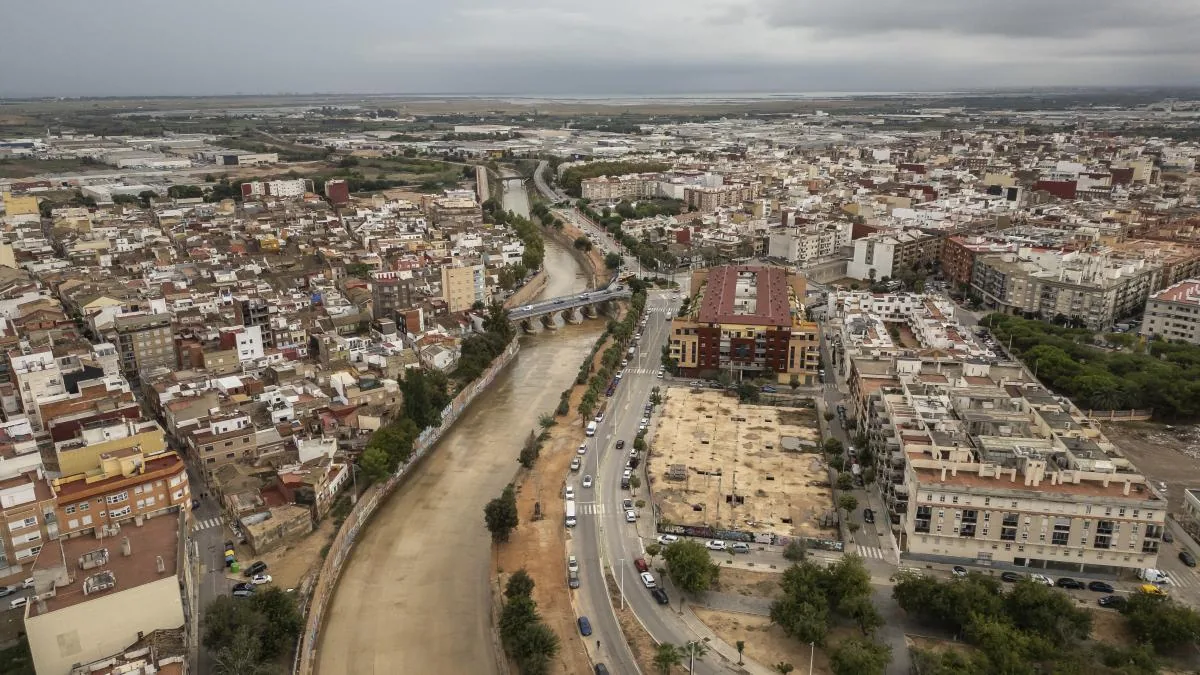
Governing a territory requires knowing it. Knowing its geography, but also its history, its risks, its peoples, and the memory of those who inhabit it. It is not enough to have maps, technical reports, and advisors. There is knowledge that only continuous contact with a territory and the people who live in it can provide. I am absolutely convinced that one of the factors that determined the disastrous management of the October 2024 DANA emergency was precisely that: some of the highest political leaders of the Generalitat Valenciana, from Carlos Mazón to then-councilor Salomé Pradas, did not sufficiently know the geography (and orography) over which the tragedy that caused 232 deaths was occurring and, probably, also memory, the “knowledges” around water and the history of some regions that have suffered like few in Spain the scourge of torrential autumn rains. Just reviewing the history of floods confirms this.
Read more The blow to employment in the interior of Castellón: from Marie Claire to Importaco or Frost-trol
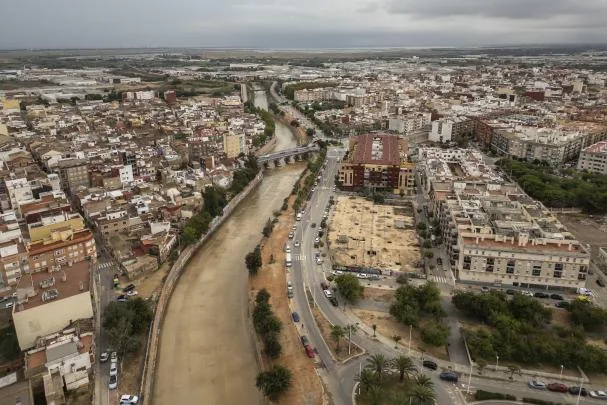
This was not the case with Vicent Mompó, mayor of Gavarda, a town devastated by the 1982 dam. Mompó knew that memory and was able to interpret from early morning what a red alert meant and what could happen in the river basins that cross the province of Valencia. That is why he ordered workers to return home at noon and began moving through the areas that could be affected. He knew what could happen. Something similar happened with the mayor of Valencia, María José Català, who had already activated Cecopal at ten in the morning, aware that the city and its metropolitan area could face an extraordinary situation. Experience does not replace technical reports, but it helps to interpret them. memory, the “knowledges” around water.
The same reflection leads me to think about the serious crisis in Ceuta. There is no need to recommend Robert D. Kaplan, Enric Juliana, Josep Vicent Boira, or Joan Romero to understand to what extent geography conditions history and politics. Those who from Madrid made the first decisions during that crisis seemed to be unaware of the geographical complexity of the autonomous city and, above all, the history of its neighborhood with Morocco. Some even claimed that the problem had been resolved barely 24 hours later in compulsive tweets on the X network. As if that border could be understood only through official reports and the events of the day.
A brother of my mother did his military service by obligation in Sidi Ifni and, when he returned, he never wanted to talk about those two terrible years. However, in my home remained the awareness that the relationship between Spain and the southern neighbor was crossed by a long and, at times, dramatic history. I remember my grandfather telling me how Vicente Blasco Ibáñez rallied the masses to oppose sending young Valencians to fight in Morocco. That family memory has always made me understand that borders are not simple lines drawn on a map. They are the history of power and are inhabited territories, with memory, interests, fears, and conflicts accumulated over decades or centuries.
One might say that this is what advisors are for. Naturally. But advisors can provide information; they cannot manufacture knowledge of a territory in a few hours. And we have also seen that those who are paid to advise ministers or presidents do not always know how to interpret what is happening until the human tragedy already occupies all television screens. Information is not necessarily knowledge. And much less experience. It takes “culture” with a capital C to have the capacity to understand where the world is heading.
The same happens with the geography of the Valencian Community. An autonomous community may appear as an administrative unit on a map and yet be a politically much more complex territory. The province of Valencia is heavily conditioned by the enormous weight of its capital and its metropolitan area; Alicante presents very different political ecosystems among themselves, and Castellón has, in turn, its own dynamics. Benidorm has nothing to do with Alcoi, Alicante with Vinalopó, or the Marinas with the inland regions. There are specific contexts (a very important concept when making decisions), different cultural, economic, and linguistic traditions, and with them, also different political behaviors.
Read more Puyal, through his successors
That is something many Valencians have never understood, with bad consequences. Because one of the great objectives of Valencian politics, that of structuring the Comunitat, has clashed for decades with a territorial reality much more complex than administrative maps suggest. On the party level, the PP of Alicante has its own dynamics; the PSPV continues to have difficulties recovering its pulse in much of the province, and Compromís maintains its main electoral strength in Valencia, with much less penetration in large areas of Alicante. Geography, ultimately, continues to determine Valencian politics.
It also explains much of the internal tensions within the parties themselves. It is no coincidence that the Valencian PP has had presidents from different provinces – three from Alicante (Eduardo Zaplana, Carlos Mazón, and the current Juanfran Pérez Llorca; one from Castellón, Alberto Fabra, and Francisco Camps from Valencia) nor that today there are different centers of territorial power. Nor is it a coincidence that the relations between Vicent Mompó and María José Català have a dimension that goes beyond their respective institutional responsibilities, generating an evident fracture in the provincial organization. Nor that the PSPV of Diana Morant must manage very different territorial balances if it wants to face the 2027 regional elections with guarantees. Added to this is that, in the current executive of the Valencian socialists, there is personnel willing to return to the organic battle if Morant does not obtain a good result in those elections.
The worst of all is that, if the knowledge of our own geography is so deficient among our Valencian politicians, imagine how we can be seen from the watchtowers of power in Madrid when it comes time to plan strategies
The worst of all is that, if the knowledge of our own geography is so deficient among our Valencian politicians, imagine how we can be seen from the watchtowers of power in Madrid when it comes time to plan strategies. One proof is the persistent lack of investments in Alicante, the treatment of the Cercanías units, the delay of the Mediterranean Corridor, the lack of consensus for urgently needed financing in Valencia, or the tendency of Génova and Ferraz to design leaderships and methodologies from Madrid without sufficiently attending to territorial realities and the opinion of their own organizations. This is what happens when the peripheries give up asserting their geographical, historical, economic, and political weight. I am already tired of writing about it. But it is worth insisting: those who decide from afar usually have a poorer vision of what they intend to govern.
That is why, whatever decision Alberto Núñez Feijóo makes regarding the future of Juanfran Pérez Llorca, or whatever strategy the PSPV designs for the next regional and local elections, both formations will make a mistake if they again look at the Valencian Community as a uniform and distant, secondary, marginal territory. There are historical, geographical, cultural, economic, and linguistic conditions that cannot be ignored. Geography is not a backdrop on which politics develops. It conditions it. Sometimes it even explains it. And when those who make decisions do not know the territory on which they decide, the consequences can be political: the Valencian Community will again be key in the 2027 general elections. By the way, autumn begins soon.
Read more Works uncover a section of the Canal de la Infanta in Barcelona