On November 17, 2025, the UN Security Council approved Resolution 2803, creating a Peace Board to oversee Gaza. On January 19, 2026, as President Trump threatened to invade Greenland, the contents of a letter he addressed to the Prime Minister of Norway were made public: “Given that your country has decided not to grant me the Nobel Peace Prize for having stopped MORE than eight wars, I no longer feel obliged to think exclusively about peace.”
Read more Repsol multiplies its profits by 3.7 in the first half to 2,201 million
Should we then conclude that, like the US Department of Defense, now called the Department of War, the Peace Board should be renamed and become a War Board? Perhaps not, but the sequence of events described above suggests that the Peace Board should not be analyzed as a lasting element of international relations, but rather as an illustration and symptom of the deep crisis in international relations. Therefore, it is worth analyzing the conditions of its creation and the implementation of Resolution 2803.
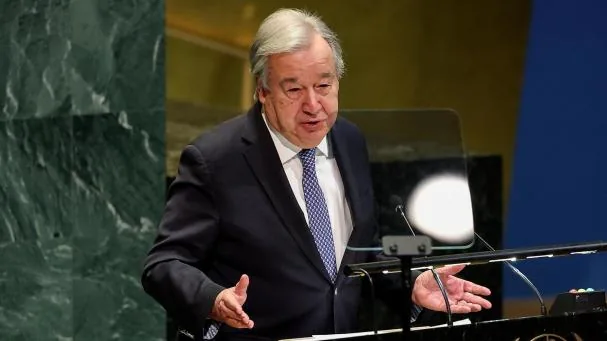
The adoption of this resolution by the UN Security Council was a tactical success for US diplomacy. Of the 15 countries on the Security Council, 13 voted in favor (including the three Western permanent members), while China and Russia abstained, allowing the resolution to pass without any veto.
At the time, Israel’s intense bombing campaign against Gaza had already almost completely devastated the strip, and the US tactic was to include the Peace Board in a broader package that encompassed a ceasefire, the deployment of an international stabilization force in the area, and a transitional administration, with an eventual path towards the creation of a Palestinian state. What fueled the sense of urgency was the humanitarian argument: without the resolution, there would be no ceasefire and the offensive against Gaza would continue. The argument worked with Arab countries, who did not want to appear indifferent to the fate of the Palestinians and who, in any case, were unwilling to challenge any US initiative. Once Arab support was secured, other countries did not want to be perceived as an obstacle to the ceasefire in Gaza.
A blank check for Trump
However, the adoption of the resolution is still an extraordinary event in the eighty-year existence of the UN. For the first time in its history, the Security Council delegated its responsibilities on a specific issue (Gaza) to an institution (the Peace Board) whose procedural rules and composition were unknown at the time. It was, literally, a blank check for President Trump, tasked with later announcing the composition and regulations, and that blank check is valid for more than two years, as the resolution remains in force until December 31, 2027. It is remarkable that China and Russia did not veto it (in recent years, they have frequently vetoed US-sponsored resolutions) and that France and the United Kingdom did not abstain (but voted in favor). In both cases, the Arab factor may have influenced, but it is not the only explanation.
China and Russia did not bother to veto the resolution, partly because they probably did not believe it would have concrete consequences. The International Stabilization Force authorized by it would be difficult to assemble, as few countries would be willing to deploy in the hostile environment of Gaza. Even if constituted, it would likely be disappointing, as the disarmament of Hamas, also authorized by the resolution, would have been quite limited, given that no troop-contributing country would be willing to forcibly disarm that organization and that voluntary disarmament would not occur without a political agreement guaranteeing its political future. In short, China and Russia accepted the resolution creating the Peace Board because they did not take it seriously and considered it another example of presidential theatricality without consequences that could be conceded without great risks. Furthermore, and more worryingly, the abstention highlighted their growing disdain for international institutions, including the UN.
Trump’s intimidation achieved a tactical success with the Peace Board, which, however, has not led to any lasting commitment. The change in circumstances, moreover, has made it lose its relevance
The support for the resolution by France and the United Kingdom raises more questions. The two European permanent members of the Security Council care about that body because their international position is considerably strengthened by their permanent membership; they want the Council to remain at the pinnacle of global security architecture. Despite this, they voted in favor of a resolution that, in practice, marginalizes it on an issue of great importance. Neither London nor Paris has been willing to distance themselves from Washington, not even through a symbolic abstention, even though the adoption of the resolution has further weakened the UN and their own power. This is a clear illustration that intimidation can be effective against weak European leaders who believe they still need US support in Ukraine.
Countries invited to the Peace Board
Events since then have confirmed that the Peace Board is unlikely to have a lasting role. Trump has invited some sixty countries; among them, a large Arab contingent, but also European countries and various autocracies. Surprisingly, he has not invited any sub-Saharan African country; and Canada, which had been invited, had its invitation withdrawn after a speech by its prime minister in Davos extolling the virtues of multilateralism.
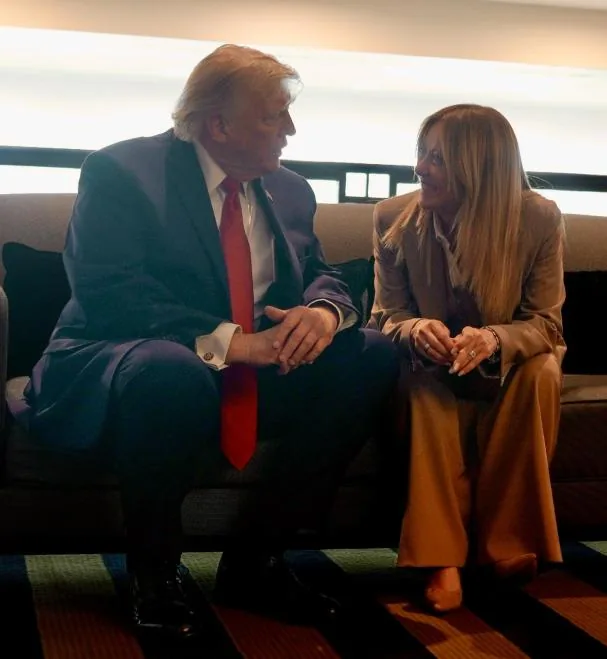
The response to the invitations has been, at best, mixed. Once the pressure for a ceasefire in Gaza disappeared, countries began to evaluate the Peace Board on its own merits, and many are, to put it mildly, unenthusiastic. Several European countries, including France, Ireland, Spain, the United Kingdom, and Ukraine, have rejected the invitation. Some remain undecided, such as Italy, which attended the first meeting as an observer. Other major countries, such as Brazil, Japan, China, Russia, and South Korea, have not expressed their position and, for the moment, remain on the sidelines.
Read more Carissa Véliz, philosopher: “Privacy is a form of power, and we are giving it up”
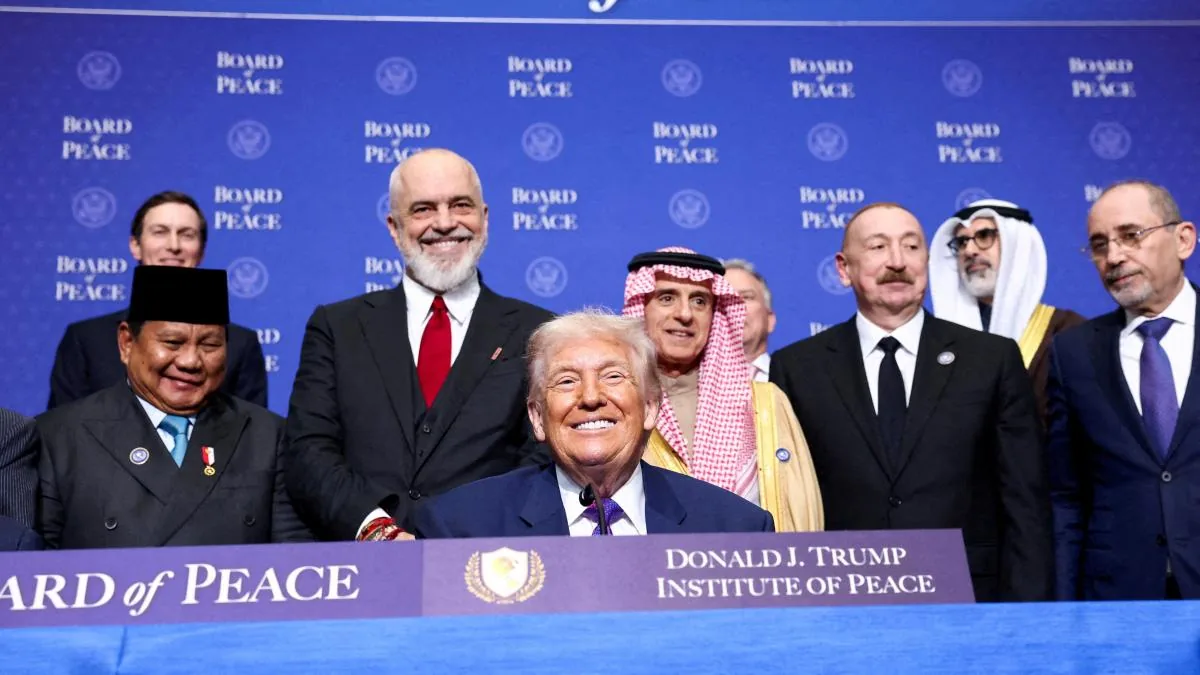
The Peace Board Charter, released by the US in January, did not allay initial concerns. It is striking that, while the initial agreement ratified by the Security Council states that it would be the supreme authority responsible for overseeing Gaza and nothing else, Gaza is not mentioned in the Charter; and the geographical scope of the Board covers the entire world, although this expansion, which exceeds the mandate granted by the Security Council, lacks legal basis. President Trump holds the presidency, and his appointment is for life. The president’s powers are broad: he decides which countries are invited to join the Peace Board, renews and revokes membership, appoints the executive council that implements the decisions of the Peace Board, and can veto the decisions of both bodies. In practice, no decision can be made without the president’s approval. An unusual feature is that countries wishing to remain on the Board for more than three years must pay 1 billion US dollars to a reconstruction fund controlled by President Trump. Should these provisions become an institutional reality, the Peace Board will mark a turning point in global affairs: a limited group of countries selected by President Trump will legitimize and finance the implementation of his decisions, initially for Gaza, but if he gets his way, for any other conflict in which he decides to involve that body.
The focus shifts to Iran
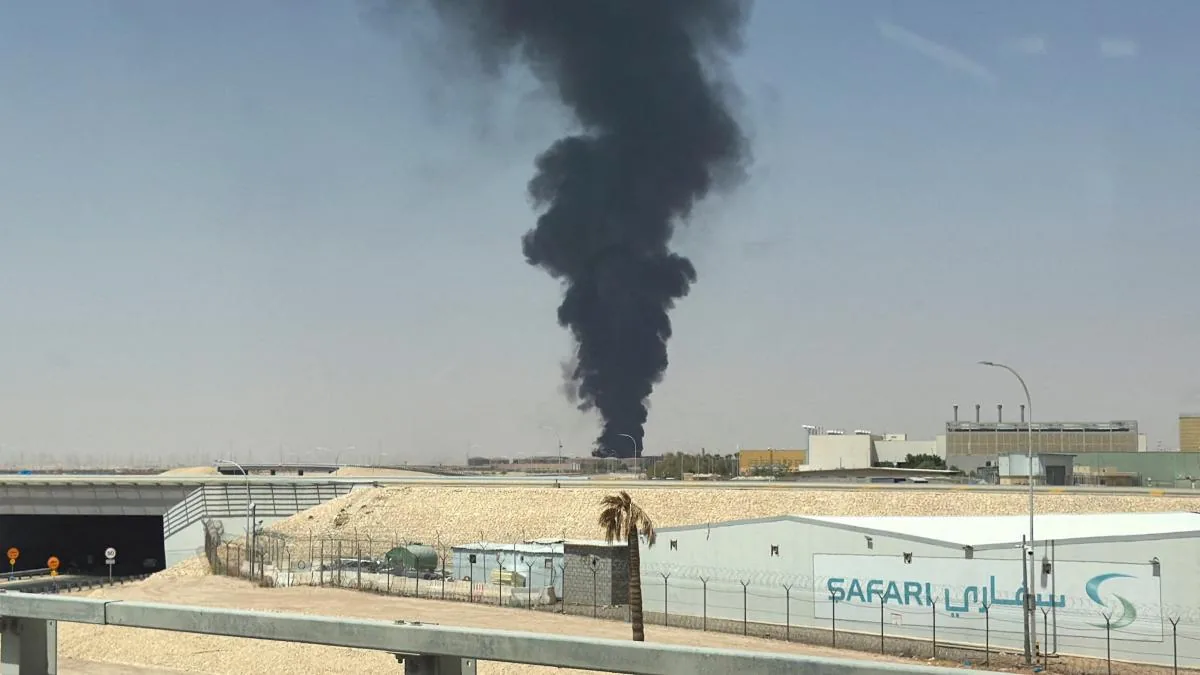
However, reality is far from that scenario: the inaugural meeting of the Peace Board was held in Washington, at the newly renamed Donald J. Trump Institute for Peace, on February 19, 2026. On February 28, less than ten days later, Israel and the US launched their attacks against Iran, and priorities changed. Since then, and as expected, no concrete progress seems to have been made in the deployment of an international stabilization force in Gaza, and little has been heard of the National Committee for the Administration of Gaza, the Palestinian technocratic body responsible for managing the strip under the authority of the Peace Board and its executive council. Gaza remains under siege: the Rafah border crossing has remained intermittently closed since February 28, and humanitarian aid can only enter through the Kerem Shalom checkpoint. Since the adoption of the resolution, at least 700 people have lost their lives and nearly 2,000 have been injured. Meanwhile, in the West Bank, settlers have intensified their attacks against Palestinian villages, frustrating the hopes of those who expected that a resolution adopted almost unanimously would generate political momentum for peace to extend beyond Gaza. Nothing has been heard either of the executive council which, according to the Peace Board Charter, must meet fortnightly under the chairmanship of President Trump. Today, the Peace Board seems more like an ephemeral event than an institution, and all progress in Gaza and Palestine is stalled.
Contrast between rhetoric and reality
The contrast between the grandiloquent rhetoric that accompanied the creation of a new institution aimed at promoting peace and the reality of an expanding war in the Middle East is most revealing. It reflects, in part, a fundamental contradiction in President Trump’s approach to international affairs. On the one hand, the president has global ambitions and claims to be a global peacemaker, from the conflict between India and Pakistan to that in the Democratic Republic of Congo and Rwanda. However, on the other hand, he has neither the attention span nor the will to provide the resources to sustain his grandiose vision. He may be willing to deploy an international stabilization force in Gaza, but with troops from other countries. And, more importantly, he seems to believe that the path to peace more often involves coercion than persuasion. And that is why his impatient diplomacy, whether with Hamas or with Iranian leaders, can instantly shift from peace rhetoric to actual war. Such sudden shifts do not build trust and, in fact, make it even harder to achieve genuine understanding.
The same observation applies to the method used to create the Peace Board. It is not the result of long negotiation or the search for broad-based compromise. President Trump skillfully seized the opportunity presented by the exhaustion of the prolonged war in Gaza, but his aversion to institutions that inevitably require complex negotiations led to the creation of an institution that is merely an extension of himself and which, for now, has turned an ephemeral success into a failure. His intimidation achieved a tactical success, but it has not led to any lasting commitment; and, in the face of a change in circumstances, what was a product of specific conditions loses its relevance. Today, as the region is engulfed in a conflict with no clear end in sight, when most of the world wants to stay out of a war it disapproves of, the Peace Board increasingly resembles a beached whale. Perhaps China and Russia were not wrong to abstain.
The Peace Board against the UN
The predictable failure of the Peace Board demonstrates that replacing the UN is not easy. 1945 was a unipolar moment: the US had a monopoly on nuclear weapons, was the world’s creditor, and its GDP accounted for half of global GDP. Despite this, the negotiation of the UN Charter was a difficult one. The world of 2026 is clearly multipolar, and it is impossible to reach a global consensus around a source of legitimacy other than the UN. So the world is at a real crossroads. It can completely abandon international law and international institutions, and return to a pre-1914 world where power is the only reference. That world has always ended in catastrophic war. Or it can, having tried everything else, return to the UN. The dead end into which President Trump has placed the US by attacking Iran provides that opportunity. This happened in the 1956 Suez Crisis, when Great Britain and France attacked Egypt, and the deployment of a UN force provided a solution that allowed two permanent members of the Security Council who had made a serious mistake to save face. The UN is rarely the first choice of great powers, but sometimes it can offer a convenient way out.
Jean-Marie Guéhenno holds the Arnold A. Saltzman Chair in International and Public Affairs Practice and is Director of the Kent Program in Global Leadership in Conflict Resolution at Columbia University’s School of International and Public Affairs (SIPA)
How to read VANGUARDIA DOSSIER
PRINT VERSION
• Purchase of copy. The print edition of VANGUARDIA DOSSIER can be purchased at newsstands and regular bookstores for 12 euros.
• Subscription. Request your subscription by calling 933481482 and you will receive VANGUARDIA DOSSIER conveniently at your home.
DIGITAL VERSION
• Purchase of copy. The digital edition of VANGUARDIA DOSSIER is available for free in the “Vanguardia Dossier” app for iOS (App Store) and Android (Google Play Store). Each copy costs 8 euros.
• Subscription. Subscribe to La Vanguardia Premium and get unlimited access to all content of La Vanguardia and VANGUARDIA DOSSIER in its digital version.
Read more The phenomenon of men’s choirs to create healthy masculinity