The flow of the Danube, the second longest river in Europe, has fallen below its minimum records of the last 40 years due to lack of rain, the reduction of water from Alpine snowmelt, and successive heat waves that have been affecting the region for weeks.
Read more Andy Burnham ignores criticism from the right and goes on vacation
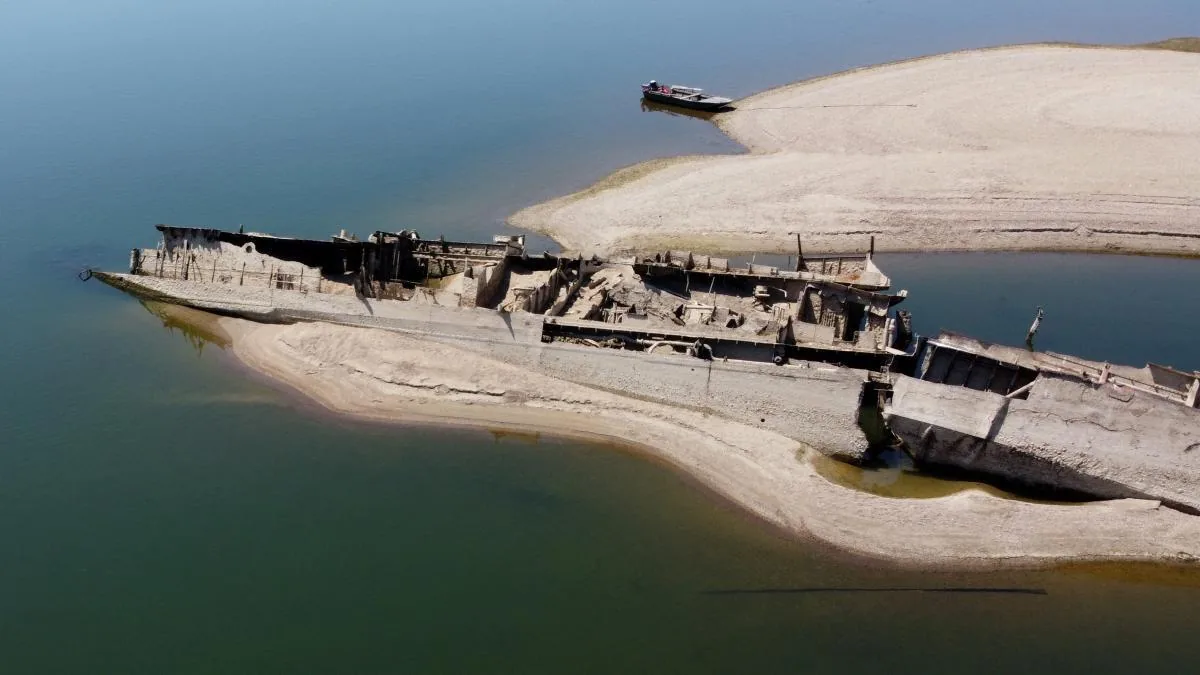
The levels are so low that dozens of German battleships from World War II are emerging in plain sight right in the middle of the river near the river port of Prahovo, in Serbia.
The German Black Sea fleet
A rusty hull can now be seen along with a broken mast where the Nazi flag used to fly. The ships, some still loaded with weapons, belonged to the Black Sea fleet that the Germans deliberately sank during their retreat.
Their goal was to prevent the Soviet forces advancing into the interior of Europe, near the end of the war, from taking control of the vessels. Historians state that up to 200 German warships were sunk in 1944 in the area.
Also read
Some of these ships were removed from the river by the Yugoslav communist authorities, but most have remained there due to the explosives they carried. Now, the low water level has practically paralyzed maritime traffic.
This drop in flow has also uncovered a stone ball that, according to specialists from the Mathias Rex Museum in Visegrád, could be an ancient catapult projectile used during the sieges of the castle located north of Budapest.

Hundreds of similar stones were thrown in those battles. Archaeologists point out that these projectiles were used until the 16th century, but going further back in time is possible, since in Roman times there was already a fortress here and stone-throwing machines were also known.
Read more The Ceuta crisis boosts the French far right in the race to the Élysée
In Bulgaria, the Danube drought has revealed the remains of a mammoth in the village of Ryahovo, near the city of Ruse. During the Ice Age, the swampy areas of the ancient river course favored the natural preservation of animal remains, which were buried for millennia under layers of sediment.
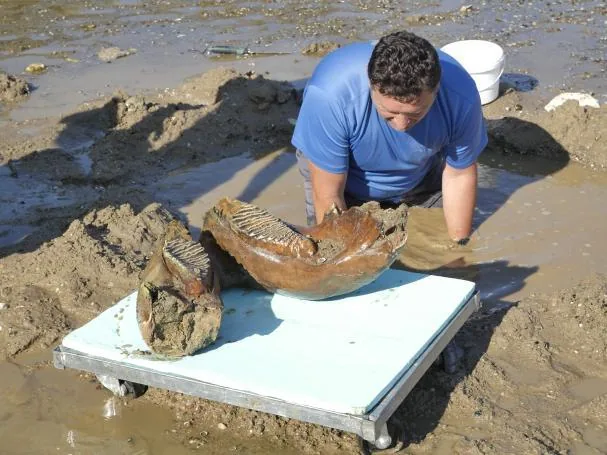
The remains – including a femur, a tusk, and a lower jaw with two large teeth – were discovered accidentally. The finding was reported by a local resident.
The Bulgarian authorities have warned that the Danube is at minimum levels, with an average of about 130 centimeters below usual, which has caused difficulties for navigation in some stretches.
A little further south, in Croatia, a coal ship that sank in the same river in 1937 appeared. The vessel is a river freighter (or barge) that appeared near the town of Opatovac (between the cities of Vukovar and Ilok).
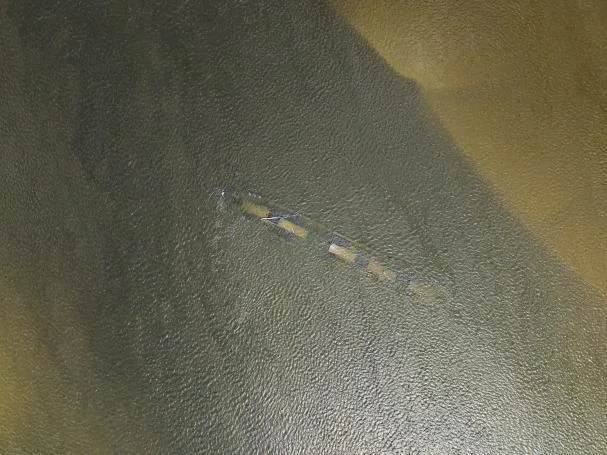
Local records and press articles from the time indicate that it is a cargo barge called ‘Fulton’, linked to Central European or Hungarian/Austrian shipping companies that transported dozens of wagons with tons of coal.
With the fourth heat wave hitting Western Europe this summer, the situation could create logistical bottlenecks on a Danube River that winds for about 2,850 kilometers from Germany to the Black Sea.
Read more Legislative offensive in the U.S. to have the Polisario Front designated as a terrorist organization