There are coincidences that the devil loads.
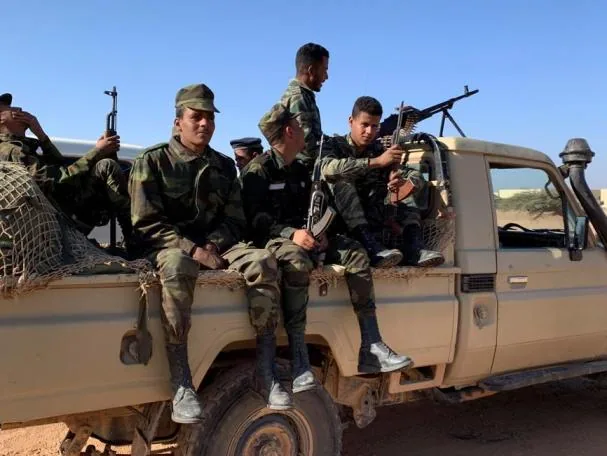
Just as an unprecedented crisis breaks out in Ceuta, the U.S. decides to intensify its pressure on one of Morocco’s staunchest enemies: the Polisario Front.
Read more The missing persons of Ceuta
Last Friday, hours after thousands of people overflowed the Ceuta border, two U.S. congressmen introduced a bill in Washington to designate the Sahrawi independence group as a terrorist organization.
The sponsors of the initiative – Democrat Josh Gottheimer and Republican Ronny Jackson, two ideological rivals united by their unconditional support for Israel – believe that the Polisario is a pawn of the Iranian regime and, therefore, a direct threat to U.S. security.
“For too long, Iran and its allied terrorist groups, such as Hezbollah, have exploited the Polisario Front to destabilize West Africa,” Jackson said when presenting the proposal. “When a group appropriates drones and weapons from the Islamic Revolutionary Guard and coordinates with Iran-backed terrorists, we must call it by its name: a terrorist organization,” Gottheimer added.
The legislative project urges a thorough investigation of the Sahrawi group’s activities and to act accordingly if connections with Tehran are proven.
Also read
If carried out, the designation as a terrorist organization would have serious political, diplomatic, and legal implications for the Polisario. For example, it would open the door for the U.S. to undertake military and judicial actions against the group, or to impose financial sanctions and freeze Sahrawi funds abroad.
But there is still a long way to go before that happens.
The proposal must gather enough support in Congress, whose composition may change substantially after the legislative elections next November. And if approved, it would still have to undergo thorough reviews by the State Department and U.S. security agencies.
However, the mere processing of the text is already significant. Especially considering that in recent months two very similar proposals have already been introduced.
In June last year, Democrat Jimmy Panetta and Republican Joe Wilson also introduced a legal initiative in Congress demanding the Polisario be declared a terrorist group for its alleged links to “Iran, Hezbollah, and Russia.” Shortly after, last April, a trio of Republicans led by Ted Cruz processed in the Senate the so-called Polisario Terrorist Designation Act.
Read more The EU saves its weak unity against illegal immigration
None of those two proposals have made significant progress, but the new initiative may help give momentum to the idea.
The geopolitical context is also favorable. The relationship between the U.S. and Morocco has always been good. After all, the North African country was one of the first to recognize American independence, in 1777. But now it seems that this friendship is at its sweetest moment, as evidenced in the Ceuta crisis, in which Washington has closed ranks with Rabat.
The origin of this rapprochement must be sought precisely in the Western Sahara conflict.
In 2020, when he was about to finish his first term, Donald Trump surprised everyone by recognizing Moroccan sovereignty over the former Spanish colony. That shift was not free: in exchange, Morocco agreed to establish diplomatic relations with Israel under the Abraham Accords.
Since then, the U.S. and Morocco have intensified their ties, especially in defense and security areas, and Rabat’s position on the Sahara has gained supporters: from Spain to France, passing through the UN, in recent years there have been successive endorsements of the Moroccan autonomy plan.
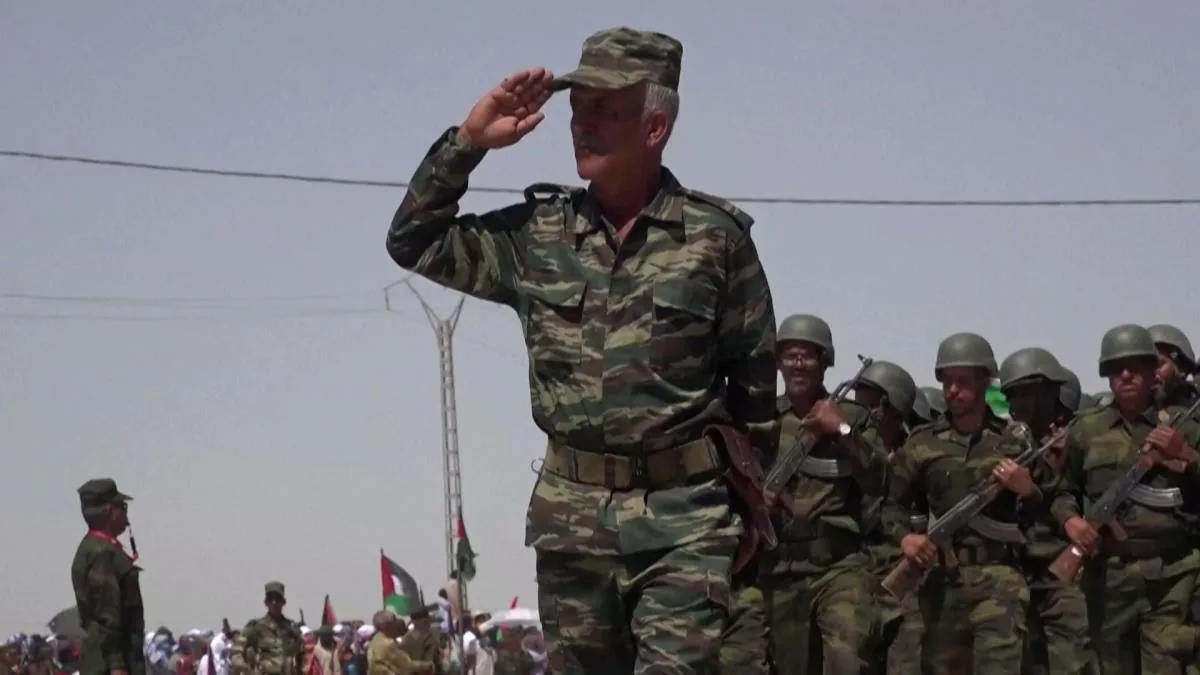
Designating the Polisario as a terrorist organization would further sideline the Sahrawi cause. It would also represent yet another U.S. challenge to the international order: since 1979, the UN recognizes the group as the “legitimate representative of the people of Western Sahara,” and treats it as an essential part of negotiations to resolve a conflict that remains very active.
It is enough to recall what happened in June, when a Moroccan attack took the life of one of the most prominent Polisario figures, Lahbib Mohamed Abdelaziz. According to analysts, this military man was the main candidate to succeed Brahim Ghali at the head of the independence struggle.
Read more DJ Pedro Sánchez