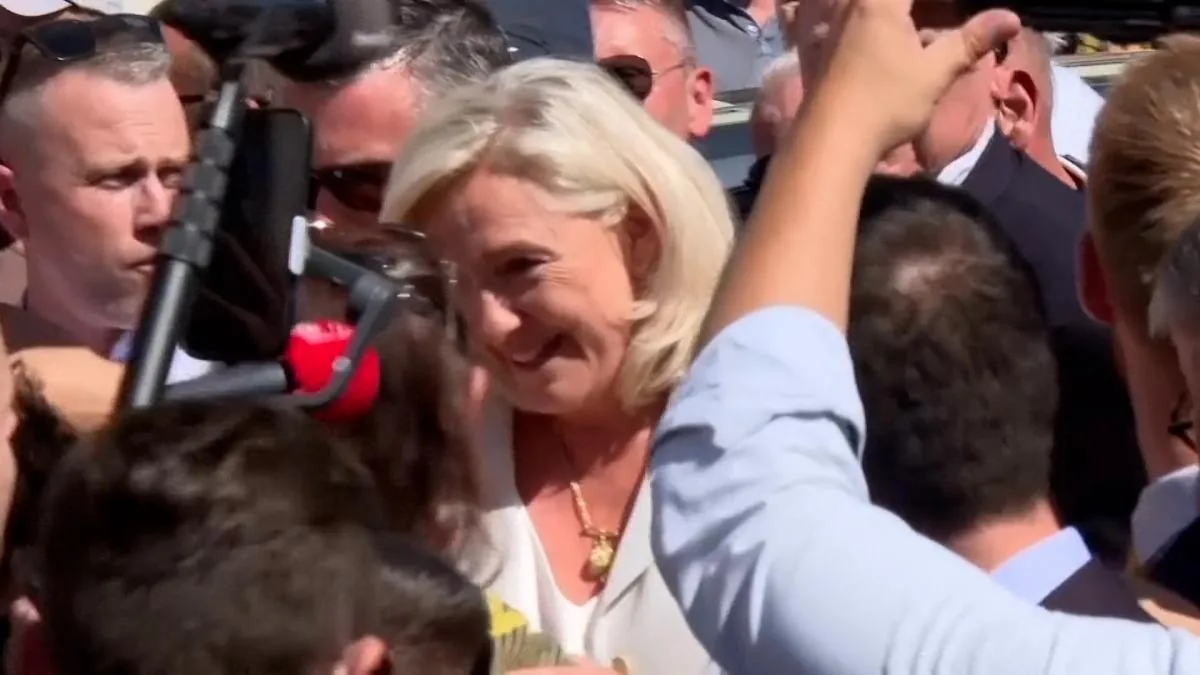
There could be no better publicity for the French far right, in a position to win the presidential elections next spring, than the shocking images from Ceuta in recent days. The migratory surge they have been denouncing for decades materialized on the screens of continuous news channels and the front pages of newspapers.
Read more Legislative offensive in the U.S. to have the Polisario Front designated as a terrorist organization
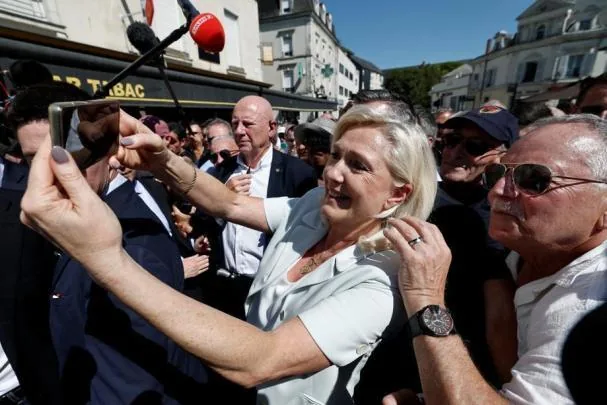
Aware of the excellent fuel to feed their campaign, the National Rally (RN) and other allied parties, such as Reconquista, have not stopped commenting on what happened and playing into their hands, with little hesitation in exaggerating and manipulating the truth.
“In the face of massive and coordinated entries of migrants into Spain, encouraged by the Spanish Government, France must without delay strengthen controls at its borders,” wrote the RN candidate for the Élysée – for the fourth time – Marine Le Pen, on the X network. She then went further about her intentions: “And in 2027 we will stop this madness, reserving the free movement of Schengen to EU nationals.”
Le Pen’s words were supported by the party president and prime minister candidate, Jordan Bardella, and by the party spokesperson and MEP, Aleksandar Nikolic, who is the son of a Serbian and a Portuguese. Nikolic railed against the immigrant regulation decided by the Spanish Government, which he called “a threat to the entire continent” and took for granted that some of those who entered Ceuta will be transferred to the Peninsula and from there will be able to jump to other countries.
The Ceuta crisis fits the RN like a glove. It puts the migration issue back in the spotlight, the number one problem, according to polls, among their loyal and potential voters’ concerns. Talking about migration is easy for them and allows them to gloss over issues where their positions are ambiguous, contradictory, or inconsistent, especially in the economic field.
Realities like Ceuta serve Le Pen to assert herself, even claim the problematic legacy of her father, and argue that history has finally proven her party right, unfairly stigmatized, and that many now think like her.
Read more The missing persons of Ceuta
Reconquista MEP Sarah Knafo, who obtained 10.4% of the votes in the Paris municipal elections, jumped on the bandwagon of accusations against Spain. “The hundreds of thousands of regularizations by Sánchez have sent the message to the whole world that Europe is an open bar,” she said.
The events in Ceuta have shown that, in the migration discourse of French parties, whether out of conviction or electoral tactics, the positions of the right and the far right are now almost identical. The president of The Republicans (LR, traditional right) and former Interior Minister, Bruno Retailleau, also pointed to Sánchez in an interview with Le Journal du Dimanche. In his view, the Spanish Prime Minister “has a great responsibility.” “I already said a few months ago that the massive regularization of almost a million people in Spain was totally irresponsible,” he recalled. “A country cannot make all others suffer its lax decisions,” he stressed.
To the reproaches to Madrid was added one from one of the candidates a priori best placed to reach the second round, Édouard Philippe, mayor of Le Havre and leader of the center-right party Horizons. Philippe, who was Macron’s prime minister between 2017 and 2020, considered that “it is not acceptable that a country can decide alone on massive regularizations that create a pull effect for the entire continent.”
Among the media there was a critical reaction towards Spain, with exceptions such as Le Monde. In its front-page editorial last Saturday, the conservative Le Figaro called Sánchez “the European bad student of migration policy.” On the CNews channel, leaning towards the hard right and far right, one analyst said that “Pedro Sánchez played apprentice sorcerer and is paying for it, but the problem is that we will all pay.”
The Ceuta drama has served for the vast majority of French people to discover for the first time the existence of the two Spanish sovereign territories on the African continent and that they are, therefore, territory of the European Union. However, it will not be easy, in case of a serious sovereignty dispute with Rabat, for French public opinion to give automatic support to the Spanish partner. It is a complex situation that, from the French perspective, and with due differences, may evoke a similarity with what Algeria represented. A balanced medium like France Info said in yesterday’s news that Ceuta and Morocco are “Spanish enclaves in Moroccan territory.”
Read more The EU saves its weak unity against illegal immigration