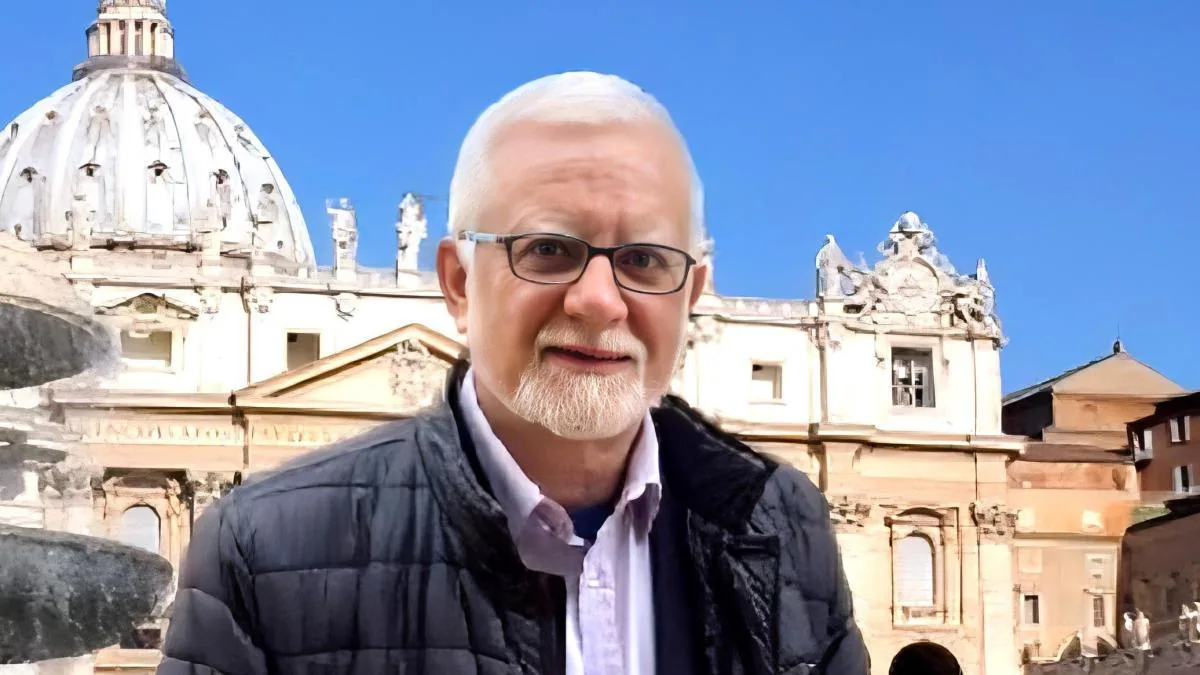
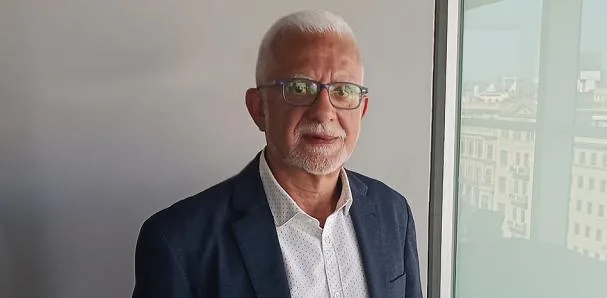
It’s not every day you get to speak with someone who has privileged knowledge of their subject and knows much more than they say, which is already quite a lot. A Vatican correspondent for many years, he knows like no one else the complexity of the Church and the power struggles hidden within it. He is very aware that he is facing a reality for which simplistic analyses are not valid.
Read more Miles-long queues in Girona to participate in an audition for a Disney movie
That’s why he says, with great wit, that in the Holy See “two plus two is never four.” He refers, for example, to the fact that the categories of right and left are not easily applicable. There can be, for example, a cardinal who is both homophobic and in favor of lifting clerical celibacy.
In his latest book, Leo XIV. Shadows Under the Dome (Roca Editorial, Pòrtic in Catalan), Lozano tells us in a world exclusive about the intrigues that have surrounded the election of the last pontiff, whom he describes as a man in the vein of the beloved Francis. That is why he has had to confront the most unyielding Catholics.
Lozano describes, for example, an operation to defame him with a false accusation of complicity in a case of pedophilia. He thus reveals some keys to a pope who, to date, has maintained a low profile, but who has not hesitated to stand up to Donald Trump regarding his warmongering policy.
In The Godfather Part III, Coppola’s famous film, the links between the Holy See and organized crime are discussed. Fiction or reality?
This link has occurred in real life, especially in the eighties, even nineties, particularly through Giulio Andreotti’s Christian Democracy. I spoke with Andreotti for about three or four hours in a hotel in Palermo, on the eve of his trial for mafia association. He explained to me – all off the record, of course – how this relationship worked with certain mafia bosses who controlled the territory, especially in southern Italy.
I also remember blessings, baptisms, weddings of heads of mafia families in Palermo Cathedral, officiated by Cardinal Salvatore Papalardo.
Furthermore, Judge Giovanni Falcone, who would be assassinated by the mafia, also gave me various guidelines on the ties between the Church and organized crime. These consisted fundamentally of political clientelism. It greatly suited Christian Democracy, which needed the religious factor in a deeply Catholic society to obtain votes.
Christian Democracy thus managed to place people in practically all mayoralties and in the regional government of Sicily. Many Sicilian politicians were part of successive Italian governments, primarily Giulio Andreotti, who was prime minister of Italy seven times and minister of fifty thousand things I don’t know how many times.
Furthermore, through the Vatican bank, a lot of black money from organized crime was recycled. This led to prominent Vatican figures, for example, during the time of John Paul II, also having significant connivance with mafia groups. We are talking, for example, about Archbishop Paul Marcinkus.
In fact, in my two previous books, Intrigues and Power in the Vatican and Vaticangate (both by Roca Editorial), I reveal the connections he had in the case of Emanuela Orlandi, the girl who disappeared in the Vatican in 1983.
We won’t ask you who killed Kennedy, but we will ask how John Paul I died. Natural death or assassination?
Without a doubt, it was not due to natural causes. This is recognized within the Vatican, though not officially. In my books, I offer clear clues about what happened. An autopsy was never performed because, in principle, autopsies are not performed on the bodies of popes. In this case, there was an entire operation to cover up how the death occurred. John Paul I died, substantially, because he was attempting reforms in the Vatican bank. In fact, on his deathbed, a thick dossier was found about a project to make changes to that institution. This was not really in the interest of many people within the Vatican because the links with organized crime meant extraordinary commissions for the pockets of certain cardinals.
You started as a Vatican correspondent during the time of John Paul II. Has the papacy changed much since then?
The papacy has changed, and society has changed. Times have moved at a tremendous speed and are currently accelerating even more. John Paul II’s pontificate was groundbreaking. There was an explosion of media, which became even stronger later, with the emergence of social media during Benedict XVI’s era. After the German pope, the Argentine pope, Francis, marked a before and after, a paradigm shift in what the pontificate is.
What did that change consist of?
The pontificate had fundamentally monarchical roots. Pope Francis tried to give it a more religious character and, at the same time, sought to materialize substantial changes.
For example, the Vatican Curia has always been somewhat the court of that monarchy represented by the pontificate. Bergoglio, on the other hand, tried to limit it to the function it should have: to assist the Pope in the direction of the Church, in the government of the Church. He did not quite succeed in this. It was precisely the Curia, an important part of it at least, that most directly opposed the reforms.
Leo XIV, does he represent continuity or change?
The current Pope follows the same line. Although he is a traditionalist in form, he is a reformer in content. Like his predecessor, he also wants to make profound reforms in the Vatican Curia. I have discovered the existence of a hidden project for a collegial government of the Church, a government where the Pope will always have the final say, but would cede responsibilities. It is desired that decisions stem from co-responsibility and are taken by consensus.
Now there is much talk of synodality, which would consist, precisely, of a Church with a more collegial decision-making process. To what extent is this a cosmetic reform, if the Pope consults the faithful but reserves the final word?
All Vatican reforms are slow. Practicing the sharing of what divides, the culture of pact and consensus, is not easy in the Church either.
Synodality should not be cosmetic. Pope Francis considered it his great reform of the Church, looking towards a not-too-distant future.
For him, it was necessary to listen to every last parishioner, being aware that the cultural differences that exist between countries, between societies, make it very difficult to reach agreements, especially on moral issues.
How could the feelings of the faithful reach Rome?
Pope Francis conducted a large-scale survey at the beginning of the synodal process – which continues with Leo XIV – asking what was wrong with the Church and what could be done to change those negative aspects. There was a widespread response from parishes around the world. Not all, because some bishops halted this process in their dioceses.
The Vatican has never released the results, but I know people who have seen the responses. A part of the Church calls for female priesthood, the abolition of priestly celibacy, or the establishment of a type of “marital” union between homosexual couples, etc.
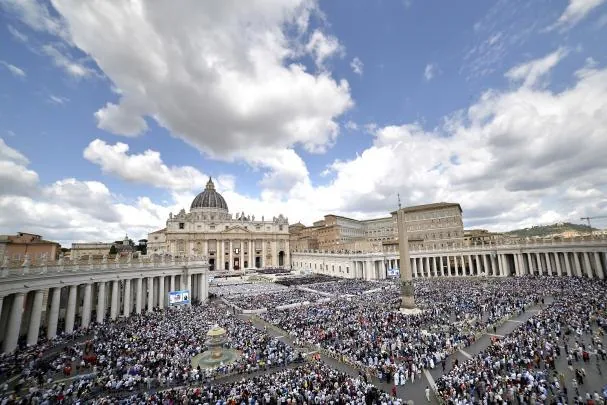
Other Catholic sectors, on the other hand, ask to return to the Latin Mass, not to forget tradition. A theology anchored in immobility. One must not forget that the Vatican, ultimately, is a microcosm of the current cultural war that exists in the world.
Sometimes we talk about a Pope not being able to do what he intended. Why? Isn’t he supposed to have all authority?
Read more CaixaResearch Institute drives tomorrow’s research
The Church is still a bureaucratic structure where putting spokes in the wheels is relatively easy. Certain pontifical documents reached bishops around the world, who put them in a drawer and, out of sight, out of mind.
Let’s talk about John Paul II. Was his influence on the fall of communism as decisive as they say?
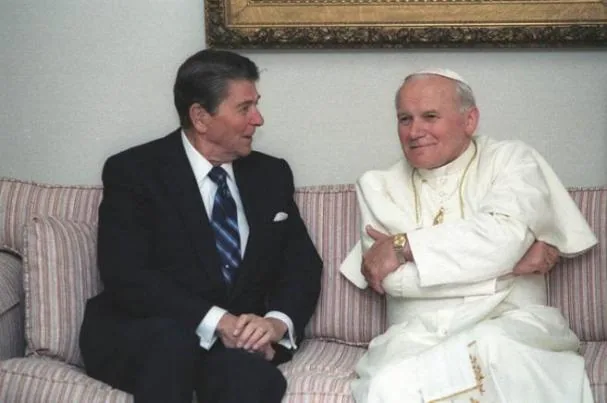
He had vital geopolitical importance. There was an agreement between President Ronald Reagan, John Paul II, and Lech Walesa, the leader of the Solidarity trade union, which led to the fall of communism in Poland.
This was decisive for the subsequent fall of the other countries in the Soviet orbit and the self-destruction of the USSR. As a person who had suffered communism, Wojtyla had a great interest in seeing it disappear.
What about the Lefebvre schism?
I experienced the Lefebvre schism in Switzerland, I was there, I conducted the only interview he gave before he died. It was quite unusual for an ultra-right-wing pope like John Paul II to have a schism emerge from the right.
Now there is a new challenge from the Lefebvrists: they are going to repeat what they did with John Paul II, appointing bishops, which is an exclusive prerogative of the pontiff. This schism is understood at a time like the present, where the global trend is towards new populisms, the suppression of political and social freedoms and rights. It is understood that radical groups exist who want to take advantage of these favorable winds.
You don’t say that an American, Leo XIV, was chosen because of money, that is, because of the decrease in funds coming to Rome from the United States. But you do highlight that this was one factor, among others.
Neither conservatives nor progressives had the necessary votes to elect a candidate. Some had long prepared dossiers to rule out more or less progressive candidates.
Progressives counted on the possibility that, thanks to the cardinals appointed by Pope Francis, there would be a certain progressive majority. This was not the case. A small core of people who did not want to lose Francis’s legacy united to preserve it.
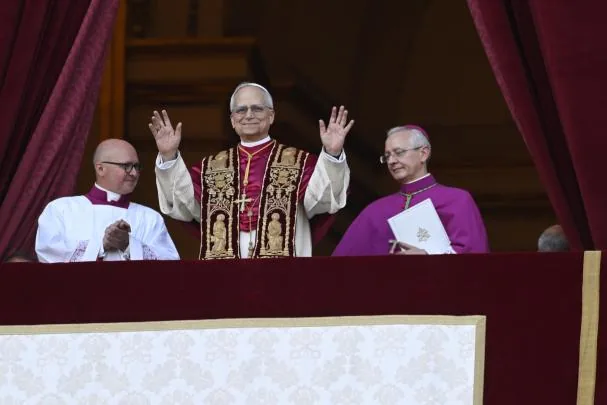
How did they achieve it? They said that if an American, Robert Francis Prevost, was elected, money would surely flow back to the Vatican, which had very serious cash problems, even to pay salaries and pensions to its workers. This has now been unblocked. It really has been so. The traditional symbols displayed by Prevost also helped in his election.
Let’s move on to scandalous things now. Benedict XVI suppressed a brothel for members of the Curia…
In the Vatican, as in any institution in the world, cases of corruption and abuse occur. There was a brothel within the Vatican itself where there were men and women (young, but not minors). I eventually discovered that everyone knew about it. The law of silence, omertà, was applied. Benedict XVI had it closed immediately. This is part of the Vatileaks scandal, which led to his resignation.
So, it wasn’t for health reasons?
The scandals were for him as if a fifty-thousand-ton slab had fallen on him. He could not continue. He wished for someone else to come and solve all those problems. Pope Francis laid the groundwork to start fixing them: he reformed the Vatican bank, made the Vatican cease to be a tax haven. On the issue of morality, he had a more open attitude. For example, with homosexuals and transsexuals.
Is it true that Pope Francis wanted to appoint a woman as cardinal?
This was a widespread rumor in the Vatican. I corroborated it with a source very close to Bergoglio, who told me that he had it in mind, but that he had been advised against it, because if he appointed a woman cardinal, the chosen one would first have to be consecrated as a priest and as a bishop. But Francis appointed many women to positions of responsibility, and Leo XIV continues this practice.
A very amusing passage in your book is when you say that the cardinals, even the most opposed, would agree over a good meal.
A good table brings many people together, not only in the Vatican, but all over the world. Historic agreements have been reached around a good table. In my book are all the restaurants that the cardinals frequented for discreet and intriguing meetings before the Conclave.
How has his experience in Peru influenced Leo XIV?
This leaves a strong mark. An American arrives in Peru as an Augustinian missionary. He works twelve years in some of the poorest communities in Peru. Afterwards, he is bishop of Chiclayo, a region of Peru, where there were no roads. He collaborates there in the floods, obtains ventilators during the Covid era. He has done work that greatly influences his personality. He is a pope from the first world and, at the same time, a pope from the south.
Monsignor C., one of the characters in the book, stated that in the Vatican nothing is what it seems. And what seems, isn’t either.
Yes, because there are a series of nuances. The language is always sibylline. It is a rhetorical, baroque language. At the beginning of my time as a TV3 correspondent in the Vatican, I would interview cardinals, and when the interview ended, I would ask myself: “What did this man tell me after spending an hour with him?” Little by little, I tried to learn the verbal and gestural language, to interpret the silences, the half-words, … the glances. Without a doubt, these counted more than what the interviewee was saying.
When you encounter someone who wants to leak information, how do you distinguish if they are telling the truth or trying to manipulate to serve unspeakable interests?
For this, you need a lot of experience, to put in a lot of hard work. A young journalist arriving at the Vatican won’t grasp this. In my long experience, I’ve had scares in this regard: I’ve been fed leaks that were absolutely false, attempts to attack a certain person, to get a more important position. Even now, I receive five or ten dossiers a month, about this one, about that one. Who makes them? Often you don’t even know. I almost never use anything from these dossiers. I do ask, though. Most of the time, they are fake news.
What was your relationship with Paloma Gómez Borrero, also a Vatican correspondent?
I was a fish out of water when I started. Paloma taught me to navigate, she practically took me in as if I were a son. I called her the “Vatican mamma” and she called me “friendly Catalan,” as if there were no other. She was very thoughtful with me: she explained the Vatican’s incredibly complicated organizational chart, introduced me to many people, people who are still confidantes, top-level information sources.
Have you had problems writing your book?
It has cost me blood, sweat, and tears, because I’ve faced boycotts, pressures, everything. From some and from others. Some because they believe it harms the Church to uncover uncomfortable realities. No, that has never been my intention. The others, because they don’t want it to be said that this pope reached the pontificate through a hidden operation involving secret services. I will not speak further on this matter.
Read more Workers from two institutes in l’Hospitalet protest against the presence of mossos in the centers