







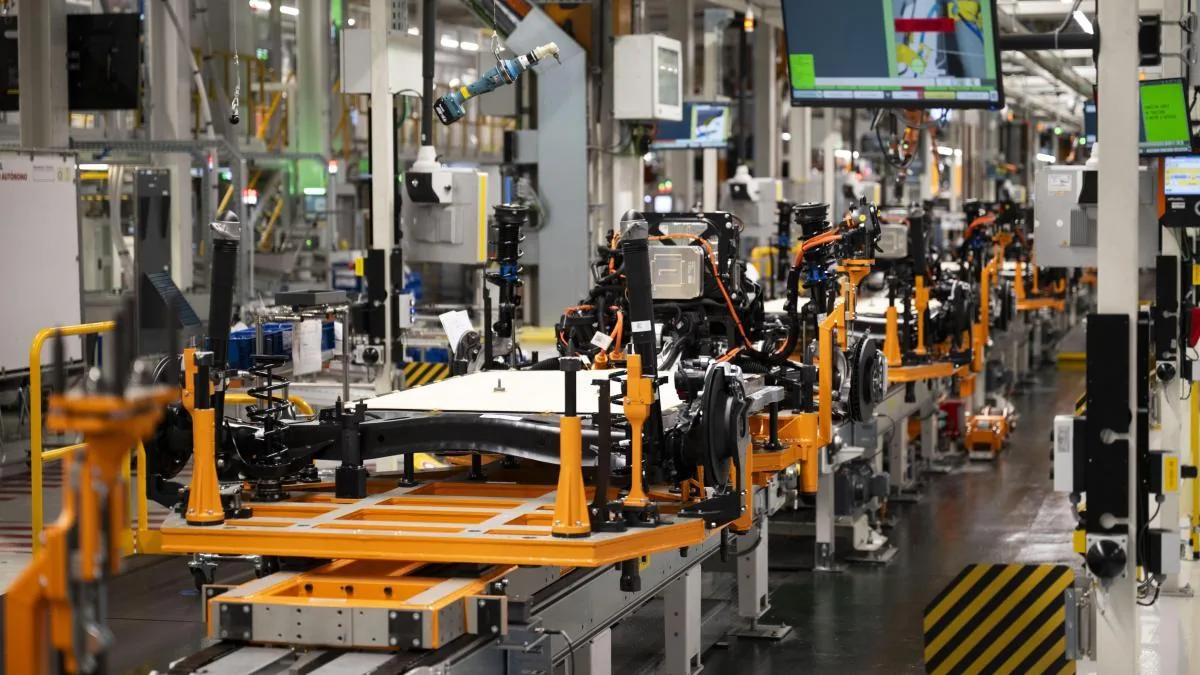
The automotive industry in Spain is undergoing one of the greatest transformations in its history, and time is increasingly running out against it. “We are not facing just another market cycle, but a turning point in technology, value chain, geopolitics, and business model,” explains Ignacio Crespo, Consulting partner at KPMG in Spain.
The possible disappearance of the Seat brand by the end of the decade is a clear sign that something is changing and that time is running out, but it is not the only one. Practically all Spanish car factories have undergone or are undergoing significant transformations with electrification and digitalization as the main axes and with the entry of Chinese manufacturers as necessary collaborators and competitors.
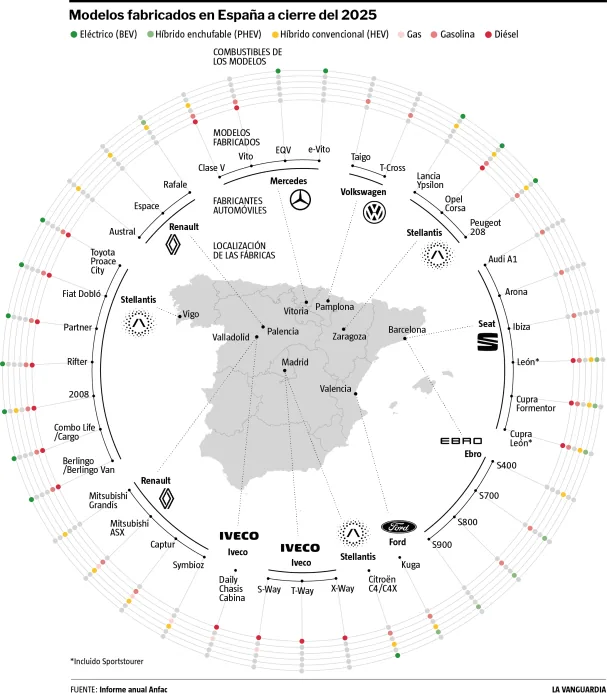
In the first half of the year, seven of the 12 automotive plants in Spain (the largest car manufacturing plants because there are five more for parts and engines) have reduced or stagnated their production compared to the same period last year. Specifically, these are the three Stellantis plants in Vigo, Zaragoza, and Madrid; the Ford plant in Valencia, the Renault plant in Palencia, Iveco in Madrid, and Mercedes in Vitoria.
On the other hand, Renault and Iveco in Valladolid, Seat in Martorell, Volkswagen in Pamplona, and Ebro exceeded the production figures of the first half of last year, according to data collected from various companies. The official figure for the total of all, provided monthly by the vehicle manufacturers association Anfac, points to a production drop of 1.7% up to June 2026, down to 1,199,542 vehicles produced.
There are general and specific explanations for the production decline. Anfac states that this setback is due to “adjustments in production lines to incorporate new electrified models and lower demand in the European market.” Thus, exports have fallen by 3.3% up to June.
Production adjustments for electric vehicles and lower demand slow the pace
Then, each plant makes its particular adjustments to face the challenge, detailed by Xavier Ferré, partner responsible for Automotive and Transport at EY Spain: maintaining competitiveness in electrification amid China’s advance and pressure from other countries. “Electrification is changing the competition: it’s no longer just about who manufactures better, but who dominates batteries, software, costs, and speed of innovation,” he points out. The transformation and slower-than-expected demand for electric vehicles slow the pace.
Read more The center-left opposition wins the elections in Sweden, according to polls
All are changing. Renault currently holds a strong position in Spain as the main hub for manufacturing its hybrid cars and having secured the allocation of five electric models for Palencia and Valladolid by 2028. Volkswagen in Pamplona and Seat in Martorell have recently been awarded four electric models: the Skoda Epiq and the I.D. Cross for VW and the I.D Polo and the Cupra Raval for the Catalan plant. The problem facing the VW group in Spain is that the Seat brand itself has no planned electric allocations in the medium term, which calls into question its survival as a brand and the group’s ability to fill the two factories with new models without Seat.
Also read
The Stellantis plants (the largest manufacturer in Spain, with more than 40% of total production) in Vigo and Zaragoza have managed to electrify their models and have been awarded the STLA Small platform to manufacture electric compact cars. Additionally, together with the Chinese CATL, it is building a battery gigafactory in Zaragoza with an expected investment of up to 4.1 billion. Stellantis has also agreed with Leapmotor to manufacture some of its models at its Zaragoza and Madrid plants, which guarantees the industrial future of the latter, which was uncertain beyond 2028.
This partnership with Asian producers is also repeated in Valencia. Ford and the Asian Geely have formed a joint venture to bring five models to the facility, two 100% electric from Geely and three from Ford. The importance is very high because Almussafes had been losing models for years and operating well below capacity. The factory has a potential capacity close to 500,000 vehicles annually, but last year it assembled fewer than 100,000. The goal of the alliance, harshly criticized by the Trump administration, is to progressively fill the lines again and even increase the current workforce of about 4,200 workers.
The arrival of Chinese manufacturers is an opportunity if they attract investment and establish local suppliers
The arrival of Asian manufacturers in Spain “must be analyzed pragmatically,” says Crespo from KPMG, because it can be “an important opportunity.” Chery (owner of Ebro and Omoda), Leapmotor, Geely, BAIC (with Santana in Jaén), and SAIC (in Ferrol) already have manufacturing in Spain or are in the process of setting up. “These investments,” he adds, “can generate employment, attract suppliers, and accelerate the transfer of technological capabilities.” The key is “to attract investment, but with local suppliers and technological development in European territory,” he emphasizes.
Spain has a very strong local supplier value chain, which collectively invoices more than 41 billion. But the current geopolitical context “of high uncertainty, pressure on margins, and slower demand evolution” is impacting accounts, point out Sernauto, the Spanish automotive suppliers association. The association sees the arrival of new manufacturers as an opportunity. But “for a true tractor effect, we need a significant part of components, engineering, and technological development to also be located in Spain.”
Read more Carney pushes the idea of making Canada an “associate member” of the EU