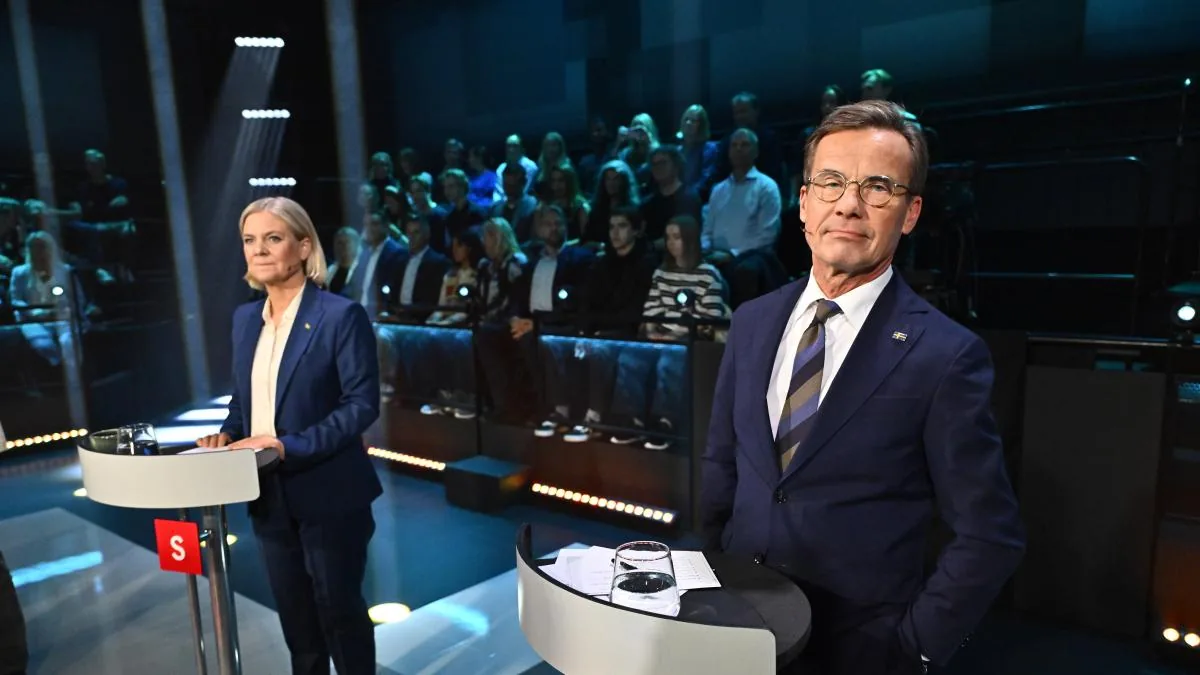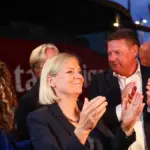







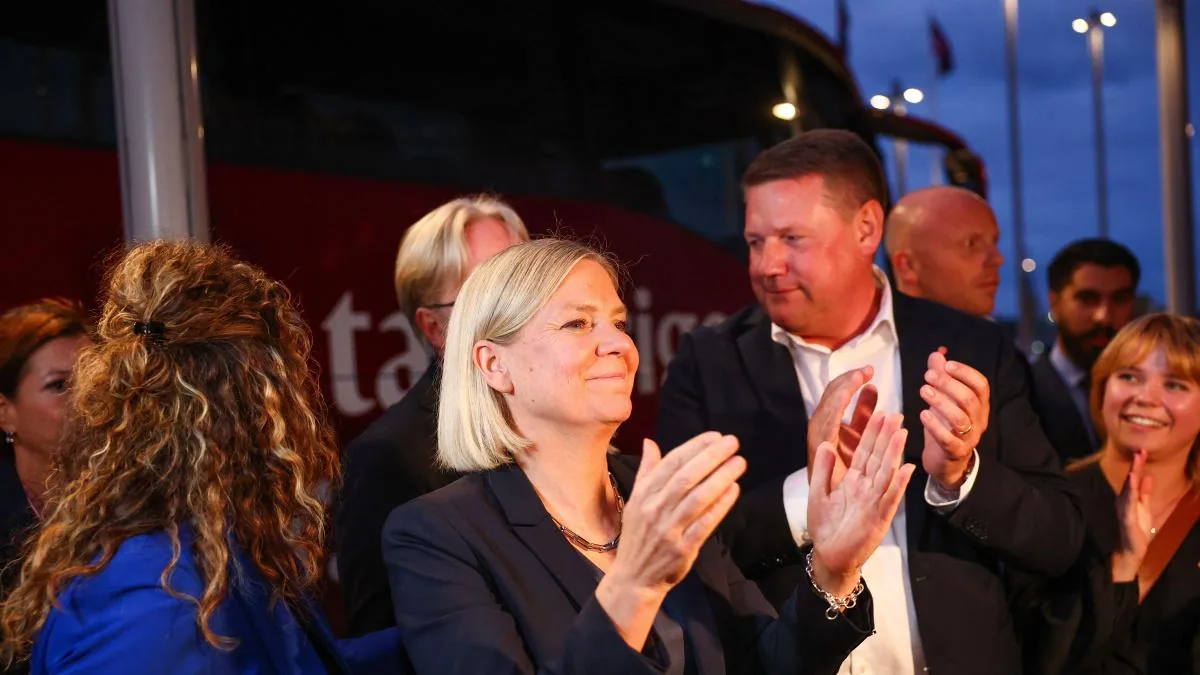
Sweden held a tight general election this Sunday which, according to exit polls after the polls closed at 8 p.m., points to a narrow victory for the center-left bloc of former Prime Minister Magdalena Andersson, which would have achieved 51.3% of the votes. The right-wing bloc of the current Prime Minister, conservative Ulf Kristersson, which includes the far-right Sweden Democrats (SD) as external support, would have reached 47% of the votes. The official count is underway.
Read more Carney pushes the idea of making Canada an “associate member” of the EU
Both blocs consist of four parties. Projections indicate that the center-left bloc – formed by Andersson’s Social Democratic Party, the Centre Party, leftists, and greens – is on track to achieve an absolute majority, to the detriment of the right-wing bloc, formed by Kristersson’s Moderate Party, Christian Democrats, Liberals, and far-right members. Caution while awaiting results, however, is necessary.
The Scandinavian kingdom of 10.4 million inhabitants went to the polls to elect the 349 seats of the Riksdag (Parliament), in an event where regional and local positions are also renewed. About 8 million voters were called to the polls, and around half of the voters cast their ballots early. According to the Swedish system, the official count, which started tonight and about which the Swedish Electoral Authority will keep informing, will continue on Monday.
“Now it is up to the Swedish people to decide what direction our country should take. Should we have a government completely dominated by the Sweden Democrats, something that has never happened before in Sweden? Or should we have a government led by me, guiding Sweden under a new spirit of cooperation?” Andersson had declared to journalists after voting at a polling station with her husband in Nacka. The Social Democratic Party committed during the campaign to strengthen the welfare state and help households facing difficulties cope with the rising cost of living.
Magdalena Andersson, a 59-year-old economist and the first woman to reach the head of government in Sweden, became prime minister in November 2021, after her predecessor and party colleague, Stefan Löfven, resigned following a lost vote of no confidence in Parliament and other political tensions. Löfven had been prime minister since 2014, and after those eight years in power, the Social Democrats lost in the September 2022 elections.
Read more Enric Mas, a complete sun without shadows, recovers the Vuelta a España
During her short ten-month term, Andersson competently managed a historic shift triggered by the large-scale Russian invasion of Ukraine: her country’s application to join NATO after two centuries of neutrality. Sweden was finally admitted to the Atlantic Alliance in March 2024, when she was no longer governing the country.
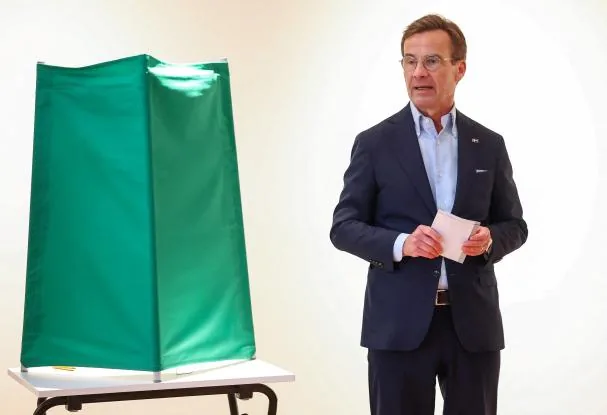
Ulf Kristersson, a 62-year-old economist, became prime minister in October 2022 by breaking, together with his Christian Democrat and Liberal partners, the cordon sanitaire against the far right, although the SD agreed not to enter the government and accepted to give external support to influence its policies, as has been the case throughout the legislature. Now, however, Kristersson and his partners have agreed that, if they gain a majority at the polls, the SD would indeed be in the future government and have ministers.
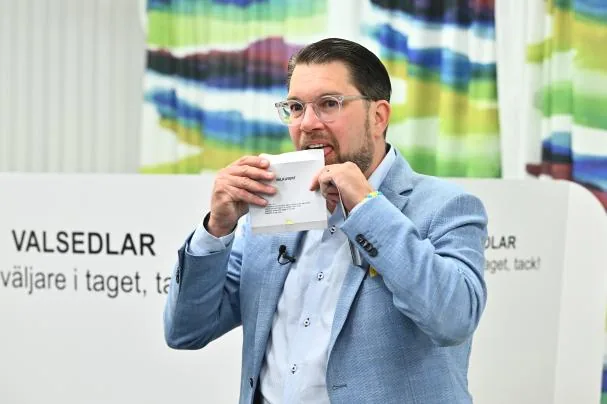
Founded in 1988 by neo-Nazi supremacists, the Sweden Democrats (SD) softened their positions somewhat starting in 2005, when Jimmie Åkesson was elected leader. In 2010 they managed to enter the Riksdag and in the 2018 elections they garnered 17.5% of the votes, without being accepted in government coalitions. In the 2022 elections, the SD became the second parliamentary force with 20.5% and the leading force of the right-wing bloc, finally touching power, but from outside the government. Hostility to immigration and ultranationalism continue to be their hallmarks.
Read more An 80-year-old man dies in the ‘bous al carrer’ of Vilavella after being gored by a bull