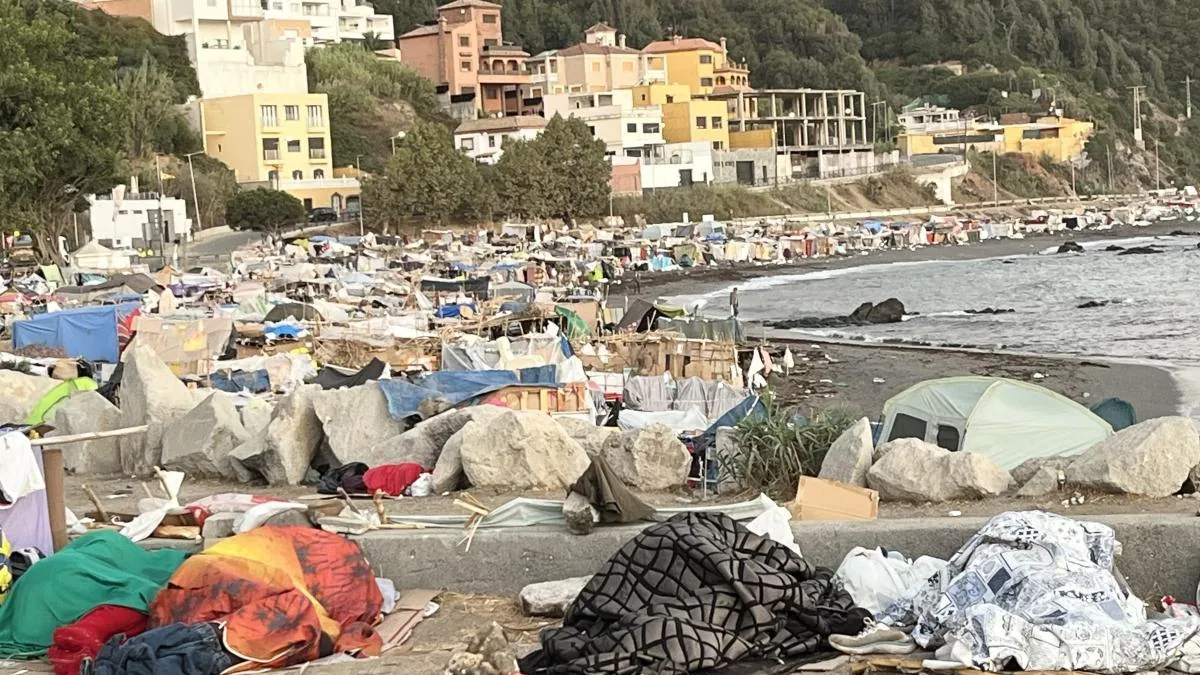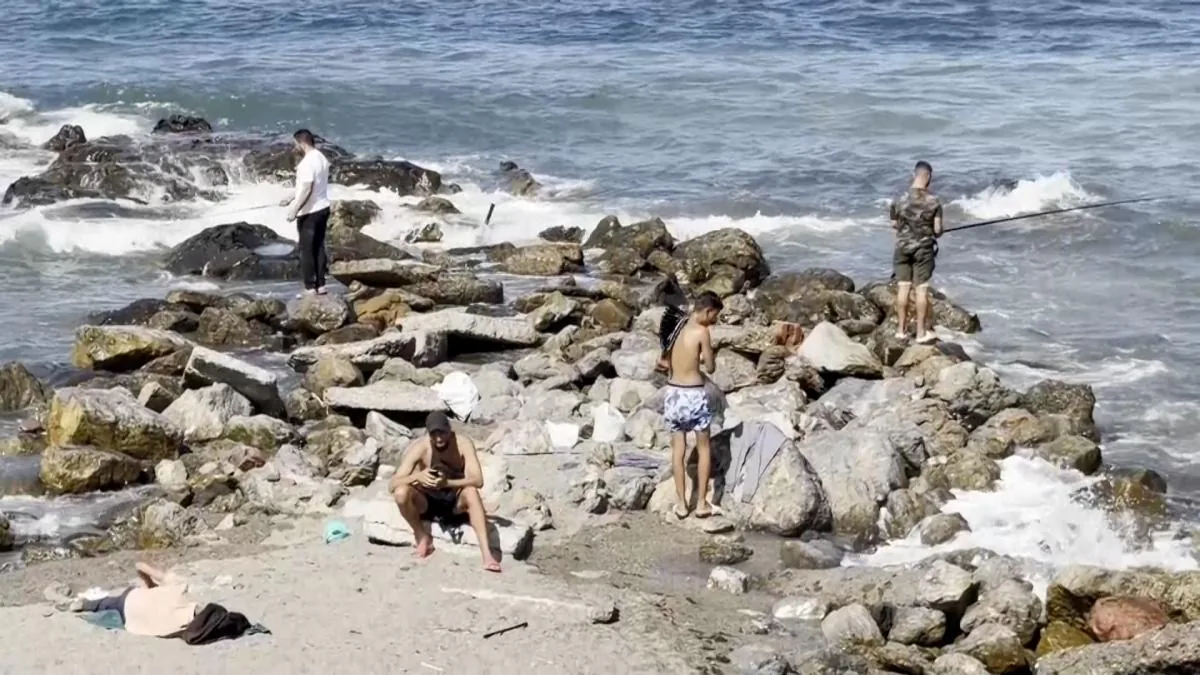







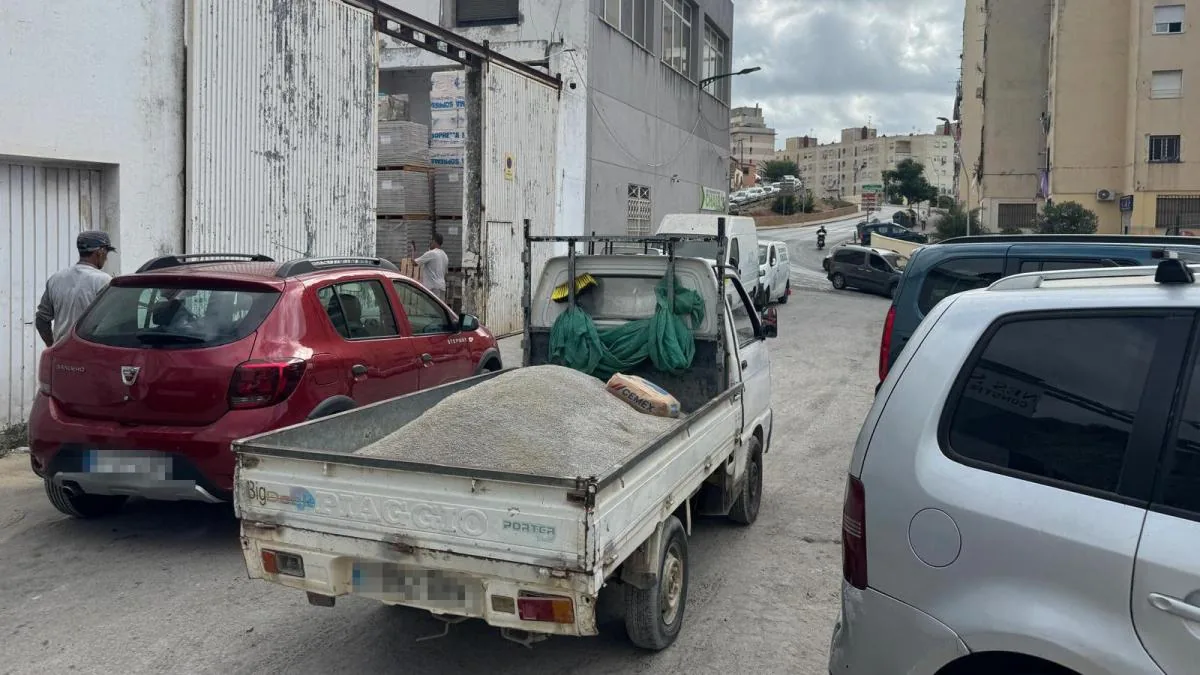
In the neighborhoods on the outskirts of Ceuta, some unsettling movements on wheels catch the eye. Besides the immigrants wandering back and forth and the military all-terrain vehicles patrolling the avenues, many Piaggio Porters – classic compact vans for small deliveries – rush through the narrow and steep streets. They look like taxis, going back and forth. On Saturday at noon, they lined up in a row at a roundabout in Loma Colmenar to access some construction material warehouses. They arrive, load – cement, mortar, plasterboard, gypsum boards, or bricks – and leave. And they come back for more.
Read more The situation of Ceuta, beyond the politicians
A brief chat with one of the store managers is enough to solve the mystery of the little white vans, which according to one of their drivers are impossible to rent for the coming weeks due to huge demand. “This crisis had to have something good. The economy has boomed. We have never sold so much in such a short time. There was no labor to do renovations and the worker who offered himself did so for 120 or 150 euros a day,” explains the warehouse manager. After the massive influx, there is plenty of labor. And cheap, of course. And off the books, naturally. Like Fadil, who on Saturday morning was not as lucky as on previous days when he goes to the doors of these shops to offer himself as a bricklayer. Since he doesn’t manage well with Spanish – beyond saying he doesn’t look for trouble; just work – he shows the gallery on his phone with photos of his work: he builds partitions, tiles kitchens, changes floors, replaces bathtubs with shower trays. At fifty euros a day. Although some days he has bartered, because he had no other choice, for a place to sleep.
On the street or in Facebook groups
They offer themselves in exchange for 50 euros a day or a bed to sleep and a hot meal
Two streets up, on Reyes Católicos Avenue, the Local Police have to pass every hour to clear double-parked vehicles that concentrate in three consecutive stores owned by the same person: a paint store, a hardware store, and one specialized in electricity. The lines are endless. There are more cautious Ceutans, who just say that after summer, September is a perfect time to get into the pending renovation or paint the home. And when asked who will be the handyman, everyone has “a handy relative.” But there are others who speak with fewer taboos. “Of those who have come in, those who commit crimes, all to Morocco, but those who really want to work, let them stay. They are experts in their field, perfectionists like no one, and with a lot of experience,” says Tariq, a resident of El Príncipe, who has come to the store for some cans of white paint for the walls of a room he has built for his daughter. Behind the counters, they confirm the sales boom. “We don’t stop, what can I tell you, you just have to look at the line,” sums up a clerk.
Iassine was born 23 years ago in Fez. His testimony is proof that the border is not completely closed. That immigrant swimmers still take to the sea. He entered Ceuta last August 20, from Riffiine beach. To locate: four hours swimming at dawn. He injured an ankle, so he prefers to leave aside his real specialty, plasterer, to paint houses. He says he hasn’t lacked work every day since he arrived. His Barça shirt, which at first must have been blue, but now is full of paint drops of all colors, confirms it. Mainly they contact him through Facebook, where he has posted several ads on the most visited profiles by locals: “Milanuncios Ceuta” and “For sale, exchange, giveaway Ceuta.” But while offers come in, to wait outdoors in the Loma Colmenar settlement, he prefers to station himself in front of the stores. Just in case luck strikes. How much a day? Also 50 euros, which seems to be a standard price.
Read more The declassified papers of Ceuta serve Judge Tardón to pull the thread
Rabat since the pandemic
It tightened controls on cross-border workers and there is a shortage of low-skilled workers
On the Facebook pages that Iassine mentions, ads for painters, carpenters, assembly services, electricity, light and water installations, or complete renovations proliferate. These are recently created profiles that post and delete ads within hours when they get the service. Meanwhile, they fill with comments like “invaders out,” “there is no work for you here.” The latter is refuted by any Ceuta entrepreneur. The border closure due to coronavirus marked a before and after for cross-border workers who crossed to Spain every day. Many jobs were lost that have not been recovered. Then Rabat tightened controls with Schengen visas, which about a thousand people have. Before, it was estimated that the number of people accessing to work regularly or irregularly was 8,000 people a day.
Fadil, who on Saturday was waiting at the construction warehouse, was one of the 864 people who secured a place yesterday in the new reception center in Los Rosales. Inside, he made the victory sign with his hand. He has days ahead in which he will not exchange his work for a bed. Until his return to Morocco, he says he will keep making money. Although he does not know the margin he has. Neither he nor the Ceutans involved in renovations. Hence the Piaggio Porters rush to finish the renovations. They are the other side of the crisis: expulsions, but not so fast.