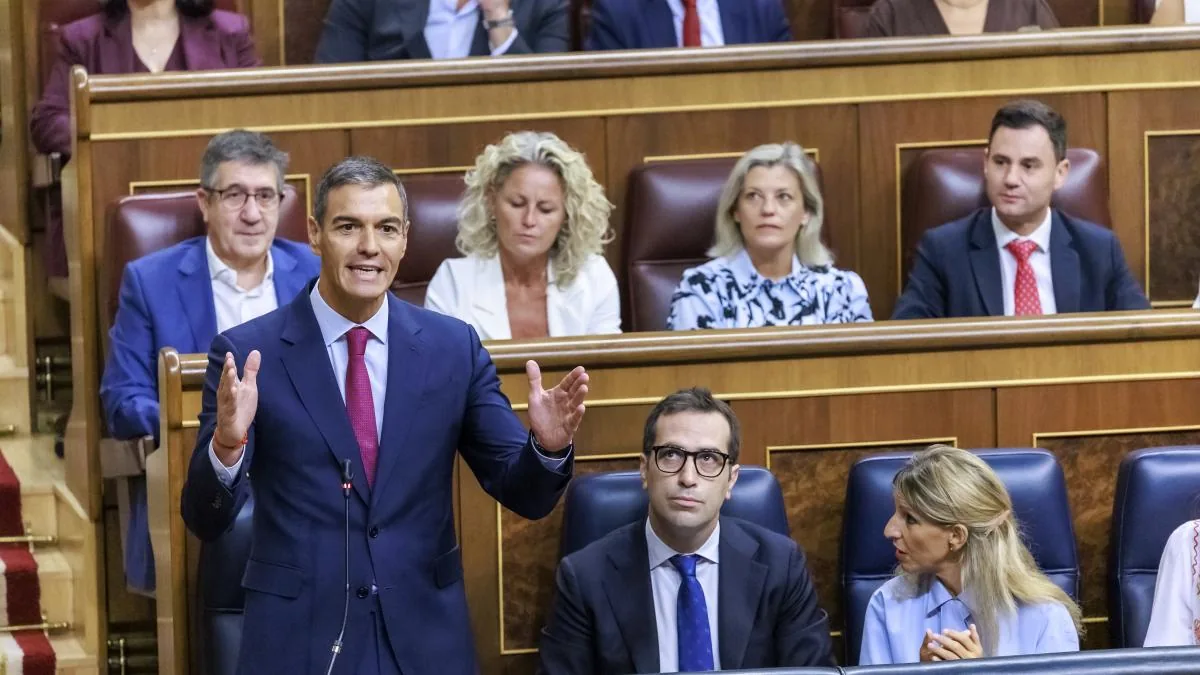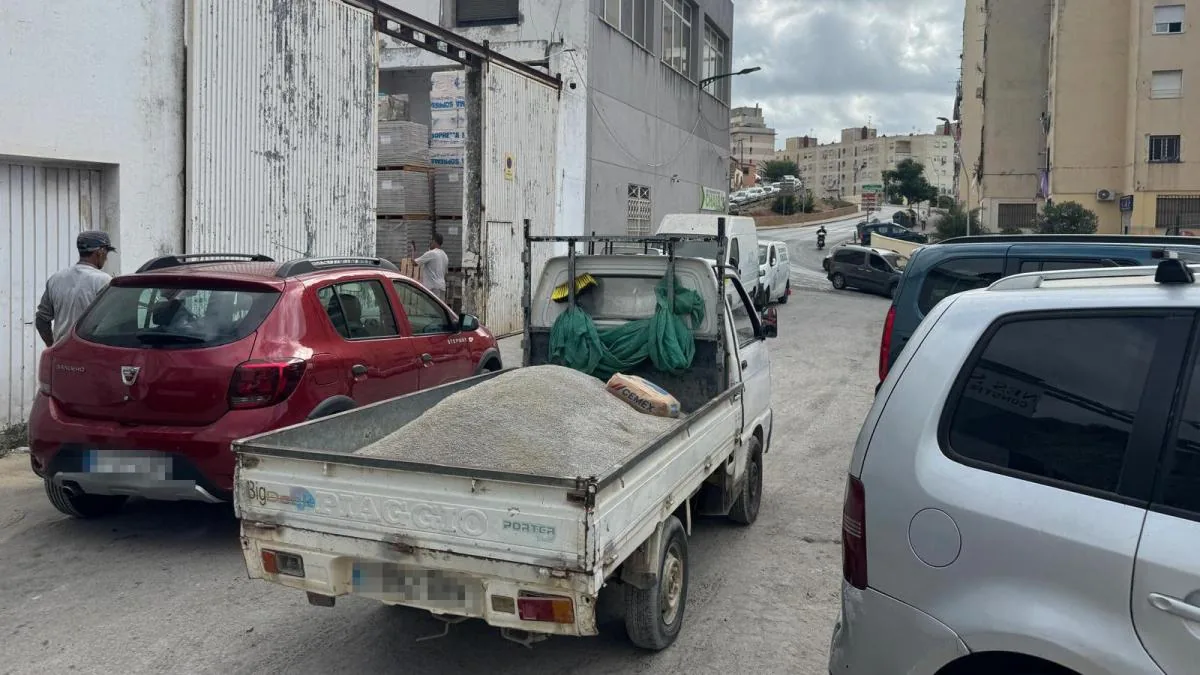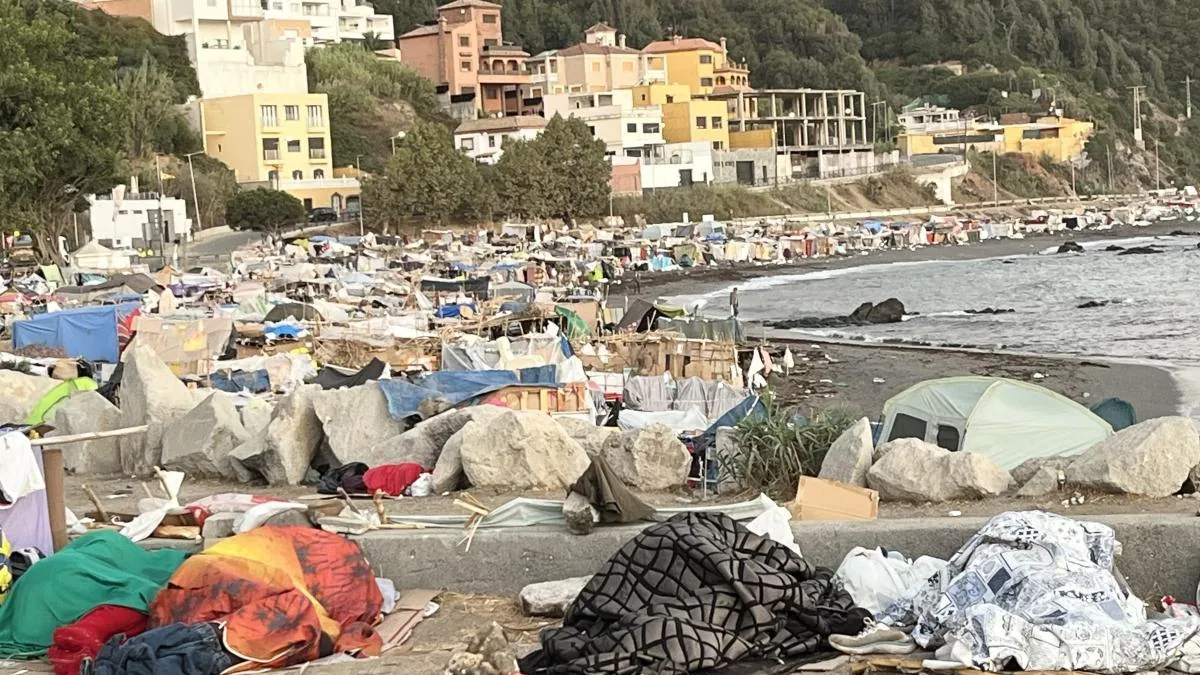







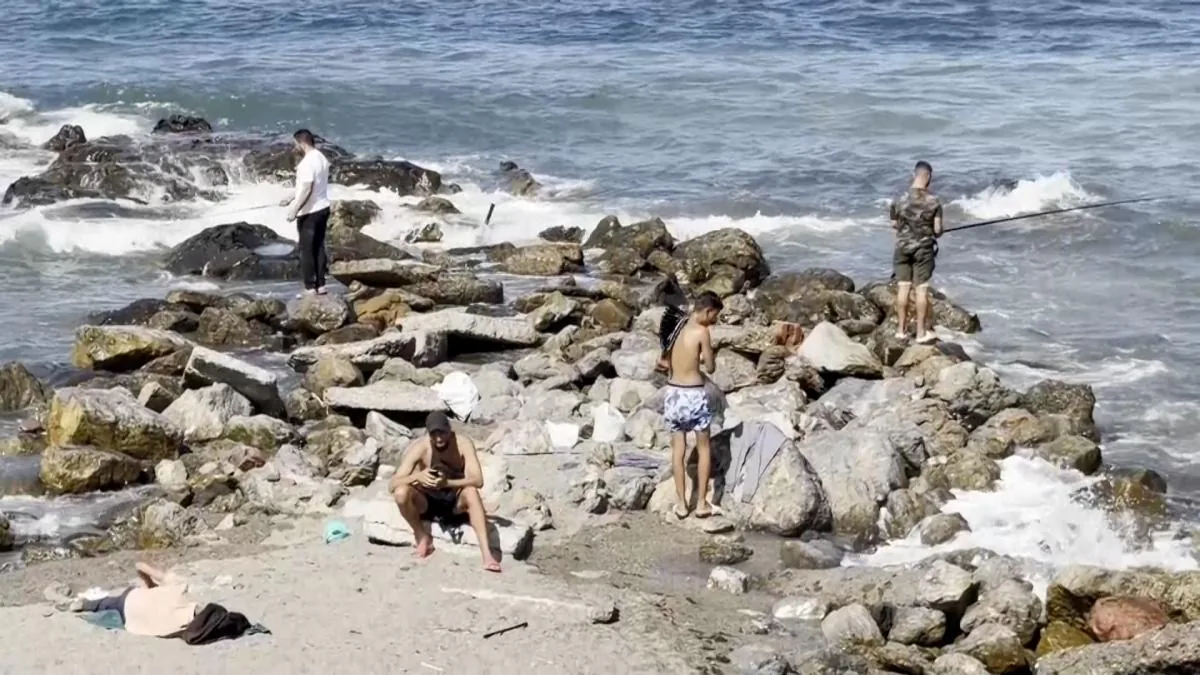
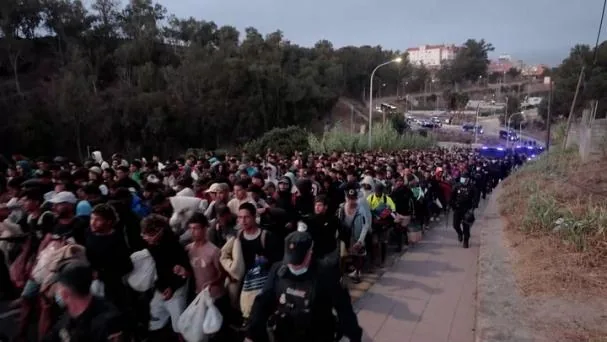
The decision of the Prime Minister, Pedro Sánchez, to declassify communications between police forces, intelligence agencies, and institutions regarding the warnings about the Ceuta crisis has opened several scenarios, some more predictable than others. For now, the Government has exposed the activity of the National Intelligence Center (CNI), causing great unrest within the secret services. It has led to the first resignation, that of the chief of staff of the Government delegate in the autonomous city, and has prompted a criminal investigation into the massive entry of between 70,000 and 80,000 people from Morocco between July 30 and 31.
Investigators are pursuing clues about whether Morocco was behind the organization of the avalanche crossing
One day after the Government, following approval by the Council of Ministers, released the 40 declassified documents, the judge of the National Court María Tardón requested the papers from the Ministry of the Presidency. Ministerial sources indicate that the legal services are preparing all the material to formally send it to the investigating judge, who has initiated an investigation into the Ceuta crisis.
The National Court Prosecutor supported the initiation of proceedings although without requesting any measures
So far, the magistrate has only admitted several complaints and opened proceedings for alleged crimes against peace and territorial integrity, as well as homicides for the death of 83 people, according to official data, while swimming from Morocco to Ceuta. The Prosecutor supported the start of the investigation, although focusing on the possible authorship of some criminal organization – something initially ruled out by the Police and also by the investigating judge – and without requesting the carrying out of any measures.
After declassifying the papers, there have been moves in Ceuta to cover backs before the judge
Legal sources indicate that the investigators appointed by the magistrate are still pursuing certain clues in search of the possible authorship of the organization of the massive entry. However, Tardón has not yet taken a firm step regarding the direction of this branch in the investigation, pending more concrete data. The declassification of the documents has opened new avenues for the magistrate to pull the thread. There are three strands in the case: first, the possible authorship and alleged participation – by action or omission – of Morocco. Second, whether political leaders ignored police warnings about calls through social networks for a massive entry into Ceuta, both by sea and by land. And third, it will be to confirm or completely dismiss the possible participation of any criminal organization and, if so, which one.
The Civil Guard requested on July 8 to reinforce the border, but the floating barrier was not installed until after the crossing
Before deciding whether to start an investigation, Tardón asked the Police and the Civil Guard if they had received or notified alerts in the previous days. With the now declassified documentation, it is known that there were warnings that massive calls were being made on two Facebook channels – with up to 180,000 followers – and a WhatsApp group to enter Ceuta on July 30. Distorted information spread like wildfire in them that the border was open and everyone who set foot in the autonomous city would have a free pass to cross to the Peninsula. This thesis is corroborated by testimonies collected by the media, including La Vanguardia, from July 30 itself, when immigrants were still arriving hoping to obtain immediate residence permits. Also by those who began, in those hours after the massive crossing, to return to Morocco, saying they felt deceived by the call.
Read more Spain faces the industrial restructuring of its car factories
It is expected that Tardón will start pulling the thread and calling the interlocutors of those alerts who, judging by the outcome, did not gauge the severity of the attack. Among the declassified papers there is a communication from the 29th between a CNI official and the Government delegation’s office, in which the former warns of the call for the “assault,” taking advantage that during the Throne Festival in Morocco the security forces will be “tied up.” The person who received that message was the Chief of Staff of the Delegation, who resigned on Friday, but stated in his farewell letter that he did forward that information received. He also reported a later 11-minute call. The Government delegate, Miguel Ángel Pérez Triano, denies it.
The papers have set a starting point for the investigation: July 8. That day, the Supreme Court issued a ruling confirming that a border rejection could not be carried out on those who entered by swimming since there is no physical barrier, like the fence for land entries.
That same day, a Civil Guard report included an internal note warning of the need to reinforce the border. According to sources from the Ministry of the Interior, from the first moment the extension of the Tarajal breakwater with a floating fence was considered to discourage swimming departures. However, that containment barrier was not installed until August 1. By then, more than 70,000 people had already crossed.