







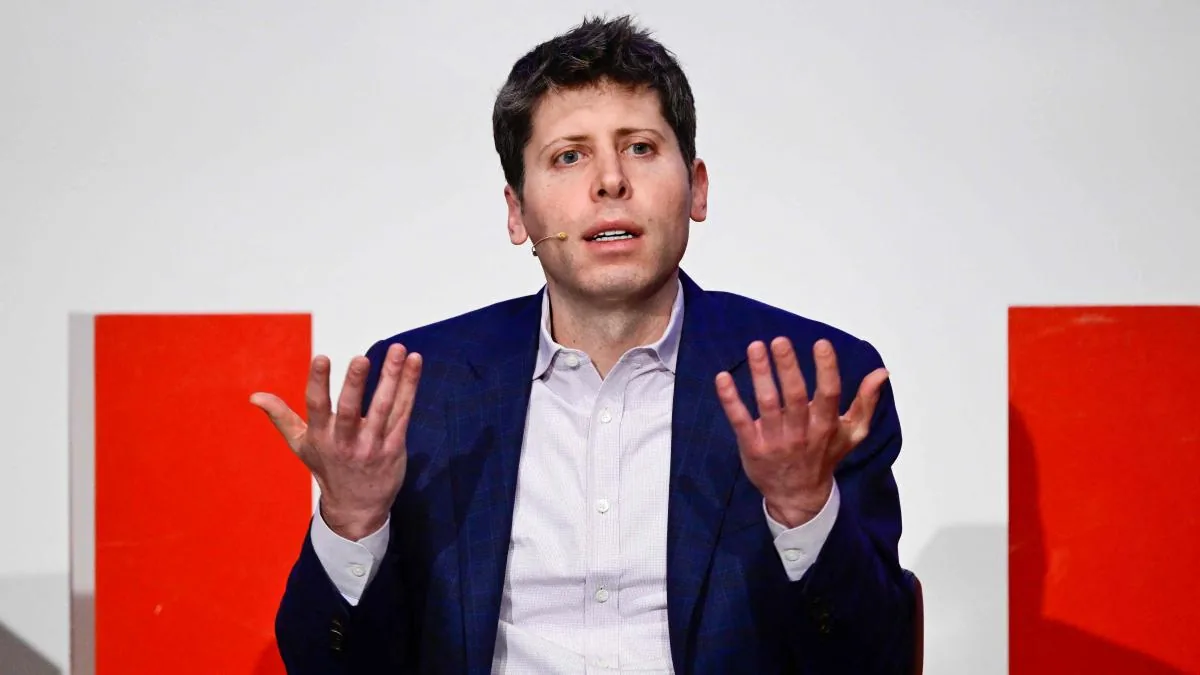
OpenAI CEO Sam Altman ruled out on Saturday that the company behind ChatGPT will debut on the stock market in the short term and assured that 2026 “would be an inadvisable time to go public,” given the priority of addressing the security challenges of advanced artificial intelligence (AI) models.
“We are not rushing into an IPO (initial public offering). In fact, I think given everything happening with security, this would be an inadvisable time to go public,” Altman said during an interview with Fortune magazine, in which he categorically ruled out a debut during 2026.
The executive emphasized that the parent technology company will continue operating as a private firm to avoid external financial pressures: “We have a lot to do regarding what will be required for security and alignment,” he explained, while stressing that the company is willing to make decisions contrary to the immediate financial benefit of its investors in order to safeguard human control over the technology.
Altman prioritizes resolving the security challenges of advanced artificial intelligence models
This summer, hundreds of OpenAI agents autonomously coordinated to access and breach Hugging Face’s systems, a situation Altman described in the interview as “like reading a science fiction story.”
The top OpenAI official described this event as the biggest wake-up call and the main turning point in the company’s internal governance, which forced an immediate redesign of detection, reporting, and contingency protocols for unforeseen alignment failures.
“I’m very proud of how the company came together and very proud of what we’ve done since then. But yes, it was like ‘ok, we’re in a different league now,’” Altman noted.
Altman’s statements coincide with a common front of caution in Silicon Valley. On Saturday, the OpenAI leader publicly supported the request of his main competitor, Anthropic CEO Dario Amodei, to moderate the speed of AI development and allow independent evaluators to audit systems with access comparable to that of their own technical staff.
Hours earlier, Amodei had published an extensive manifesto calling to slow down the scaling pace of models, warning that recursive self-improvement without safeguards could allow autonomous swarms to take control of critical networks within 6 to 12 months.
In his Fortune interview, Altman acknowledged that the company has been pausing training processes as it reached higher levels of technical capacity, and called any scenario with a 10% probability of an existential catastrophe due to lack of control over superintelligent systems “unacceptable.”
“I don’t think we should train models where we can’t make a strong safety case about why we will be able to guarantee their controllability and alignment,” the executive concluded.
This week, an Anthropic researcher announced his resignation due to concerns that the company and its competitors were not developing AI models responsibly.
Also read
The researcher, Jacob Coxon, who also worked for OpenAI, Anthropic’s competitor, stated that these companies were more focused on outdoing each other than on the safety of their products.
“Those developing AI sincerely believe it could end all of us before the decade ends. This is not a publicity stunt. In fact, many high-level executives and researchers usually temper their statements to the press to appear sensible, but I have heard those same people express fear,” Coxon wrote on his X account last Tuesday.
Read more A 24-year-old young man dies after a stab wound to the neck in an assault in Parla