




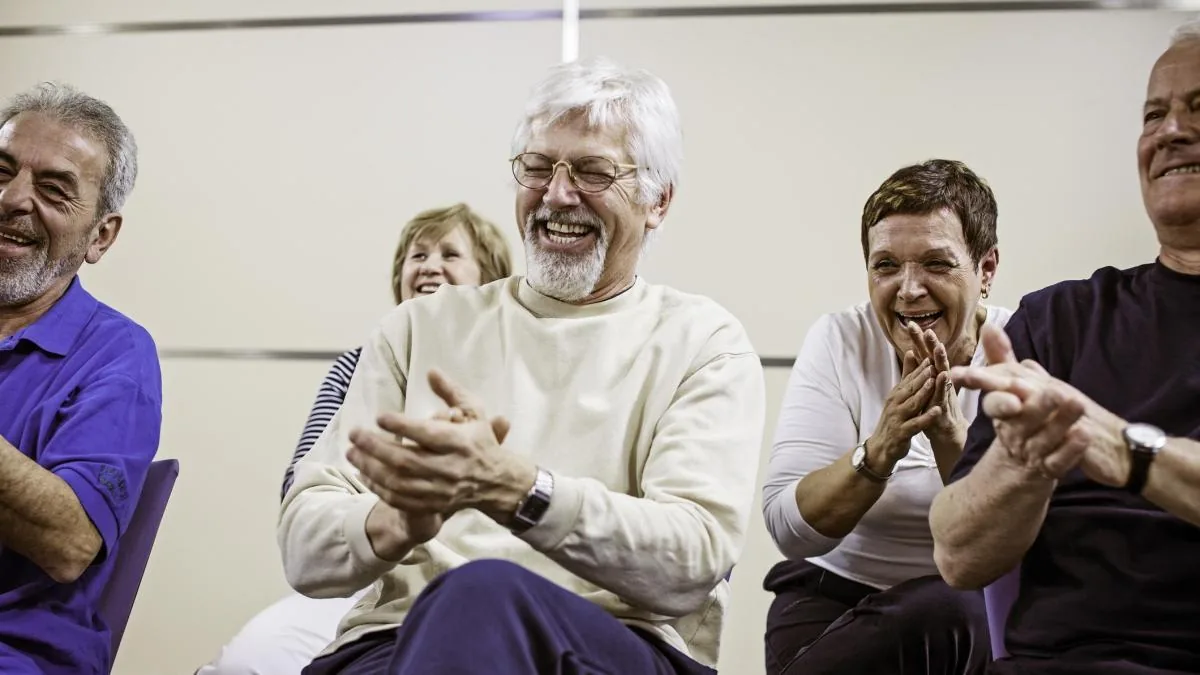
It is about replacing the saying “at once, smallpox” with “at once, vital.” This is the goal promoted by specialists in aging, physical activity, and mental health of older adults to achieve a hopeful symptom: laughing again. It appears in older people who manage to regain vitality and emotional stability. “One day you hear your laughter and you are surprised. But it happened to me after a long time trying to go out more when I didn’t feel like it, after being widowed, already tired of hearing my daughter almost forcing me to leave the house.” This is told by Rosa Serra, 76 years old, who lives in a village in the Madrid mountains.
Read more The Site, the new ‘Michelin mile’ in Eivissa
Her husband was ten years older than her and died two years ago after recovering several times from lymphatic cancer thanks to a treatment that included immunotherapy. “We were very hopeful because we saw that every time they gave him the medication, he recovered after a month. And I didn’t expect to be left alone suddenly,” Rosa recalls. “It has been very hard for me to accept that this is life and that I am young and that I can still do many things with my daughters and grandchildren,” she says with humor. She has no mobility problems “for now,” and adds with laughter: “God willing.” But whether He wills or not, Rosa is willing to do her part, which is the key to her recovery after the depression she suffered when widowed.
And emotional well-being, leading an active life, and finding motivation to move forward are the main ingredients for older adults to age healthily. “Humor and emotional well-being are key preventive tools to delay dependency and promote a full life,” emphasize the specialists at the Aging with humor from a preventive perspective conference, organized by the Spanish Confederation of Older People’s Organizations (CEOMA) in Madrid. The goal of this approach is clear: focus on prevention.
“A sense of humor can contribute to cardioprotection, to seeing the positive side of things by using it as a defense mechanism of personality and to relieve a reality perceived by the elderly as painful or negative,” says José Antonio Flórez, who was the author of the opening presentation of these sessions. The humor approach is just an excuse, agree experts in various medical and health specialties. “It has been proven that a sense of humor helps produce lower levels of inflammation, promotes blood flow, eliminates stress thanks to the production of endorphins and adrenaline,” argues Flórez, adding that “it also neutralizes the feeling of anxiety, controls fear of pain, and bodily hypervigilance.”
Aging as a synonym for transformation, not decline
Another aspect highlighted by experts in different disciplines is the necessary change in public discourse about life and the role of older adults in society, both by institutions and political representatives and the media. Sabina Camacho, from the CEOMA board, emphasizes that the At old age… vital movement, promoted by this confederation, goes far beyond being a simple and inspiring slogan. “There must be a profound paradigm shift to move from a welfare model to a model based on participation and rights, because aging is not synonymous with decline, but with transformation,” stresses this specialist.
Carlos is 82 years old, a retired doctor, and prefers not to mention his last name. “Although you never stop being a doctor, especially for the family,” he adds with laughter. He belongs to one of the organizations that defend the social paradigm shift regarding the image society projects about older adults and attended the humor sessions. “For me, a sense of humor has always been fundamental, but when you get older, you tend to lose it. Memories weigh a lot, and of course, we all have good and bad ones. And the bad ones usually weigh more,” says this professional.
Sabina Camacho
“Those of us who have a privileged environment, that is, children and grandchildren nearby, reasonable health for our age, hobbies, and friends, find it much easier to age better. But this is not the general case, and positive messages must be supported so that people remember the bad with nostalgia but without falling into depression and promote care and mobility assistance for those who, when they reach my age, cannot manage on their own,” says this doctor, who prefers to be quoted not as a specialist but as a “grandfather.” “It is my current profession, what I have liked to do most for years,” he adds.
Read more Lions and gladiators? If there was a circus in Barcino, it disappeared
As a member of the CEOMA board, Camacho advocates the At old age… vital movement and explains that it “goes beyond being an inspiring slogan.” He defends the need for a profound paradigm shift to move from a welfare model to a model based on participation and rights. “Aging is not synonymous with decline, but with transformation,” he emphasizes.
Also read
And this initiative, which is made up of more than 30 organizations specialized in the health and care of older adults, scientists, employers, and professional associations, promotes active and healthy aging through preventive health policies. The goal is to place older adults as protagonists of their own lives and encourage their active participation in political and strategic decision-making, especially those related to health and biopsychosocial well-being, summarizes the CEOMA spokesperson.
Precisely in this “vitality,” understood broadly, Valentín Fuster, director of the Mount Sinai Medical Center Cardiovascular Institute in New York, as well as general director of the National Center for Cardiovascular Research (CNIC) in Spain, emphasizes. This renowned specialist has detailed in various presentations the main keys to having a long life. In a recent interview on Cadena Ser, for example, he said that from 60 to 100 years old, the most important things, apart from managing risk factors, are “first, socializing, avoiding personal isolation; second, motivation, that is, you have to be motivated by something and find the purpose of this motivation, and third, physical exercise.”
Between 60 and over 100 years old, behavior is fundamental; one must not isolate
Valentín Fuster
Director of the Mount Sinai Medical Center Cardiovascular Institute in New York
To that vitality advocated by older people’s organizations, Fuster adds the awareness that individuals themselves must take: “Between 60 and over 100 years old, behavior is fundamental,” he emphasizes; “you must not isolate yourself, you must be motivated and exercise, because this has a very important impact on dementia, very fundamental to consider at these ages,” insists the cardiologist.
The need to promote public policies that encourage active aging
In fact, the study , by the Spanish National Research Council (CSIC), emphasizes some of the issues mentioned by Fuster. It highlights in its conclusions that in the so-called third age, “physical activity, balanced nutrition, and mental well-being are key to maintaining energy and health,” which the data corroborate. Researchers highlight the fact that Spain combines record longevity with new challenges in care for dependency and chronic diseases, and the precise need “to promote public policies that encourage active, healthy, and equitable aging.”
And the message society gives to older adults about their role and the image it has of them and their value plays an essential role in this, as Ruth González, management advisor of Grupo SENDA, a company dedicated to publishing and projects in different sectors, also emphasizes. According to this expert, transforming the current social model toward one that fosters a different view of older adults also involves “changing the media’s approach to aging.” “There must be talk of diversity in aging, integrating longevity as part of an active and productive society,” she concludes.
Read more At the summit of Mount Uishèra…, with the permission of the guard dog