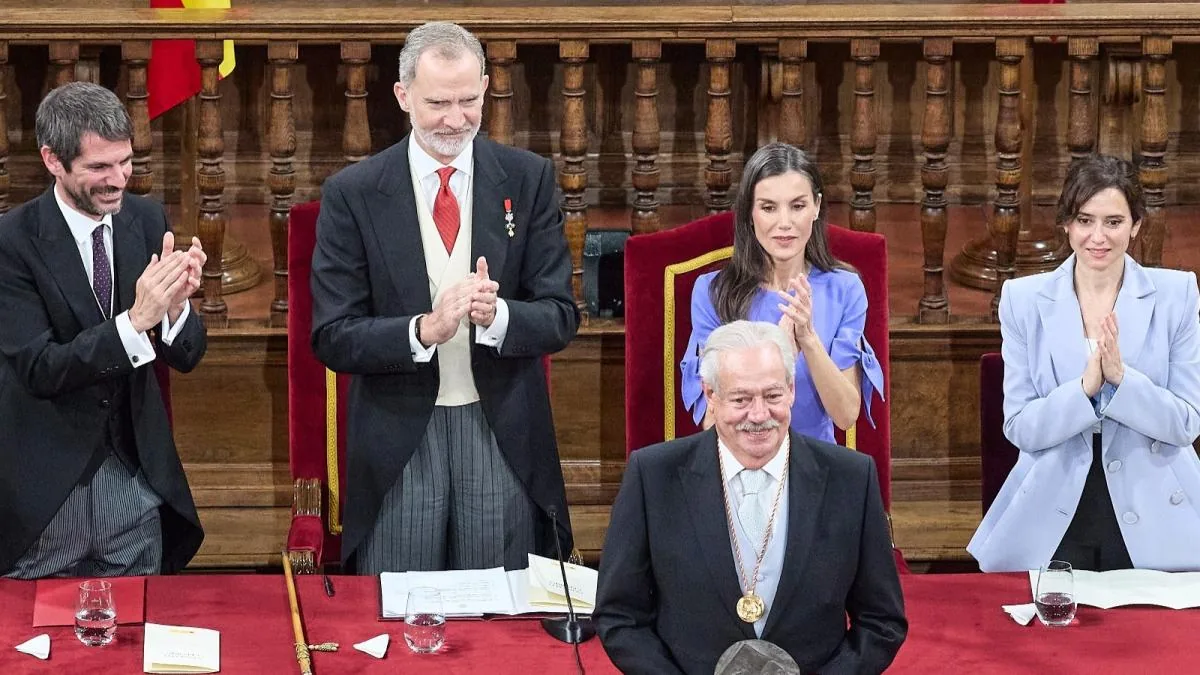
We thank Gonzalo Celorio for representing, in his work and in his life, that fruitful dialogue between tradition and creation, between memory and future, between Mexico and Spain. For enriching, ultimately, our language and our literary heritage.” With these words, the King certified this Thursday the enduring union of both countries, “more than brothers,” in the ceremony for the delivery of the Cervantes Prize to the Mexican writer that took place in the auditorium of the University of Alcalá de Henares.
Read more Welcome to the Sant Jordi of pollen, with a new literary axis and not without controversy
Behind the political controversies that, from the Mexican government, have been fueled in recent years over the request for an apology to the Crown for the abuses committed during the conquest, this Thursday’s ceremony has proceeded along the path of understanding, shared history, and a culture that unites. This was recalled by the King when he highlighted that the life and career of Gonzalo Celorio “remind us that Mexico and Spain are more than brother countries: they are cultures intertwined by language and culture, united by a sincere closeness and a shared affection that endures over time.”
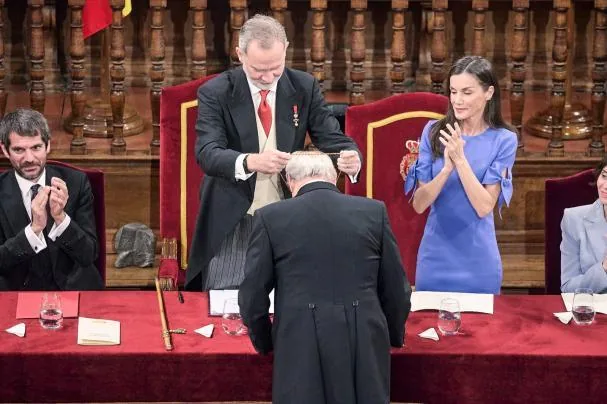
Gonzalo Celorio, visibly moved, received from the King the medal and the sculpture that accredit him as a Cervantes Prize winner, thus joining a list of fifty writers, Spanish and Hispanic American, who have created the best works of Spanish literature.
In his words, Celorio remembered his father and dedicated his speech to the literature of the self and memory and to his reading of ‘Don Quixote’, focused on the sense of humor and freedom. The award winner began with the words his father uttered on his deathbed: “You will arrive, son.” And he added: “If you can’t, I’ll push you.” Today I arrived, Dad, precisely today, 64 years later,” he said emotionally. He then dedicated the following paragraphs of his speech to Cervantes, the “most celebrated writer that the Spanish language has engendered throughout its millennial history and in all the places of the vast territory where it is spoken.”
Celorio also highlighted the links between Mexico and Spain: “Mexican nationality cannot be dissociated from Spanish history and culture, which are inherent to it. With its own peculiarities, to some extent derived from ancient cultures, in which an attempt has been made to superimpose the retrotopia of paradise lost, Mexico is a substantial part of what Carlos Fuentes happily called ‘the territory of La Mancha’.”
Read more M. Rajoy’s story, in three acts
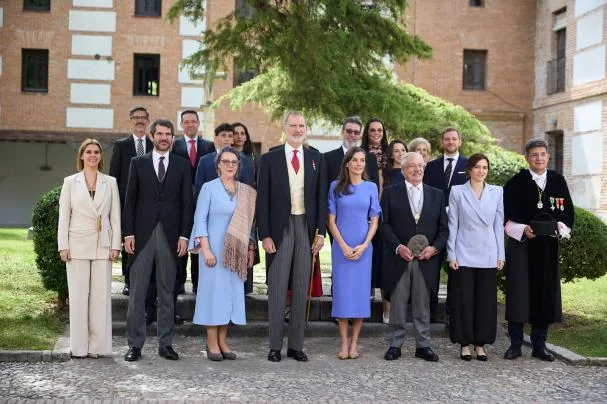
In the final section, the brand new Cervantes Prize winner returned to his family memories, to his mother who “always found time to read novels”; to his father who “wrote a love letter to my mother every day, even though both were at home”, and to his older brother, who was 22 years his senior: “who some afternoons would invite me to his room, which was less a bedroom than a library, and made me memorize bombastic phrases that I would have to say aloud when one of his girlfriends came home.”
Celorio concluded his speech with a praise for Spanish: “When someone asks me what is the word I like most in the Spanish language, I answer that the word I like most in Cervantes’ language is the word ‘word’”
Urtasun recalls the Republican exile
The Cervantes Prize award ceremony began with the words of the Minister of Culture, Ernest Urtasun, who pointed out that the Cervantes Prize to Gonzalo Celorio is a “living” reminder and a “tribute” to the generation of Spaniards exiled in Mexico, responsible for the “common history of Mexico and Spain.” Urtasun reviewed the tragic history of the Republican exile in Mexico, from the so-called “children of Morelia” — 456 girls and boys, between 5 and 12 years old, who, fleeing the civil war, arrived at the port of Veracruz in 1937 — and to all the exiles who, with generosity, were welcomed by the government of Lázaro Cárdenas, among whom were notable intellectuals who contributed to the enrichment of Mexican universities and cultural institutions.
Read more Cospedal on Bárcenas: “That person you’re talking about did not have compromising papers”