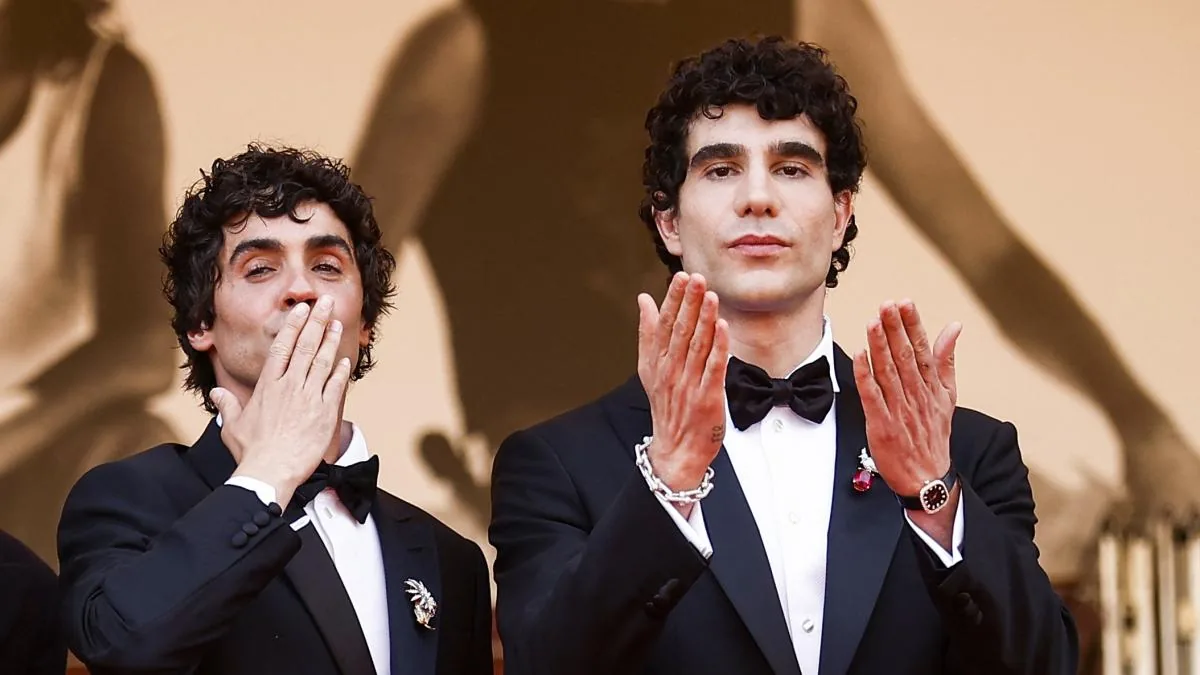
The debut of Los Javis at the Cannes festival could not have been more anticipated. After El ser querido, by Rodrigo Sorogoyen, and Amarga Navidad, by Pedro Almodóvar, La bola negra is presented in the final stretch of the event, where Javier Ambrossi and Javier Calvo aspire to the Palme d’Or with an unfinished story by Federico García Lorca of which only four pages were preserved and which was his first work with an openly homosexual protagonist. The famous Andalusian writer began La bola negra at the beginning of 1936, but he was murdered on August 19 of that same year.
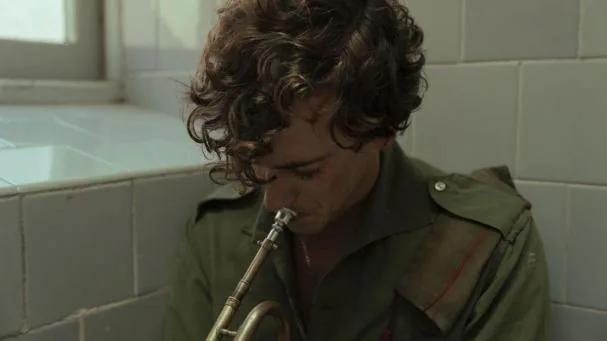
The film, which delves into what it has meant to be a queer person in three different moments in the history of Spain, 1932, 1937, and 2017, also relies on the text of the theatrical phenomenon La piedra oscura, by Alberto Conejero, National Prize for Dramatic Literature, with which Los Javis co-wrote the script of a story featuring a cast that includes Guitarricadelafuente, Miguel Bernardeau, Carlos González, Milo Quifes, Lola Dueñas, and special collaborations by Penélope Cruz as a cupletista and the American actress Glenn Close in the role of a writer expert on Lorca.
The movie brings to light that there are many love stories buried in the fields of Spain. “It’s because Lorca was murdered. It’s not an idea, a chimera, or a historical memory, it’s a personal reality of a guy who lived and was killed for being gay. For me, it’s very important to claim that. History is not just a line of text. As Glenn Close’s character says, ‘I’m interested in history because of the people,’ and it was essential to bring that part of the humanity of historical memories,” Ambrossi states during a talk with a group of journalists. Calvo adds that Close’s character says it is impossible to separate an author like García Lorca from his intimate desires, something that disproves the opinion of those who argue that Lorca’s sexuality doesn’t matter. “But how could it not matter if in all his plays he talks about his heartbreak and his fear? All the love and heartbreak he felt throughout his life is what built his work.” And he criticizes that everything said about him in film and theater “has often been from a very heterosexual perspective.” “That queer Federico has hardly been present in the art of our country,” he laments.
LGTBIQ+ stories can be grand and don’t have to appeal to a niche
Javier Ambrossi
For Ambrossi, “one of the driving forces was to talk about the impossibility of expressing yourself, because there are buried loves that are those that cannot exist. Those that you can’t even recognize in yourself and say if you are homosexual to start a life. There are many ways to cut off the future of an LGTBIQ+ person, from forbidding to killing them. And the beautiful thing about the film is that it says that’s enough. We live in a present where to honor the people who have fought and died, we at least have to try to be happy, enjoy our freedom, and claim that we cannot take a step back.”
Regarding the possibility that those hard-won rights could be harmed again, Calvo opines: “The threat exists and we see it every day on the news and in the streets, in other countries. There are people trying to make intolerance and fascism fashionable, and I think our job is to prevent that from happening by moving people emotionally and making them part of stories they can engage with from the heart. It’s a great way to reclaim that ground.” La bola negra is Los Javis’ most ambitious production, with several stories set in different times that are intrinsically linked. “We wanted it to be a big movie to claim that LGTBIQ+ stories can be grand and don’t have to appeal to a niche. Our banner is to create big things and besides, it stars three openly homosexual actors,” Ambrossi comments.
Read more Arrested the alleged investor of Lleida CF, accused of fraud and document forgery
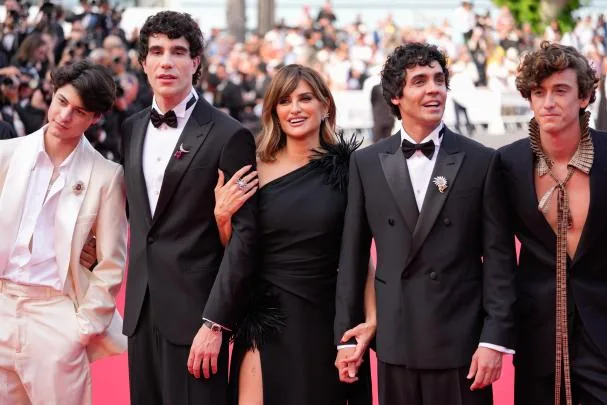
The basis that served as inspiration was La piedra oscura, by Conejero. It was while they were going to write the last chapters of La mesías that Calvo read the play. “As I read the prologue, when it tells about the bombing, I started crying, it moved me a lot, and I told Javi there was something to do because a project was getting stuck. From there, it’s the mystery of how we came up with that inside La piedra oscura was La bola negra, we read Lorca’s pages and the skiers and the snow caught our attention.” The challenge was to give it a contemporary counterpoint. They chose the year 2017 so that one of the characters would die at 100 years old. “We wanted it to be as current as possible and it’s a good year, politically it had its movement in Catalonia and it resonated with the year 1932 and that pre-war thing.”
At first, they doubted whether to include García Lorca’s character in the film, “but Alberto Cortés appeared and a magic was created between Miguel and him, between their roles as Rafael and Federico, which is the most beautiful in the movie. Suddenly, it’s curious that something you thought was unnecessary becomes the cornerstone.” La bola negra arrives at the Croisette fresh out of the oven and will premiere in Spanish cinemas in October. “More than the editing, which has always gone very well with Alberto Gutiérrez – with whom they have worked since Paquita Salas – the odyssey was that it’s a very sound-heavy movie,” Ambrossi indicates. “We arrived when we had to arrive, a week late,” Calvo says laughing.
Close, who acts as Ian Gibson in a female version, is a fan of La mesías. “She wrote us an email with a pdf where she said she connected with the series and asked us to meet her in New York. We went to her house, talked about several projects that none came out, we left, and when we were just writing the historian’s scene we saw it had to be her. We wrote to her and that same night she accepted.” The star of Dangerous Liaisons didn’t know how to speak Spanish but committed herself. “She was shooting The Hunger Games in Germany and we sent her a coach, a teacher from the Cervantes Institute… from there another movie comes out,” Los Javis laugh. “We rehearsed a lot with her and it was amazing.”
Glenn Close committed to speaking Spanish and we sent her a coach while she was shooting ‘The Hunger Games’ in Germany
In the movie, the phrase ‘The heart of a gay man is an ocean full of secrets’ is heard. Ambrossi and Calvo jump in unison: “It’s our tribute to Titanic, a queer Titanic!” Ambrossi also points to The English Patient. “It’s a Hollywood that fascinates me and made me dream of cinema.” The case of Penélope Cruz’s collaboration was similar to Close’s. “When we were at the Movistar event telling that we were going to write this movie, that same afternoon she called us because she wanted to be part of it.” She loved playing a cupletista and performs two musical numbers, in one of them with a blonde wig and on top of a tank surrounded by men who want to touch her. “We have tried to make the movie we would want to see,” they happily conclude.
Read more This is what Bad Bunny’s fans are like