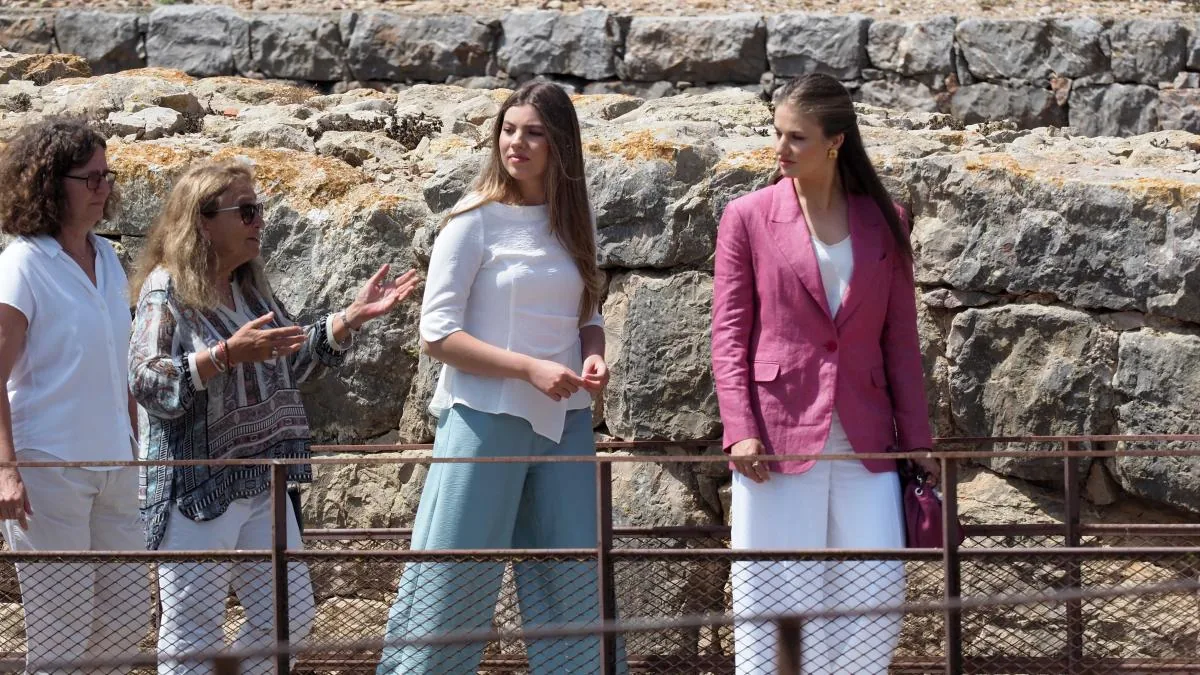
Asclepius (Escolapio) the Greek god of medicine, welcomed Princess Leonor and Infanta Sofía this Wednesday at the gates of the ruins of Empúries. The daughters of the Kings took a walk through the origin of the territory, now known as Girona, which twenty-seven centuries ago was a commercial hub throughout the Mediterranean thanks to Empúries, the market founded by the Greeks that, after a period under the Roman Empire and being lost in the early Middle Ages, was reborn last century as the most important Greco-Roman archaeological site in the Spanish Mediterranean.
Read more The PP proposes authorizing immediate returns for those who enter Ceuta and Melilla by swimming
The Princess of Girona and her sister fulfilled this walk through the ruins of Empúries with their annual visit to the province of Girona, as part of the activities of the Princess of Girona Foundation (FPdGi). Upon arrival at the site, they greeted a group of young people who have participated in the FPdGi programs this year. At the foot of the stones of the southern wall, they were able to admire a replica of the statue dedicated to the Greek god of medicine Asclepius, the Spanish Escolapio.
With the Mediterranean Sea and the coastal pines in the background, the site managers, Mónica Borrell and Marta Santos, explained to Leonor and Sofía the entire area of shops and workshops built on the main street of the ancient Roman city, among which stand out the remains of a Roman-era fish salting factory (1st century BC), where fish was chopped, gutted, cut, and cleaned with abundant water before salting or marinating in vats.
They also had time to visit the agora (the main square of Greek cities where political and economic activity converged) and, specifically, climbed to the reconstructed part of the stoa (portico) which, in Empúries, was built perpendicular to the sea, closing the agora to the north.
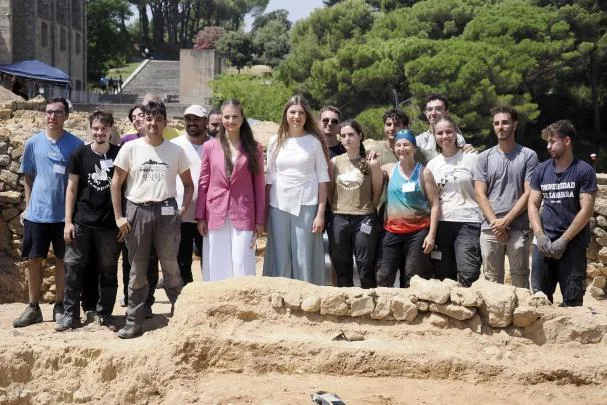
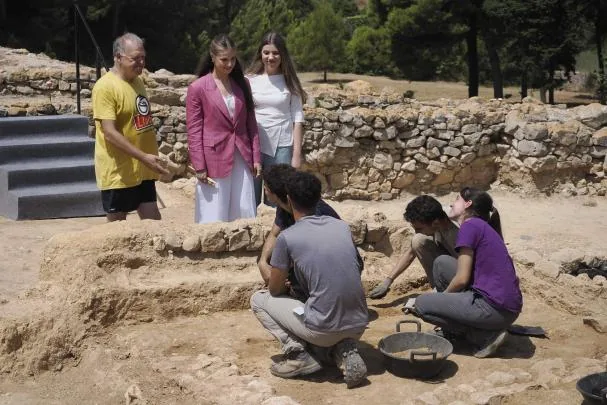
Before entering the Archaeological Museum of Empúries, Princess Leonor and Infanta Sofía were able to observe the excavation work in houses of the ancient Greek city from the 5th century BC, carried out by students of the summer course for archaeology students held in this town in Girona for 80 years.
Read more Practical experience is more important than family connections for finding the first job
Also read
The professors and students of the course explained, under a blazing sun, the excavation work of the course carried out in the northern sector of the Greek core, framed within the research project “Emporion, Emporiae, Impurias: ports and cities throughout their history.” Previous interventions carried out in this sector have allowed a deep understanding of the city’s connection with the ancient port and, in addition to recovering the complex stratigraphic sequence preserved in this area, have documented various domestic structures corresponding to the foundational phases of the Greek enclave of Emporion and its subsequent evolution.
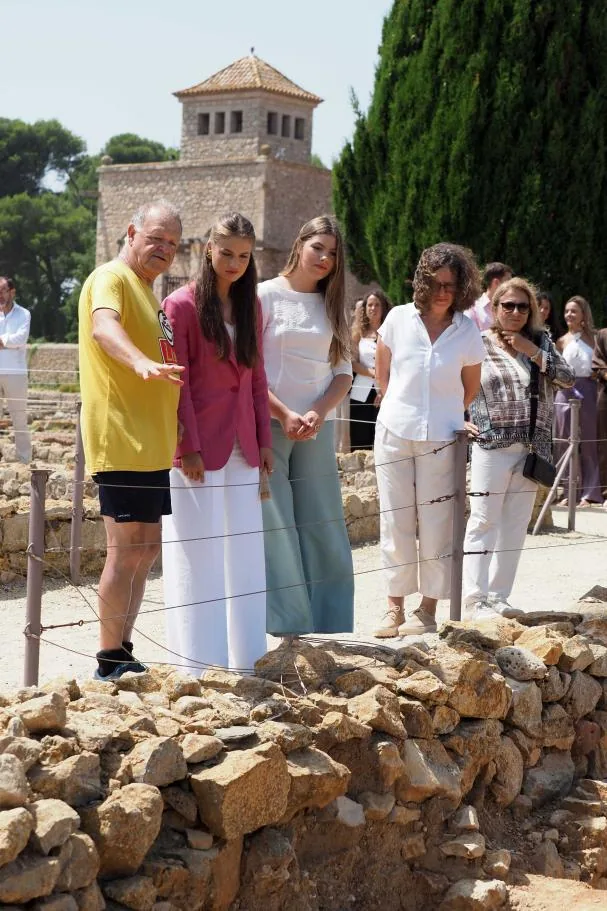
Princess Leonor and Infanta Sofía toured the Archaeological Museum, where representative objects of the site’s history discovered during more than one hundred years of excavations in Empúries can be seen, such as the original statue of Asclepius/Escolapio; a lead commercial letter; the mosaic of the sacrifice of Iphigenia; samples of Etruscan pottery; the amphorae used to transport garum, which prove the great commercial market of the time.
At noon, the Kings arrived at the site, where they are for the first time, to share a meeting with the Young Advisory Council of the FPdGi along with Leonor and Sofía, followed by a lunch joined by former awardees of the Foundation.
Read more The Biennial of Digital Arts is born to make Barcelona the international capital of the sector