Among the amalgam of festivals and digital centers such as Sónar+D, Mira, Offf, or Ideal, Barcelona is advancing towards becoming the capital of digital art. It is practically already so in Europe, but the ambition is to become a benchmark by crossing even more borders in the medium term. To achieve this last objective, the Biennal d’Arts Digitals has been launched, with the essential support of public administrations: the City Council and the Generalitat Government, together with the Barcelona Creativity & Design Foundation and the collaboration of the Ministry of Culture. The platform aims to serve as an umbrella for all digital initiatives to, in addition to that primary goal, promote co-production between local and international agents and bring digital arts closer to the public.
Read more The CIS places the PSOE again eight points ahead of the PP despite Ábalos’s conviction
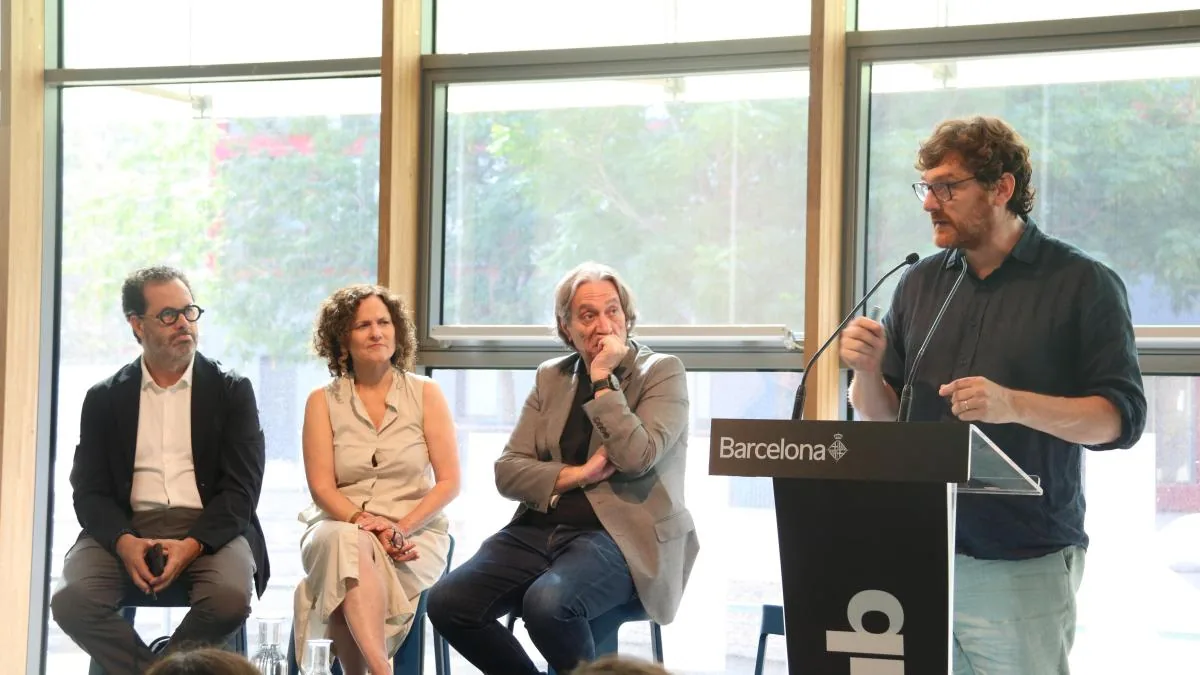
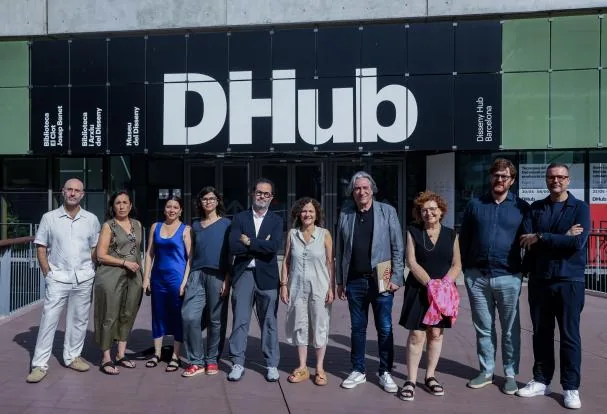
At the presentation event, held at the Disseny Hub, Pep Salazar, curator of the Biennal d’Arts Digitals, explained before the Councilor for Culture and Creative Industries, Xavier Marcé, the Minister of Culture, Sònia Hernández, and the president of the Barcelona Creativity & Design Foundation, Enric Jové, that the project was born after it was observed three years ago in this same space of the Disseny Hub, with the exhibition Digital Impact, that “there was a way of doing and explaining” digital arts that had to be consolidated by the public administration.
For Salazar, it became essential from then on to launch this Biennal, because digital art “is an artistic reality” and artists in this field “need tools to express themselves.” “Digital art, like all arts, raises questions about vital and social issues and shows us where we are going as a society and as a culture,” he assured.
Digital art raises questions about vital and social issues and shows us where we are going as a society and as a culture”
Pep Salazar
Curator of the Biennal d’Arts Digitals
The Biennal d’Arts Digitals will unfold from November until March next year around three main axes. The first, exhibition-based, through a show titled Vectors, which will display through “27 or 28 pieces the origins of digital arts and how it has arrived to today,” and another exhibition, Ressonàncies. “It will be very open,” Salazar stated, because it will be located in the hall of the Glòries metro station with a 16-meter screen. The uniqueness is that it will be permanent, exhibited 365 days a year, with creations adapted to the size of the screen and made by different artists.
A second axis of the Biennal is the professional one. In this section, the organization is first working on a symposium aimed “at everyone,” scheduled for February 3 and 4, 2027, focused on culture, innovation, and technology topics. Additionally, a “more closed program” is planned for which experts in fields such as museology or technology will be invited. Almost in parallel, on February 5, the Biennal intends to organize a circuit to give visibility to new projects and “new local talents.” Finally, work is also underway on a line of professional content for students.
The third and final axis consists of a program of activities to “generate a platform.” That is, to serve as an umbrella for all activities in Barcelona related to digital culture. Salazar cited as examples the mappings organized by Casa Batlló, the digital pieces presented by Llum BCN or Sónar+D.
With all these aspects proposed, Marcé valued the initiative and the willingness to highlight the relationship between art and technology. “Notice that cinema or music have been built around technologies,” he pointed out. “We are facing a paradigm shift – he emphasized –, this that we generically call digital transition.” Immersed in this transition, and despite technology advancing faster than culture and art, it was necessary to establish “a proposal of biennials on digital arts that would allow us to pace these two speeds, so that there could be a dialogue between technology and art as sensible as possible.”
Hernández, for her part, stressed that with the Biennal the perspective on what art is and new ways of artistic creation will be broadened, considering that “contemporary art is imbued with these new technologies.” In this line, Jové highlighted that with this initiative “we talk about what role Barcelona wants to play in the development of digital arts.”
Read more PSOE president Cristina Narbona acknowledges the “worrying signs” in the Leire case