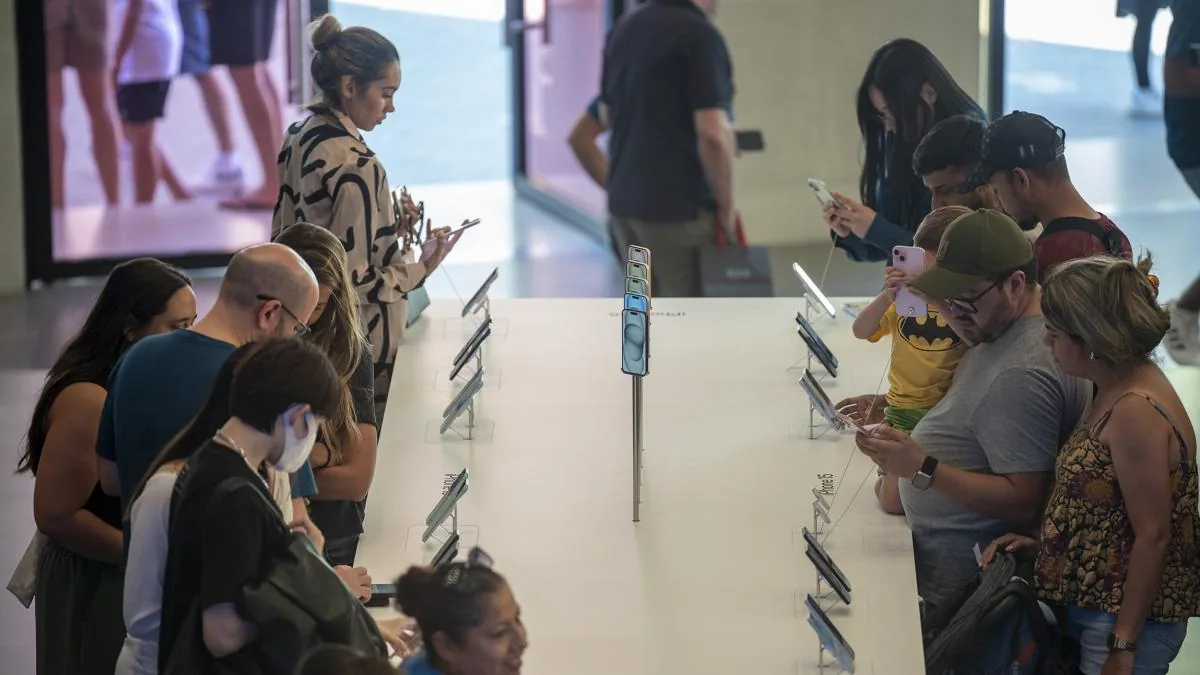
How many of us still have the same smartphone we had during the 2022 World Cup? Surely few. Most of us change phones long before their useful life ends. We consume electronic products at an increasingly accelerated pace and replace them prematurely. This trend is known as fast tech, fast and disposable technology, and it is causing serious damage to our environment.
Read more Paneque attributes the sinkhole in Putxet to insufficient concrete injection in the cavity
The name fast tech comes from another consumption pattern, fast fashion – the continuous and compulsive purchase of garments – driven by fleeting trends and marketing.
But what exactly is the impact of the accelerated replacement of smartphones? To get an idea, the manufacture of a smartphone generates between 50 and 80 kilograms of CO₂. This means that its global annual production is responsible for between 60 and 65 million tons of CO₂. These emissions are equivalent to those produced in a year by the use of about 14 million gasoline cars.
The gap between how long a phone could last and how long it actually lasts
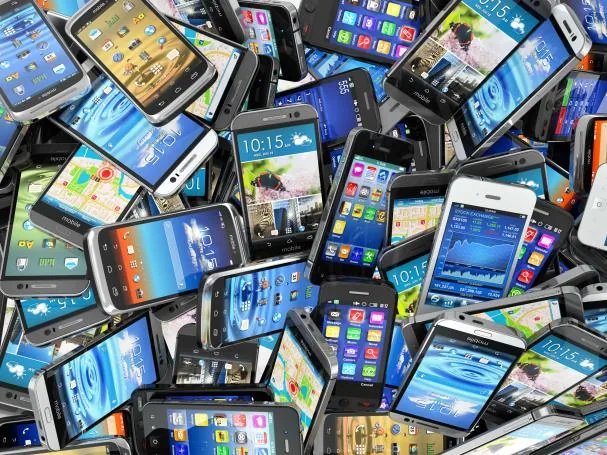
We call “potential useful life” the time during which a product can function properly. In the case of a mobile phone, some of the main manufacturers state that a new smartphone can receive software updates for six or seven years.
However, recent analyses show that consumers renew their smartphone, on average, every three years. Less than half of what designers expect. Is this drastic shortening attributable only to weaknesses in the economic and legal ecosystem?
Also read
Of course, it must be taken into account that both the hardware and software of a specific device can suffer deterioration that reduces its useful life. In such cases, users who want to extend the life of their device again will depend on repair services and spare parts offered by the manufacturer or the market. Thus, the level of development of the circular economy in the sector affects the effective duration of our mobiles.
This duration also depends on the existence or absence of regulations in a country on issues such as the right to repair or protection against planned obsolescence.
Promoting circularity and establishing strict regulations for the sector would help preserve our devices for more than three years. But this would not be enough: there are factors related to the consumers themselves.
How we realize our phone is aging
We tend to believe that the decision to renew our smartphone results from some cost-benefit analysis that we make explicitly or implicitly. On the contrary, recent research has shown that often we do not follow a rational course for the decision. Rather, we are conditioned by a set of social, emotional, and novelty factors.
Our behavior is better understood if we imagine that each person keeps an account of the “mental value” of their phone. Each day, that mental value erodes, among other reasons due to aesthetic aspects. For example, a new scratch on the screen or damage to the body of the device from a fall, however tiny, reduces the mental value.
Read more The reason why the King will follow the Spain-France from Barcelona
The decrease in the market value of the phone is not the same as the decrease in our perceived value: the loss in mental accounting is more radical. Every time the defect comes to mind, the value drops even more.
Always the same phone…
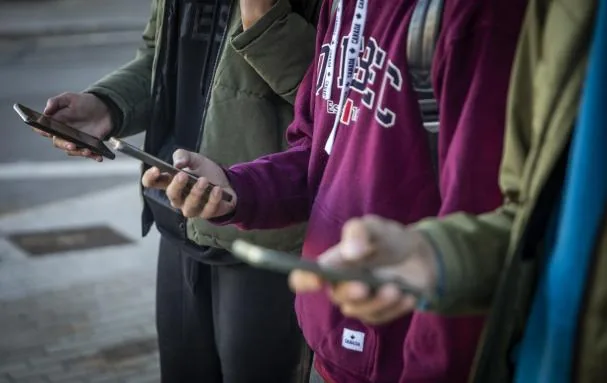
Another similar mechanism has to do with aesthetic and functional satiety. The positive surprise that the phone awakened in us when we bought it loses strength over time. We perceive the same product every day, without changes in its exterior and functionality. We become satiated. And this gradual satiety continuously reduces the perceived value of our smartphone.
Moreover, these forms of mental value deterioration are accentuated because smartphones also have symbolic value. They are not just useful tools: for many users, they are also status symbols. Their perceived value depends on the social group to which the person belongs. In this context, an aesthetic defect or the loss of novelty of the device causes the phone to depreciate more quickly.
Finally, consider the effect of new models that arrive every year and flood billboards and ads. The differences between the new version and the previous model are usually minor, even difficult to appreciate in the experience of the average user. However, they are amplified in product launch strategies. It is a wave of novelty, but we perceive it as a “tsunami” when the dams have lost their initial height. And it adds more erosion to the product’s value.
Rethinking the premature replacement of smartphones
The consumption of new phones every three years is not an irreversible condition. Changes are required in phone design, manufacturers’ business strategies, and country regulations. This would promote more sustainable production and consumption. But consumers also need to change our perception and replacement habits.
Before renewing a device, we can consult information that gives us a more objective picture of its current condition. We can practice care habits that keep it in good condition. And all this could counteract our mental devaluation dynamics.
I propose a challenge: if you change your smartphone this year, don’t do it again until the next World Cup. It may be a simple metric, but extended to millions of consumers, it could influence that system over which no consumer has direct control. This challenge could reduce emissions, save resources, and decrease electronic waste.
This article was originally published on the The Conversation website. Ricardo Sotaquira-Gutierrez is Associate Professor and Researcher at the Faculty of Engineering of Universidad de La Sabana
Read more “The secret is to love people a lot”