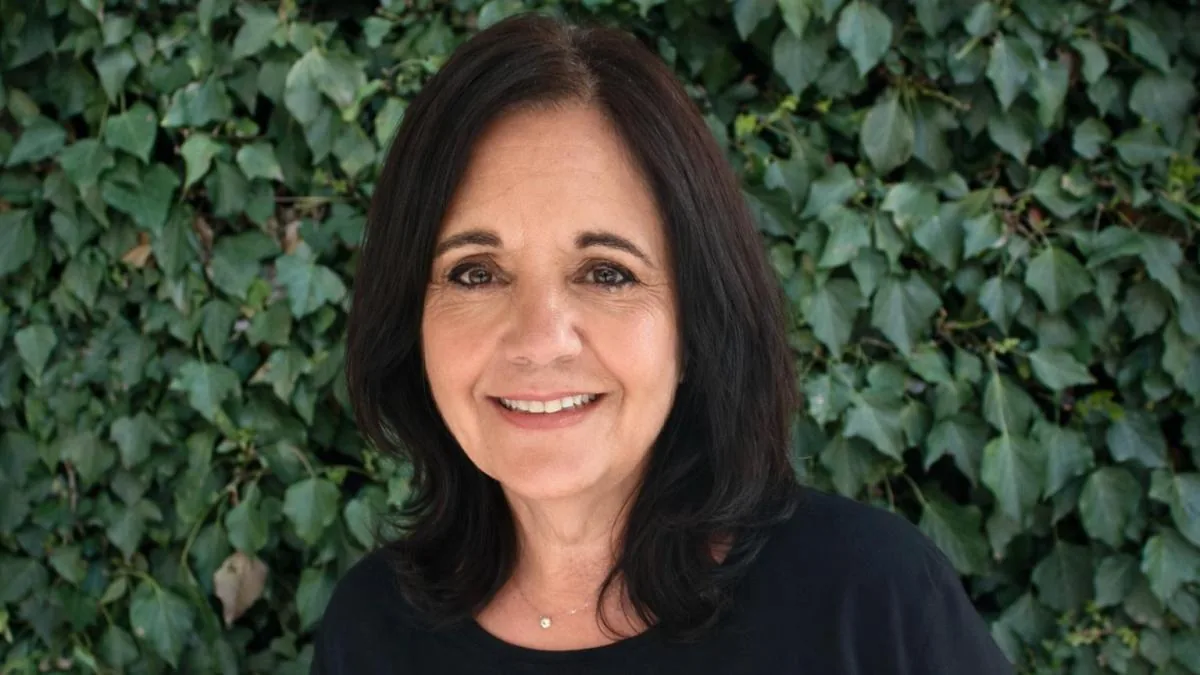
“I have always been a very olfactory person,” admits Laura López-Mascaraque. So much so that, as a child, her parents scolded her because before trying any food she needed to smell it. She even used her sense of smell as a kind of radar: “If I didn’t like someone, I didn’t want to give them a kiss,” she confesses. To that sensitivity was added a fascination probably uncommon decades ago. “While my friends wanted to be hairdressers or artists, I said I wanted to study and become a neurosurgeon.” For this reason, she decided to study the great forgotten sense: one that “was always left behind” and whose interest seemed reserved for a few fascinated by “that chemical world that surrounds us,” and who “knew how to appreciate its beauty and understand the emotions, memories, and experiences it can awaken,” she says.
Convinced that “scientists have the responsibility to convey to society what we do,” this doctor in Biology and Neurosciences, co-founder of the Spanish Olfactory Network and who also leads a group studying brain development at the Cajal Neuroscience Center (CSIC), has been expanding the focus in the laboratory for years, but also beyond. Now, she publishes The Fascinating Universe of Smell (GeoPlaneta).
She usually defines smell as “the Cinderella of the senses.” Why has it occupied such a secondary place?
Historically, smell has been linked to the negative. In the Middle Ages, odors were associated with danger or threat, and more has been said about bad smells than good ones. Freud, for example, said that civilization advanced as humans moved away from the world of smells. Also, there was a kind of hierarchy among the senses. That’s why, for me, smell has been the Cinderella of the senses. Now, however, smells have acquired a completely different value.
What value?
Gastronomy incorporates them as an essential part of the experience, and in marketing, there are no longer just logos, but also odotypes. It’s quite recent, and I say it’s almost like a new sense because we are beginning to discover a third dimension in sensory experiences and the relevance it is gaining in many areas. We also return to something that happened in the Middle Ages, when diseases were attempted to be identified through smells. Now we talk about the volatilome, the set of volatile compounds we emit that can reflect states of health or disease. It’s a field being researched, involving artificial intelligence and other tools. That’s why I believe that now, finally, we are discovering the princess behind Cinderella.
Do you think we have underestimated a sense that can be even more decisive than the others?
I wouldn’t say more important, but different. You can’t compare sight with hearing, nor touch with smell, nor smell with sight. Each fulfills a function, and in the end, the brain integrates all that information to build the perception we have of the world. But smell does occupy a very important place, that’s for sure.
And, as you point out in The Fascinating Universe of Smell, it is a sense with a particularity: its connection to the brain seems more direct, especially with areas linked to emotion and memory.
I always talk about the superpower of smell. The other senses have a kind of filter in the brain. Visual information, for example, leaves the retina and first passes through the thalamus, which filters the information and directs it to the visual cortex. Something similar happens with sounds, touch, or taste. Smell, however, reaches more directly, without passing through that prior filter, what we call the limbic system, the so-called emotional brain. There we find structures closely related to emotions, like the amygdala, and to memory, like the hippocampus. That’s why, even before processing it consciously, a memory already appears. We could say that, in its origins, the brain was much more linked to smell. With evolution, the cerebral cortex appeared, and structures related to the other senses developed. But that chemical dimension associated with smell has existed long before: it is present in plants, bacteria, and very primitive life forms. The first language of life was chemical. We don’t speak exactly of smell in those organisms, but of comparable mechanisms of communication and perception.
The good thing about smell is that it is the only sense that can be trained; if you consciously work with smells, the loss can be less
Laura López-Mascaraque
Neuroscientist
And do we have to accept that losing smell is normal with age?
The good thing about smell is that it is the only sense that can be trained. Why? Because the first information we receive from chemical molecules in the environment reaches the nose, and there are the only neurons of the nervous system located outside the brain. Also, they have an extraordinary characteristic: every 40 or 60 days, those neurons regenerate, and it has been proven that olfactory enrichment favors this process. As long as this continuous regeneration exists, we maintain the ability to smell. After a certain age, inevitable changes appear: presbyopia arrives, hearing loses capacity… But with smell, something different happens. If you train it, if you consciously work with smells, as perfumers or sommeliers do, that loss can be less. I know perfumers over eighty years old who handle a palette of thousands of aromas and still have extraordinary olfactory capacity. They don’t need “olfactory glasses,” so to speak.
And how can it be trained?
Very simple: using essences or elements we have at home: spices, lemon, orange… we are surrounded by things that smell. The idea is to dedicate a moment of the day to consciously smelling and paying attention to those odors. But there is something important: verbalizing them. One of the problems we have is that we barely put words to smells and don’t even know how to name them. You start doing it when you train. For example, you are smelling a wine, and they ask you: “What does it smell like?” It feels familiar, but you don’t know how to break down that smell. And a smell is not a single molecule but many at once. Then someone says: “Don’t you notice nutmeg? Don’t you notice vanilla?” and suddenly, you recognize it. But we haven’t learned from childhood to identify and name smells. By doing so, you are already training.
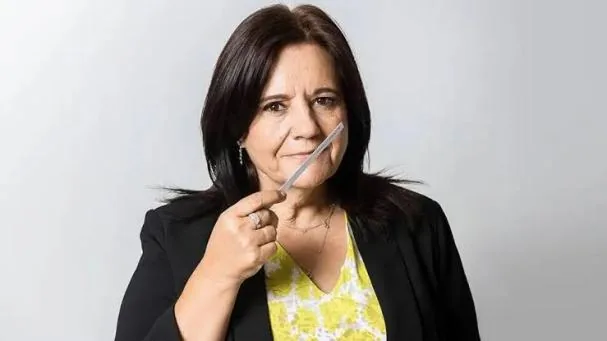
In the aging process, can loss of smell become an early sign of neurological deterioration?
This was clearly seen during COVID. Overnight, you could suffer total anosmia, that is, stop smelling absolutely everything. It was an abrupt and very characteristic loss. A different matter is when, many years before a neurodegenerative disease like Alzheimer’s, Parkinson’s, or multiple sclerosis appears, you start losing smell progressively. What we call hyposmia. That doesn’t mean that every person with loss of smell will develop a neurodegenerative disease. But it has been observed that, in many cases, before clinical symptoms appear, one of the first changes is precisely a decrease in olfactory capacity. And it happens gradually. Little by little, you start noticing that smells don’t arrive the same: before, you entered a kitchen and immediately recognized what was happening; later, that perception progressively fades. Today we know it can be an early sign of a possible neurodegenerative disease, many years before other symptoms appear.
Does detecting loss of smell in time allow prevention in some way?
That is something we will understand little by little; there is still much research to be done, and it is not exactly known what to do in those cases. Certain therapies or olfactory trainings can be recommended, but it is not clear to what extent they can modify that evolution. I am not a clinician, so I can’t say if there is any pharmacological approach that can reinforce it. What is interesting is the relationship being observed.
Also read
Can olfactory training become a tool to promote brain health and healthier aging?
I believe so. I often say it’s a simple gym for the brain. Both in children and adults, training smell is a way to exercise it. And, in some way, that olfactory therapy can help keep the brain active and alert. I see it in workshops I do with people with neurodegenerative diseases and with young children. The experience is usually very positive because it doesn’t require more complex cognitive processing or repetitive tasks. You can try to discover what something smells like, match smells, or even create stories from them. And that generates much more involvement than sitting down to repeat letters, complete mechanical exercises, or perform more routine tasks.
Does our body odor change with age?
Yes. With age, diet, hormones, stress, microbiome, skin quality, and health status. There are a lot of molecules — ketones, acids, aldehydes, alcohols… — that we emit through breathing, skin, saliva, urine, or tears. It is said that we can emit more than 500 different volatile compounds. The proportion of all these molecules constitutes a chemical profile. As we age, the body’s metabolism varies, and all that generates an aromatic layer on your body. In Japan, a term is used, kareishu, called “the smell of grandparents.” It tries to describe a smell associated with a compound called 2-nonenal, which appears in many older people. Now it has been seen that from 40 or 50 years old, you can also have it.
As we age, body odor changes
Laura López-Mascaraque
Neuroscientist
And why does it happen?
Because there is no degradation of fatty acids in the skin. There, they have it in little boxes, associated with a feeling of tenderness toward that smell. It is perhaps that strong smell often found in nursing homes. Normally, an elderly person doesn’t have to smell like that; some people do, but with proper hygiene and so on, you don’t have to transmit that smell. But yes, as we age, body odor changes. That is what we call the volatilome. There is one for wine, one for coffee, one human. It’s simply the smell you can have.
You spoke about how smells change with age, but it also happens with flavors.
Yes, it changes because, for example, in flavors, you have to consider that 80% of flavor is smell, not taste. Taste only recognizes the five basic flavors. That’s why older people, when they lose olfactory capacity, add more sugar or salt to things thinking that way the flavor will increase. We lose that capacity, and it is very noticeable. Also, the olfactory threshold decreases with age, unless you train it a lot; in that case, it is lost much less. All that influences how we smell things or people.
Earlier you mentioned electronic noses. How can they help identify diseases?
It is something being worked on and is not easy, especially in the case of smell. Digital devices have been created for sight or hearing, but trying to reproduce the processing of a smell as the brain does is quite complex. An electronic nose seeks to emulate a biological one. Now what is being tried, at least, is to detect molecules. For example, in cities, there are already electronic noses that measure pollution levels. They are olfactory sensors capable of detecting the concentration of certain compounds related to pollution. Another line being worked on is developing some type of electronic nose capable of better reproducing human smell. Now there are trained dogs capable of detecting cancer, diabetes, or COVID. What is being tried now is to identify what volatilome those dogs detect and relate it to diseases. The idea would be to detect, in a much less invasive way, if a person has cancer or diabetes, avoiding many medical tests. But there is an important bioethical issue. Imagine that in the future anyone could bring a watch close to another person and know if they have a disease. Even so, I believe this type of technology will evolve and can help reduce many complex medical tests.
Since you mention pollution, are we losing olfactory capacity or perception of smells because of it?
I think we are losing a lot. If you live continuously in a polluted environment, smell deteriorates. Even so, there are small strategies that can help, like spending time in parks or spaces with cleaner air.
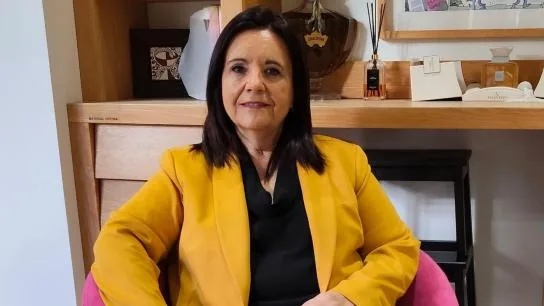
And with ultra-processed foods and fast food… Is there a risk that we are losing the ability to perceive foods?
On one hand, yes. All this fast food we have right now is horrible because many times it doesn’t smell like anything. Something similar happens with some Asian restaurants: it doesn’t matter if they serve you chicken with almonds or vegetables with soy. Very often, very similar flavorings are used for everything. However, in countries like Thailand, for example, you perceive many different smells in food and restaurants. But, on the other hand, I also believe there is much progress in rediscovering smells associated with gastronomy. Now there is a more authentic cuisine that tries to recover flavors and smells from the past and enhance the olfactory dimension within the sensory experience of a meal. I hope that, as we better understand smell, all this gains more importance. In fact, among young people, there is now much more interest in perfumes than years ago. So, on one hand, there is some homogenization of smells, but on the other, I think a true culture of smell is also growing.