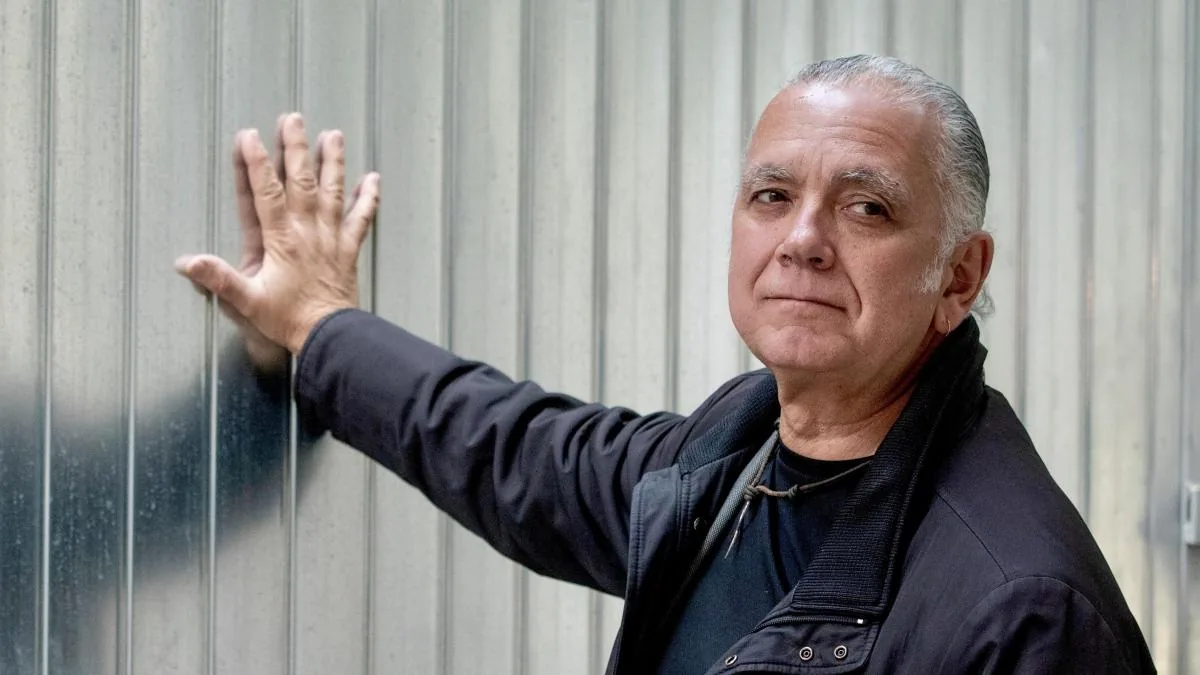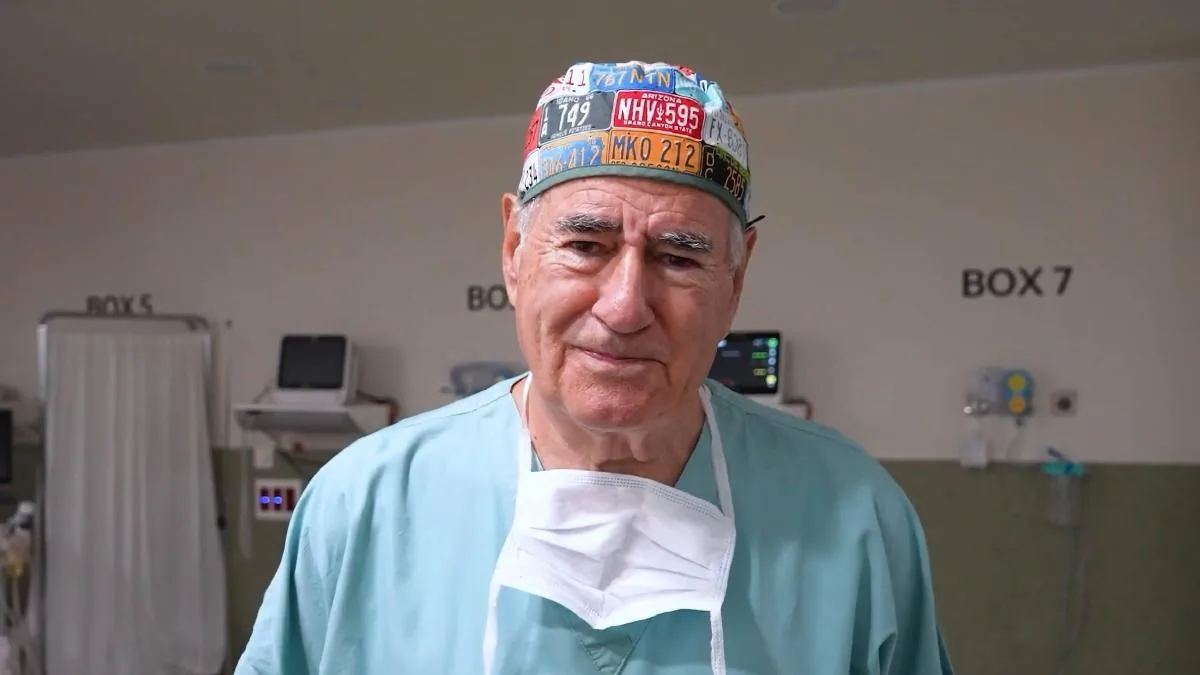
There are surgeons who transform bodies and there are others who dedicate their lives to understanding the complex relationship between beauty, identity, and the way we see ourselves. Javier de Benito (Sabadell, 1948) belongs to that second category. At 78 years old, and after more than five decades in the profession, he continues to enter the operating room with the same purpose as on the first day: to help people reconcile with their image.
Read more Firefighters rescue dog missing for two weeks that was swimming in San Francisco Bay
Considered one of the great international references in plastic surgery, he has been vice-president of the International Society of Aesthetic Plastic Surgery (ISAPS) and Taschen publishing house included him among the ten “magicians of the scalpel”. His career has also been marked by innovation and the training of specialists from the Instituto de Benito, a reference center that, since 2006, has been among the best in its specialty. Today, in addition to surgery, a large part of his work focuses on how to age better and on the role that personalized medicine will play in longevity in the coming decades.
Read also
Thousands of patients have passed through his hands, including some of the most well-known faces in this country. However, the doctor insists that the most important tool in his work is not the scalpel, but empathy. “It doesn’t matter if you do aesthetic surgery, gastroenterology, or oncological surgery: you have to humanize the profession.” Because, before changing a face, he explains to this newspaper, you have to understand the person who inhabits it.
It is not common to find someone who, after half a century in the profession, still retains an intact passion for their work. Did you always know you wanted to be a plastic surgeon?
While studying Medicine, I thought I would dedicate myself to general surgery. But I believe that success in life depends on two things: luck and knowing how to seize opportunities. One day, when my mother broke a finger, a hospital director told me about plastic surgery. I barely knew what it was about, but I went to meet Dr. Jaime Planas. I saw him operate on a nose and understood that it wasn’t just surgery, it was sculpture. Since I had always been passionate about drawing and art, I instantly knew that was my path. I gave up a position at Vall d’Hebron to train with him and spent ten years at Clínica Planas. That’s how my career began.
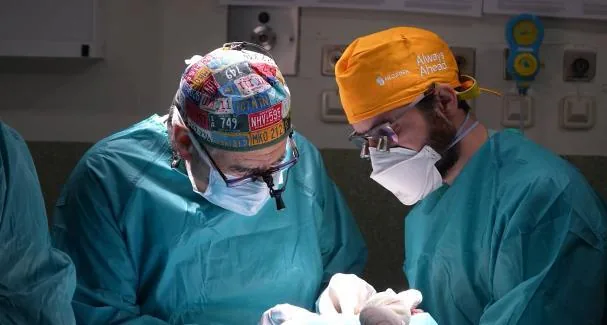
You are 78 years old, have a dazzling career, and still enter the operating room…
Yes, and I have a three-and-a-half-year-old daughter, who will turn four in October. Retirement is not in my plans. I have a Judeo-Christian upbringing, and my father taught me that one must work. Besides, I enjoy doing it. I will work until twenty minutes before I die. I will try to seduce and manipulate death, and I will operate on its nose. It’s true that I work less now. Before, I operated every day; now I do it four or five days a month. I have a wonderful medical team, one of the best, with almost twelve surgeons between Barcelona and Madrid. And, in addition, throughout all these years I have also consulted in Moscow, Riyadh, Amsterdam, and other countries.
If you look back, what transformation has marked a before and after in aesthetic surgery?
Many things have changed, but above all, technology. In the late 90s, surgery took a huge leap thanks to imaging, which allowed the development of endoscopic surgery for breast augmentation, abdomen, or eyebrow lifts. But, if I had to choose one great advance, I would say it has been anesthesia, especially propofol. It is so safe and effective that today we can perform long procedures and the patient can go home the same day. That has made surgery much safer, more comfortable, and more efficient.
I will work until 20 minutes before I die, I will try to seduce death and operate on its nose
Javier de Benito
Plastic surgeon
Has society’s view also changed?
Today everyone knows what a facelift or a rhinoplasty is. Doctor Google has greatly helped people to arrive more informed, and much of the taboo has disappeared. At the beginning of my career, we discharged patients at midnight so that not even the concierge would see them when they arrived home. Today, aesthetic surgery is discussed with complete naturalness among friends and family, and that has encouraged many more people to take the step. Of course, one should not abuse it. As in everything, excesses are never good. We live longer and with a better quality of life. It is logical to want one’s physical appearance to be in line with how one feels and with one’s biological age. That is, ultimately, our goal.
In a world where people live longer and longer, will aesthetic surgery be increasingly in demand?
On the contrary, I believe there will be fewer surgeries. There is a phrase that may sound harsh, but which I believe is quite true: surgery is the failure of medicine. When medicine finds an effective solution, surgery ceases to be necessary. We saw it with omeprazole, which practically ended many stomach operations, and now we are seeing it with new treatments against obesity, which have reduced the need for many bariatric surgeries. I believe the same will happen in aesthetics. When we can keep the skin firm by stimulating collagen and elastin naturally, we will need much less surgery. In fact, work is already being done with stem cells, fibroblasts, and treatments capable of naturally stimulating collagen and elastin.
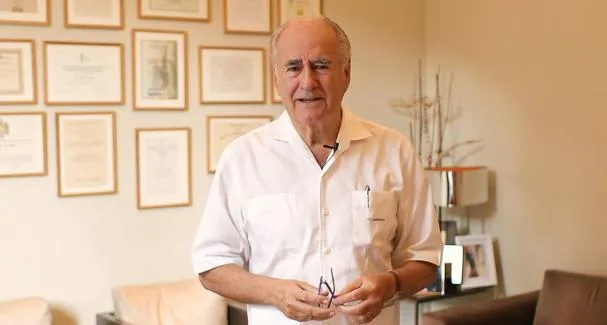
Does it make sense to rejuvenate one’s appearance if we don’t take care of the body internally?
Having surgery when you have a problem is great for looking in the mirror and seeing yourself better, but your organic system is another matter. That’s why it’s interesting to have a genetic study. We are working on a very exciting project. At the Benito Institute, there is another society, Genomic Genetic, where we have Dr. José Ignacio Lao, one of the world’s leading experts in genetics applied to autism and neurological disorders. There, they work by analyzing the hologenome.
What is it?
It combines the patient’s DNA with the study of their microbiome, especially the intestinal one. We analyze not only our genes but also the bacteria, fungi, and other microorganisms that coexist with us and influence inflammation, metabolism, the immune system, and the response to treatments. All of this, together with artificial intelligence, brings us closer to precision medicine and the ability to personalize treatments so that people not only live longer but live with the best possible quality of life and maintain their autonomy until the end.
Have there been patients you’ve told: “Don’t have surgery”?
At the institute, one of the things we are most known for is honesty. I always say that you shouldn’t make a living from anyone’s money. If someone doesn’t need surgery, I tell them. And many times they come back precisely for that reason, because they’ve been told that here we will tell them the truth. There are patients with whom special care must be taken.
Read more A car bomb in Viladecans
Before, we discharged patients at midnight so the concierge wouldn’t see them when they arrived home; today, aesthetic surgery is discussed more naturally
Javier de Benito
Plastic surgeon
Which ones?
First, there are patients who have a distorted perception of their image. The defect is in the form, but also in the brain, which interprets it: it can magnify or minimize it. That’s why, in the consultation, we also act a bit like psychologists and assess whether the patient understands their problem and if they will accept the change. There are also those who seek to solve personal problems with an operation. If someone believes that a rhinoplasty will get them a job or bring their partner back, it must be explained that surgery will not solve that. And finally, there are those who are conditioned by the opinions of others. There are women who have more vipers than friends, and mothers who bring their daughters to have their noses operated on, even if they have no complex. If the patient is fine with themselves and the problem is the environment, surgery is not necessary. That is also our responsibility.
If, as you say, the defect is the sum of the form and how the mind perceives it, do you then believe that perfection exists?
I’ve been studying it for 54 years and still haven’t found it, almost, almost, but I’ve never achieved it. Note that the best plastic surgeon that has ever existed has been nature. We have evolved to be what we are today —although I still see a gorilla on the street from time to time—, but it hasn’t made us symmetrical: there’s always one eye bigger than the other, a wider jaw, a longer arm… And yet, it has been the best plastic surgeon.
The ‘Ozempic face’ does not exist; what exists is the face of people who lose weight; the rest is marketing and wars between laboratories
Javier de Benito
Plastic surgeon
Could it be that beauty lies precisely in imperfection?
It depends. For me, beauty is that harmony which, through the senses, delights our mind. And that harmony is subjective, because beauty is in the eye of the beholder. A large nose can be beautiful if it is harmonious with the rest of the face, and a small one can be unaesthetic if it breaks that harmony. The important thing is not the size, but the proportion. Many times they tell me: “Doctor, look how this actress had surgery, she’s not the same as before.” And I always ask the same question: “Is she happy? Is that what she wanted?” If the answer is yes, what does it matter what others think? Surgery is for oneself, not for a partner or to please anyone. The important thing is that the person looks in the mirror and sees themselves better.

When an operation does not respond to a medical need, but to a personal decision, what do you consider most important when choosing a surgeon?
The first thing is to make sure they have experience and operate frequently. I don’t trust Instagram too much: anyone can show spectacular results. I would be more interested in them showing me a case that didn’t go well and how they solved it. A good surgeon doesn’t promise that everything will be perfect; they explain the risks and how they deal with them if they arise. That’s the doctor who convinces. Some people ask me: “Doctor, can I die in an operating room?” And I answer: “Yes, of course. Zero risk doesn’t exist. I could also die while operating. But, if it happened, there would be another surgeon who would finish the operation.” I would be more worried if something happened to me in the middle of the Carretera de les Aigües and it took hours to attend to me. In a hospital, you have all the resources. If you are to die in an operating room, it means it was your time and truly nothing more could have been done.
Throughout your career, you have operated on numerous public figures. When the person lying on the operating table is a celebrity, does the scalpel feel a bit heavier?
Well, a small failure in a famous person always has more resonance than in someone anonymous. That’s how it is. But pressure, no. I have operated on very well-known people and, in the operating room, for me, everyone is equal. When you operate, you are with a nose, an artery, or a muscle, not with a celebrity. The important thing is to have the surgery well planned, to have listened to the patient, and to know exactly what you are going to do. At that moment, only the surgery exists.
You have to be empathetic; I teach my doctors to look into people’s eyes, to shake hands, to convey calm, and to be close to the patient
Javier de Benito
Plastic surgeon
In recent months, there has been much talk about the so-called “Ozempic face,” especially among celebrities. How much truth is there to that concept?
I love that question. I have lived through many fads and many commercial wars between laboratories, and they are brutal. Sometimes there is an attempt to discredit a product with these kinds of messages. I am clear about it: the “Ozempic face” does not exist. What exists is the face of people who lose weight. Some people, when they lose weight, notice it a lot in their face; others notice it more in their chest, arms, or other parts of the body. Each person loses weight in a different way. Therefore, talking about an “Ozempic face” is a mistake. If it were due to the medication, there would also be a “Mounjaro face” or that of any other treatment. No, what exists is the face of weight loss. Everything else is, in large part, a matter of marketing and wars between laboratories.
After more than five decades in your career, what still awakens your passion for surgery?
The humanization of medicine. I believe much has been lost and that today it is more necessary than ever. The doctor must be empathetic. You can never ask upfront: “Well, what do you want to have done?” I teach my doctors to look into people’s eyes, to shake hands, to convey calm, and to be close to the patient. To give them their mobile phone, to call them on Saturday or Sunday and, once they have been discharged, to ask them how they got home and how they are feeling. I think that today this is fundamental, regardless of whether you do aesthetic medicine, surgery, gastroenterology, or oncological surgery.