Jannah Britt-Green had been in the Maldives for just under a month when she met Gianluca Benedetti. They quickly connected thanks to their common interests on the island, located approximately a thousand kilometers from Sri Lanka. Both were passionate about classical literature and chess, in addition to being far from home —Italy, in Benedetti’s case, and anywhere in the world in Britt-Green’s, who grew up between Mexico, the United States, Australia, and the United Kingdom, although today she divides her life between Barcelona and Menorca—. They felt they could understand each other and empathized with the demands of each other’s work.
Read more Manuel J. Castillo, longevity expert: “Our aging depends in part on our parents and grandparents”
Both Britt-Green and Benedetti worked diving in the Maldives. Marine biologist Britt-Green, who lives most of the year between Barcelona and Menorca, had only been immersed for a few months in a new coral restoration project in the Maldives, a country whose economy largely depends on tourism thanks to its coral islands.
The fatality in the Maldives is the most tragic incident in the country’s diving history
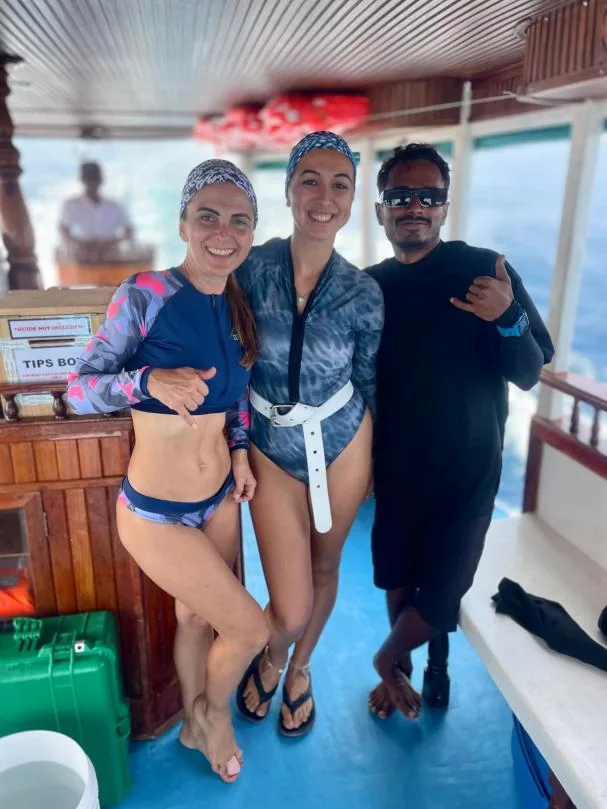
One of Benedetti’s jobs on the islands was operations manager for a diving vessel, leading a liveaboard yacht for guests who wanted to travel to the best diving spots in the Maldives. He also served as chief diving instructor. Britt-Green had not only been on the boat with him and seen how he “took such good care of his guests at all times,” but she was also accustomed to the rhythm their relationship had acquired during the almost four months since they first met.
When he had guests on board, Benedetti would step away from his phone and dedicate himself to them for several days, typically leading three or four dives a day, with the first one quite early, Britt-Green explains. When she didn’t hear from him on the morning of May 14, 2026, she didn’t think much of it. It wasn’t until the next day that she discovered what had happened: during the second dive, around 11 AM, what has been described as the most tragic incident in the history of diving in the Maldives occurred.
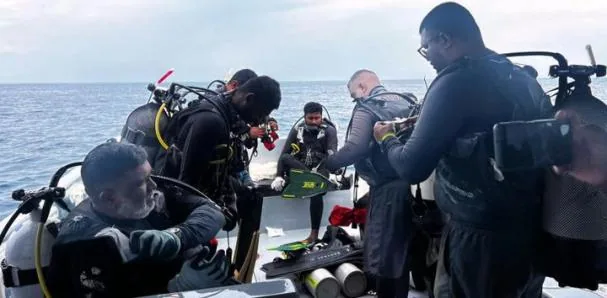
In total, five people died when a group of Italian divers “participated in a dive to explore several caves at a depth of 50 meters near the Vaavu Atoll,” as reported by La Vanguardia. The group was traveling aboard a vessel specialized in diving cruises and became trapped in a grotto after entering an underwater cave while on a diving expedition.
The cave they entered “is known for having extremely narrow passages and almost zero visibility,” this newspaper reported. During rescue efforts, Maldivian soldier Mohamed Mahudhee drowned while trying to locate the bodies of the two Italians, raising the total death toll to six.
It’s heartbreaking. Whatever the reason for going into that cave, that was not part of the plan.”
Jannah Britt-Green
Marine biologist and partner of Gianluca Benedetti
Many questions remain unanswered about how this tragedy could have occurred. The divers were found at a depth of 60 meters, when the limit for recreational diving in the Maldives is 30 meters, and any dive below 40 meters requires specialized equipment and training, The Guardian reported. Furthermore, cave diving often carries risks such as loss of visibility and orientation.
According to Mohamed Hussain Shareef, chief spokesperson for the Maldivian presidential office, the government had granted the group the necessary permit to investigate soft corals in the Devana Kandu area without knowing they intended to dive in caves: “As divers will know and appreciate, it is a very different discipline, with its own challenges and risks, and particularly at that depth, many things could have gone wrong.”
The news was, and continues to be, very difficult for Jannah-Britt Green to process. “With the equipment they were carrying and considering they were accompanied by experienced divers, this is not something they would have done on a whim,” says the marine biologist, who invokes her own experience diving in caves more amenable to exploration: “In Menorca, for example, I have done several cave dives, but they are usually between 15 and 30 meters deep, and those caves always have light entrances. They are a very different type of cave. [The Maldivian cave] was at 60 meters, it was very dark and part of a very complex cave system, where, even if you enter through a single access, finding the exit can be very difficult.
“Something must have forced them to go in there, because they weren’t even carrying guide lines. When you descend to that depth and enter a dark cave system through a single entrance, you always deploy a guide line inside so that, if any unforeseen event occurs or you lose visibility, you can follow it back to the exit,” Jannah Britt-Green explains to La Vanguardia.
“Everything has to be perfectly planned and it’s heartbreaking because, whatever the reason they went into that cave, it wasn’t part of the plan. They didn’t discuss it during the pre-dive check, there was nothing related to that cave in the dive plan. They just decided to go to the cave. I think that’s what makes it even more painful and much more mysterious, because Gianluca would never have put anyone in danger,” she says. “That’s the hardest thing to accept, the most difficult thing to reconcile to find some kind of peace or explanation.”
Jannah Britt-Green is not the only person close to the victims who, after the accident, is trying to understand how it could have happened. Marine ecologist Mónica Montefalcone, who frequently dived in the Maldives, led the dive group that day. Her daughter and Gianluca Benedetti also participated; all three died in the accident.
As this newspaper explained in May, “Montefalcone’s husband, Carlo Sommacal, stated in interviews with Italian media that his wife would never have endangered her daughter or others. He described her as ‘one of the best divers in the world,’ with about 5,000 dives completed, ‘always conscientious’ and ‘never reckless.’ ‘I’m sorry, I wasn’t there and I’m not an expert, and from what I see and read, not even experts have definitive answers; they are only hypothesizing, many of them,’ he told Reuters in a WhatsApp message.” Since then, Greenpeace Italy has highlighted Montefalcone’s career, describing her as a passionate advocate for ocean protection. The organization assured that her “professionalism and advice” would be deeply missed.
Britt-Green’s experience as a diver is not enough for her to understand the decisions made on May 14. Like many members of the diving community, she hopes that this tragedy will serve, at least, as a painful reminder of the importance of practicing this sport with the utmost safety measures. “Perhaps we will never have all the answers about why they entered the cave and what exactly happened. But it is a very hard lesson for everyone, especially for divers: never be overconfident, always be perfectly prepared, because when you descend to those depths you need the right gas mixture. You have to carry two tanks and have additional tanks at each safety stop.”
In his memory
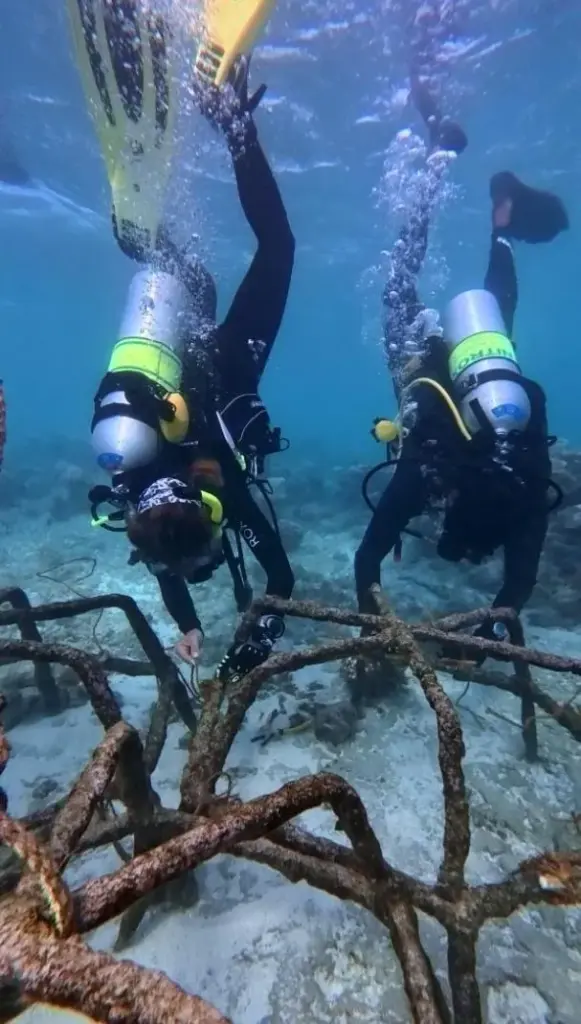
The reason Jannah Britt-Green had come to the Maldives was the absence of marine conservation and coral restoration initiatives in the Gaafu Alifu Atoll, in the south of the country. With experience in coral restoration in both Menorca and Saudi Arabia, Britt-Green was invited by The Residence Maldives to design a new marine interpretation center, transforming the facilities of an old diving center into a space dedicated to local ecosystems: seagrass meadows, coral reefs, and mangroves that line the islands.
One of the rooms she is most proud of will be an interactive coral laboratory. The space will explain the life cycle of these organisms, how bleaching occurs, and will feature an aquarium that will allow visitors to observe the difference between a living and a dead coral, as well as learn about their ecological importance.
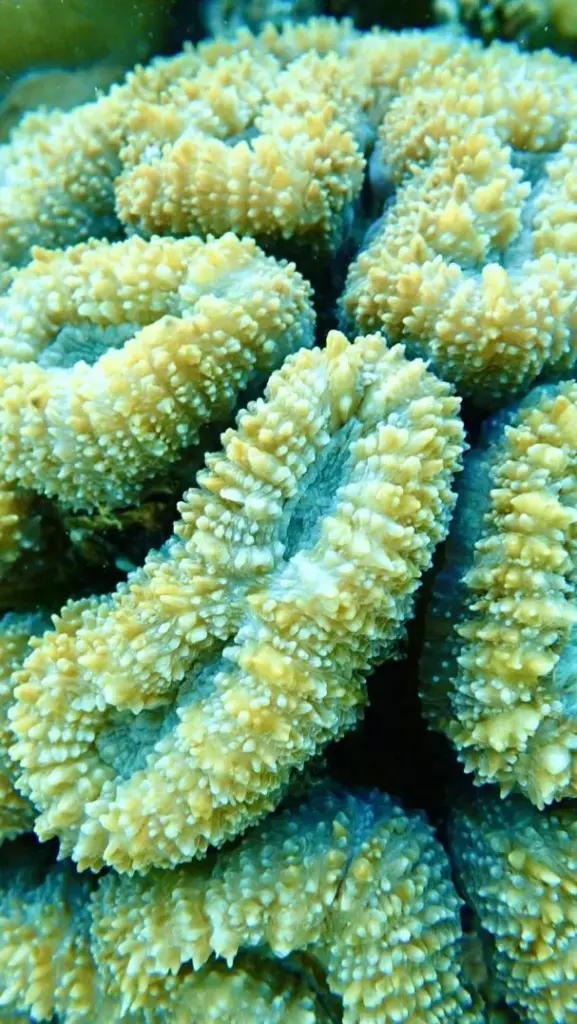
The ultimate goal is for the restoration project to directly involve those who visit the Maldives. Although the center has not yet opened its doors, six test structures —used to protect corals from bleaching and other damage— have already been installed, each with between 20 and 30 coral fragments.
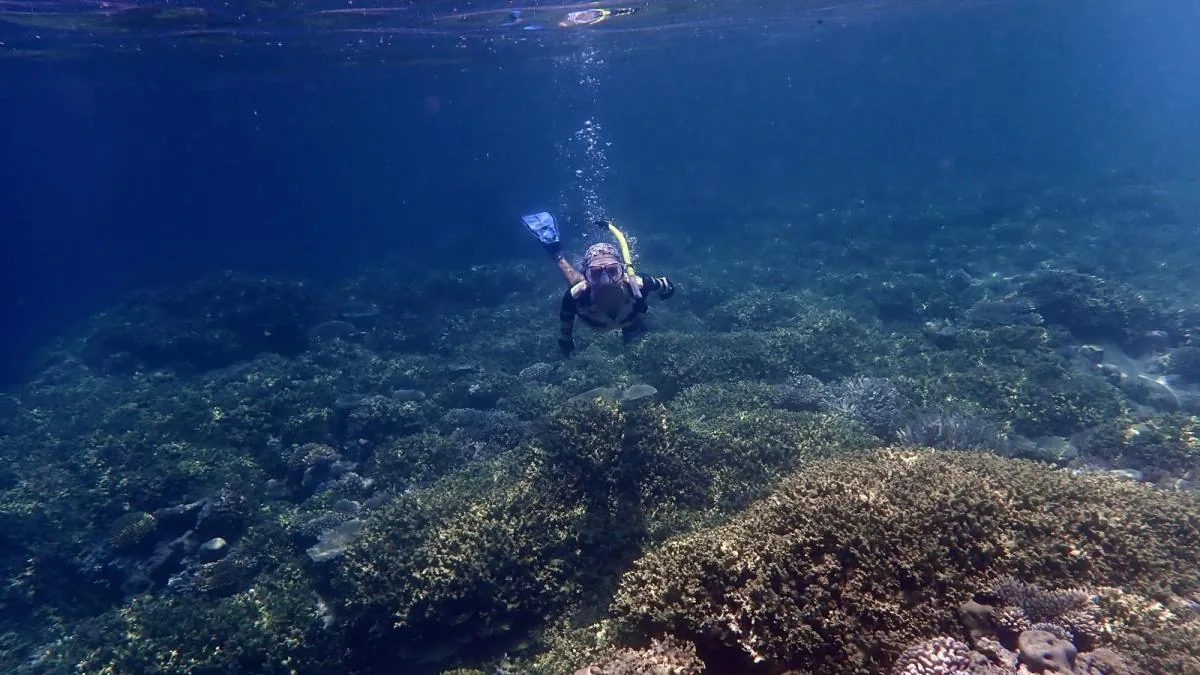
“The idea is to turn it into an experience where visitors can participate. They will be able to do a shallow dive with me, about three meters deep. Beforehand, they will receive an explanation about corals and then they will plant their own underwater garden, attaching coral fragments to one of the structures while we dive. Then I will place a plaque with their name and the date, and that will be their coral garden. Twice a year I will send them photographs and updates so they can follow its evolution. It’s about doing something that really makes a difference and contributes to restoring the ocean,” says the marine biologist.
When the project opens to the public this autumn, each of those coral gardens will have a personal meaning for those who participate in it. But, for Britt-Green, the initiative already has a deeply intimate value: she has dedicated it to the memory of Gianluca Benedetti. “Every time I go out there, free dive and attach new coral fragments, I feel like he’s with me. In some way, he accompanies me. And that helps me.”
Read more Is Spain the country that smokes the most in the European Union?