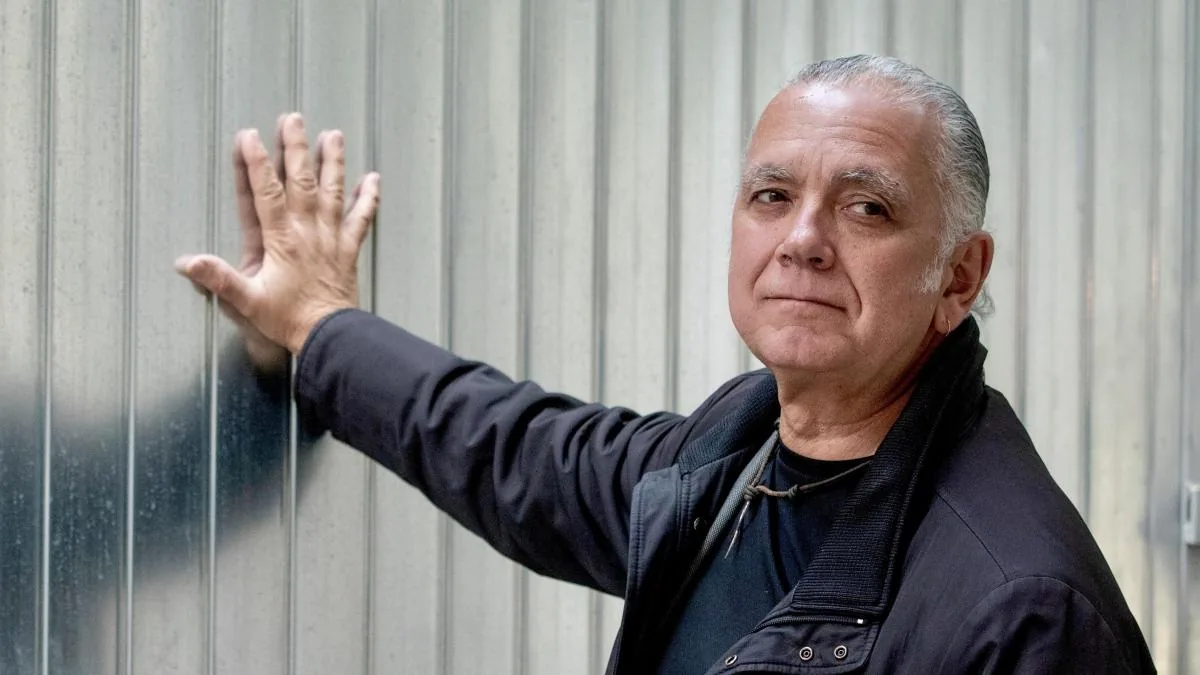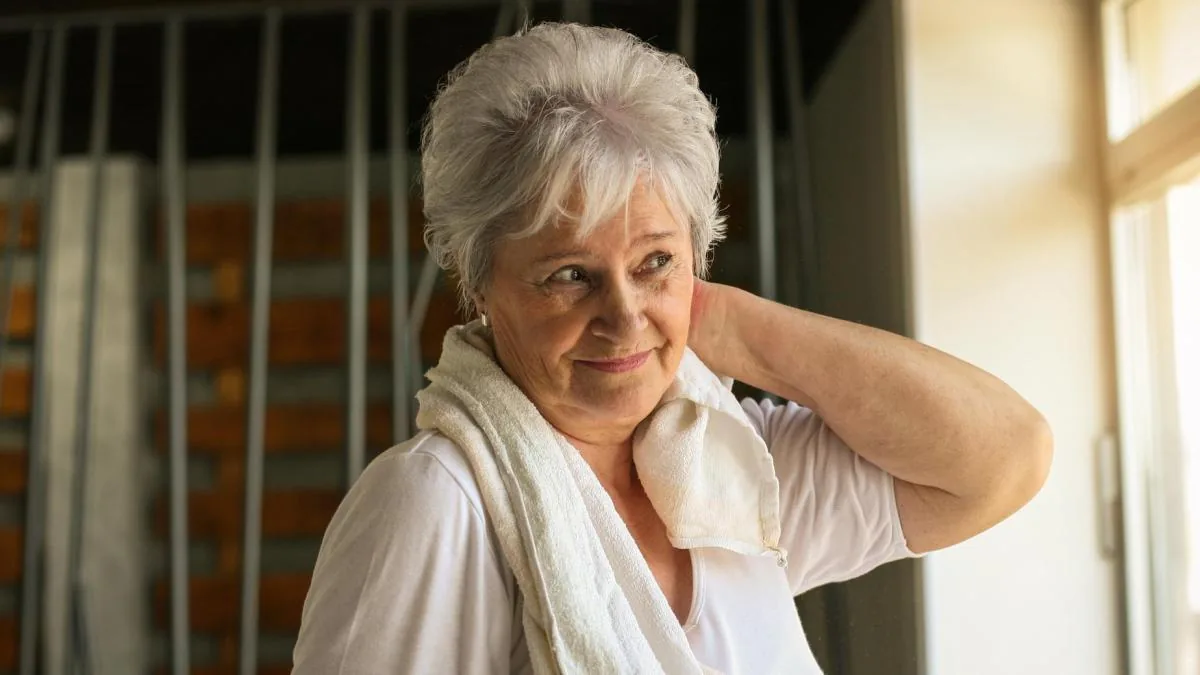
María stopped eating bread two years ago. Then she eliminated sugar, the beer with appetizers, and practically any ultra-processed food. She started walking 12,000 steps daily, stopped using the elevator to always take the stairs, and signed up for daily strength classes. Additionally, she bought a watch that measures her sleep and every morning checks an app that calculates her “biological age.” She is 66 years old and, yet, she says she has never felt so afraid of aging.
Read more ‘Tradwife’ literary universe: conservative housewives arrive in bookstores
“If I don’t train one day, I feel guilty, I feel like I can’t skip any routine if I want to be well,” she says. “Everything around me seems to tell me that if I age badly, it’s because I’m not taking care of myself enough.” Thus, what started as a decision to feel better has ended up becoming a form of permanent surveillance. In fact, María admits she reached a point where she didn’t know if she was taking care of herself or punishing herself.
Doctors insist that exercising, resting well, and eating healthily clearly improve quality of life and help prevent diseases. But when the obsession with delaying aging turns into a demand for extreme routines and constant control, guilt, anxiety, social isolation, and eating disorders like orthorexia emerge.
The passage of time has never been such a heavy burden. It’s no longer about just getting older, but doing it “correctly,” staying active, strong, autonomous, and healthy for as long as possible. The pressure to optimize the body to the maximum has skyrocketed extreme exercises, protein and supplement consumption, and intermittent fasting, among other routines. The goal is to be in shape at 70, 80, or even 100. A pressure for the pursuit of well-being that can end up causing discomfort.
Ageist Discrimination
Despite all this, Andrés Losada-Baltar, a psychologist specializing in aging and well-being and professor at Rey Juan Carlos University, reminds us that “population aging is one of the great social achievements.” “Today, 80-year-olds are physically and mentally better off than previous generations, thanks to access to education, healthcare, and the development of the welfare state.” However, this achievement clashes radically with an increasingly ageist, hedonistic, and individualistic society that glorifies youth and rejects old age.
An ideal context for the anti-aging industry, which maintains a continuous bombardment on how to fight the passage of time, avoid any sign of aging, and not appear older. A commercial pressure to which many people succumb, entering a spiral that causes them great suffering, argues the specialist.
Also read
The consequence of this situation — the specialist maintains — is the outright rejection by citizens of everything related to old age, a vital state that “is constantly and wrongly equated with illness, dependency, and social burden.” This idea feeds discrimination against older people, who are also blamed for the cost of resources needed to address this view of aging.
But the most alarming thing is that this idea of exclusion about the standard ends up affecting the very perception of people who self-discriminate. It is a vicious circle that can start a process of isolation in which the person’s physical and mental health is at risk “because of the mistreatment they receive from society as a whole, including professional groups,” warns Losada-Baltar. As an example of this reflection, the professor cites the COVID pandemic, where strong discrimination against older people was even normalized by public institutions.
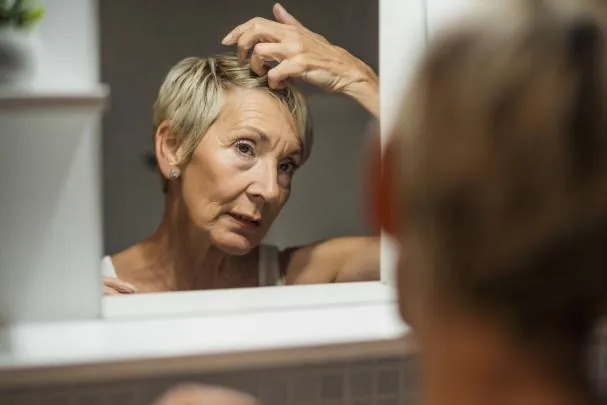
Part of this change in social perception of old age has to do with the rise of preventive medicine, scientific dissemination, and the longevity industry. A change that has its positive side by improving habits and quality of life, but also its downside: psychological pressure like the one María imposed on herself, filling her with guilt.
A study published this year in Journal of Aging Studies warns precisely that models of so-called successful aging can generate feelings of inadequacy or guilt in those who do not meet certain physical or autonomy standards that have become normalized. In fact, the researchers propose abandoning rigid care models to prevent healthy aging from becoming a new moral obligation.
Old age is constantly and wrongly equated with illness, dependency, and social burden
Andrés Losada-Baltar
Psychologist specializing in aging and well-being and professor at Rey Juan Carlos University
Science has also shown that the subjective perception of age is closely related to psychological well-being, so that the way a person interprets their own age conditions how they experience the aging process, generating frustration if they do not meet the established pattern.
Read more Back to work after the DANA: Néstor’s second chance
In this regard, Losada-Baltar points out that “the very effect of ageism and social pressure causes many people to reject what does not fit the image they want to project of themselves.” He adds: “Those who fall outside the ‘trend’ of being an active older person risk being discriminated against, even by themselves.” In other words, feeling old can start a self-ageist process in which social prejudices are internalized to the point of isolation, limitation, or feeling like a burden to society.
An Inclusive Discourse
Geriatrician Laura Coll, professor at the Faculties of Medicine and Health Sciences and Well-being at the University of Vic (Barcelona), considers that this change in thinking is the result of changing expectations about old age and how we age, which in turn originates from generational changes. “These concerns didn’t exist before; now we no longer settle for retiring and enjoying the years to come, we want to be fit, not suffer, and not depend on anyone. And that message is what we perceive as success, so not achieving it is considered a failure.”
But Coll insists that neither the classic negative view of old age nor the current extreme optimism are realistic. “We need a discourse that integrates both realities and allows for a middle ground, with a care policy that enables living in well-equipped residences, being able to stay at home with the care you need, or maintaining autonomy.” Because “seeking to improve your health and stay active is not incompatible with being vulnerable, having limitations, and needing others,” she emphasizes. “Aging involves losses, but also gains. Thinking there is only one way to age well is a mistake.”
The researcher also reminds us that living with dependency or a chronic illness does not mean you can no longer take care of yourself, age well, and lead a full life. In this regard, she advocates the concept of ‘Salutogenesis,’ which means “we can promote health at any stage of life, even when we are at the end of life.” The key, she argues, is not meeting external standards but “having projects, maintaining bonds, and environments that do not discriminate.”
Aging also varies by neighborhood
At this point, Coll, who is also a social board member of the Catalan Society of Geriatrics and Gerontology (SCGiG), introduces a determining factor in understanding this pressure to ‘age well’: social inequality, because this issue “is also a matter of class.” To understand it fully — the geriatrician indicates — one must start from the fact that “longevity has a fundamental problem, and that is that we are not all equally long-lived,” she says. People with higher socioeconomic status live more years and in better conditions, while neighborhoods with lower income concentrate worse health indicators, more chronic diseases, greater loneliness, and less access to preventive resources.
Therefore, while some can afford gyms, nutritionists, supplements, or adapted housing, others reach retirement simply worried about paying rent or maintaining a sufficient pension. A picture in which “we find profiles much more susceptible to following the mandates of healthy aging, but there are also people with much more basic concerns,” explains Coll. That is why the geriatrician questions concepts like longevity or silver economy. “There is some denial of the word aging, and it seems more acceptable to talk about longevity or senior. But, deep down, that idea of longevity is somewhat elitist because not everyone has the same opportunities to reach old age in good condition.”
It seems more acceptable to talk about longevity than aging; it is a somewhat elitist idea because not everyone has the same opportunities
Laura Coll
Social board member of the SCGiG
Also read
Ensuring Care
Against this gap, the researcher argues that aging cannot be addressed only from individual decisions or private consumption but from public policies capable of guaranteeing equity in care, housing, health, and social support. “Interestingly, there is more and more talk about longevity, but there are conversations about dementia, suffering, or the end of life, issues that really worry us and remain taboo,” she highlights.
Along the same lines, Losada-Baltar emphasizes the importance of addressing the needs of older people beyond biology and addressing psychological, social, and contextual factors at the same level, which also have a huge impact on well-being. We must not forget, he says, that “many risk factors associated with diseases like dementia are related to environment and lifestyle.”
Coll also adds an even more forgotten dimension: the vital meaning. “What happens when I retire, when I lose someone, when I get sick? What meaning does my life have as I age? These are fundamental questions we continue to avoid.” In her view, there should be more conversations about how we want to be cared for, about advance directives, and about the end of life.
María still goes to the gym three times a week, but she no longer looks at her biological age every morning. She has stopped living aging as a race against time. Now she tries to take care of herself without so much pressure or self-demand, without turning her life into a permanent exam, into success or failure. Because maybe aging well is not about looking eternally young but learning to live the passage of time without fear or guilt.
Read more Consumo blocks the websites of Polymarket and Kalshi and opens sanction proceedings