
Work emails, chats with family, groups of friends organizing trips, birthdays, gatherings. To this mix of interactions that force us to look at our phone screens, especially for young people, another digital tether is added: maintaining a permanently stimulating conversation, one that exudes enough charisma and charm to seduce—or show interest in—the person one wants to get closer to. Dating in these times, for many, represents another type of virtual slavery.
Read more Back to work after DANA: Néstor’s second chance
This is how Marcos (24 years old) experiences it. When this Madrid native is getting to know someone—in his case, other men—he finds it very important to chat with them often. Talking frequently with the guy he likes allows him to assess the degree of interest they have in each other, he says. “It’s true that you can’t always reply and that we should respect people’s space, but a certain continuity generates trust in me and helps me want to get to know him more,” he tells La Vanguardia. Keeping the conversation alive also helps him know if the other person is a good fit for him: “You can learn a lot about a person by the way they write and how often they do it.”
The language of love
Chatting frequently is interpreted as a sign of desire; not doing so generates anxiety
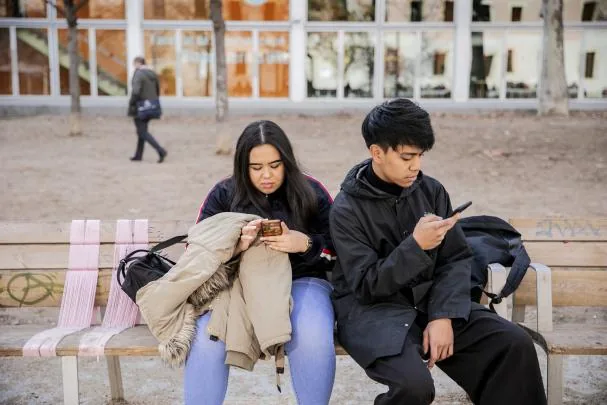
Data indicates that most young people—particularly Generation Z—identify constant conversation as one of the main signs of interest from the person they are flirting with or starting to date. This is reflected, for example, in a report just published by the dating app Hinge, which was compiled from surveys, focusing on the young LGTBQIA+ community but also interviewing heterosexual users. The team of researchers and behavioral scientists that make up Hinge Lab spoke with over 31,000 young people worldwide. 86% of non-heterosexual participants stated they needed to talk consistently with the person they liked to feel less anxiety, while most heterosexuals (81% of women and 68% of men) highlighted communication outside of dates as a sign of desire in the other person. It is “the language of love” for Generation Z, Hinge concludes.
The perception of psychologist Lara Ferreiro, a specialist in emotional addiction, self-esteem, relationships, and personal development for women, supports these data. She observes, particularly among those under 30, increasing anxiety when the person they like does not foster chat conversation. “For many, an unanswered WhatsApp for several hours can generate more anxiety than a face-to-face discussion,” explains the expert, who attributes it to the “culture of permanent availability” favored by social networks and messaging apps.
Read also
“From a psychological perspective, we also observe an increase in the so-called “double check syndrome,” where the person not only expects a response but also interprets signals such as the last connection, whether the message has been read, or if the other person is active on social media. This promotes behaviors of emotional hypervigilance and obsessive thoughts,” Ferreiro specifies.
Three decades ago, before instant messaging, a person could meet another; if they liked each other, they would arrange a second meeting and, between dates, call each other on the phone or simply wait to see each other again to talk. That would be unthinkable for many young people born in the 2000s or late 1990s.
For many, an unanswered WhatsApp for several hours can generate more anxiety than a face-to-face discussion
Lara Ferreiro
Psychologist
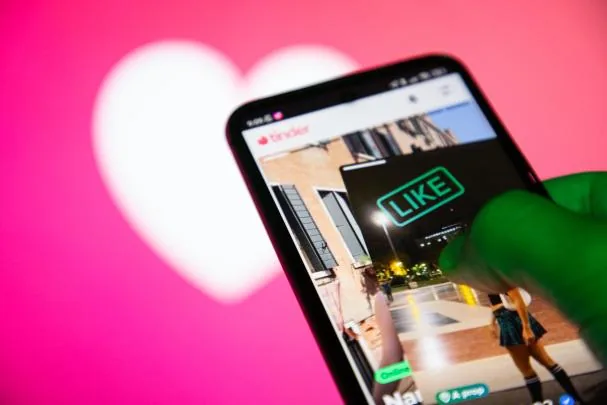
If a person doesn’t write, doesn’t keep the virtual conversation alive, or doesn’t participate in it, Gen Z interprets it as a lack of interest, and it causes them insecurity, anxiety, and frustration. “If you like someone more detached, I think you have to mentally prepare yourself that you won’t be satisfied with the frequency of their responses and tolerate the frustration it generates,” Marcos points out.
On the other side of this expectation, Luisa, a 21-year-old student from Madrid, says she feels pressured to have a permanent conversation, a demand she finds excessive. “We are in a world of dependence where it seems that whatever I do, I have to answer the phone. It’s an unhealthy need, because in the end, you’re not on your phone all day, and if you are, you have a problem,” she argues. However, if the guy she likes doesn’t chat with her, this young woman also identifies it as a lack of interest, and therefore loses the desire to continue getting to know him.
Read more Spain’s arrival in Chattanooga unleashes madness
It seems that whatever I do, I have to answer. It’s an unhealthy need, because you’re not on your phone all day, and if you are, you have a problem
Luisa
(21)
The same would happen to Marina, a 22-year-old from Menorca living in Barcelona. She maintains that even if someone doesn’t like talking online, if they like the other person, they do it “to make a good impression.” It’s already part of the social codes that force routine conversations: asking every day how the other person is, what they’ve done, bringing up new topics, joking, trying to get to know the other person through messages and in a sustained manner. Avoiding at all costs that the conversation dies down. For Marina, this leads to “shallow and filler” chats that don’t interest her. Even so, she usually responds quickly and doesn’t mind being attentive when she really likes someone.
Constant connection has become, according to Ferreiro, an “emotional thermometer” for many young people: “They mistakenly interpret that if someone takes time to reply, it means they have lost interest, when in reality they might be working, studying, or simply needing personal space. The problem is that digital silence is often filled with negative thoughts, insecurities, and fear of rejection,” she adds. And this, in her opinion, has a lot to do with intolerance to uncertainty: “New generations have grown up in an environment where almost everything is immediate and, therefore, waiting for a response can become a significant source of discomfort. What used to be resolved in hours or days now generates anxiety in a matter of minutes.”
Facing a late response…
Are men or women more anxious?
There are gender differences, although according to the psychologist, these are becoming less pronounced “because hyperconnectivity affects practically all of Generation Z.” In consultation, women tend to express relational anxiety linked to digital communication more openly, while many men manifest it in more indirect ways: “for example, by checking profiles, observing stories, or monitoring online activity without verbalizing their concern as much,” explains Ferreiro.
The specialist highlights some factors that can make online communication especially important for young LGTBQIA+ individuals. For example, they use the internet and social media as spaces for support, validation, and identity more frequently than heterosexuals: “For many adolescents and young people, especially during the process of acceptance or coming out, digital communication can become a fundamental source of belonging and emotional security,” she argues.
For Marcos, this factor is compounded by an insecurity related to the fear of commitment, something he particularly detects in the LGTBQIA+ community. Despite the stereotype, this young man does not believe that all gay men only seek sex, “which sometimes we do, and that’s great,” but rather that often the ways they relate, mediated by social networks and dating apps like Grindr, do not facilitate an emotional bond with the other person. Thus, he sees in the collective “a lot of unfulfilled expectation that leads us to get very frustrated and to be very demanding.”
Combating this type of mobile phone tyranny
María (21 years old) acknowledges her own contradiction: like people around her, she interprets a lack of interest if the person she likes doesn’t keep the chat conversation active or takes a long time to reply, something that, although she can rationally refute it, she has already “very internalized”; at the same time, she feels “lazy” when it comes to replying and being attentive to her phone, even when the person she’s talking to interests her. But in the end, insecurity is more powerful, she says, “the fear of abandonment.”
The problem with turning technology into the main source of emotional security is, for Ferreiro, that “the person ends up depending on external stimuli to feel calm, loved, or validated.” And a consequence is an increase in anxiety. “Studies show that young people who compulsively check their phones or social media exhibit significantly higher levels of anxiety and stress. When emotional well-being depends on a response, a message, or a notification, tranquility becomes very fragile because it is in someone else’s hands.”
To manage it differently, and avoid falling into the imposition of perpetual chat, the expert suggests openly discussing communication expectations and combating uncertainty with phrases like “I work in the morning and usually reply later, but that doesn’t mean I’m not interested in you.” She also proposes making an effort to differentiate interest from availability, training tolerance to uncertainty, fostering online life and emotional autonomy, and prioritizing quality over quantity. “A ten-minute call with full attention can strengthen the bond more than a hundred automatically sent messages. Furthermore, it promotes emotional intimacy, which is one of the main predictors of stability in relationships,” she specifies.
Read more The object of desire from fifty onwards