








Reading is at its peak. 70% of Spaniards over 14 years old read books. And 66.2% choose them for leisure, according to the latest Reading and Book Buying Habits Barometer in Spain from the Ministry of Culture. An interest that is evident on social media, where content about books has multiplied. The most common format there is now video reviews of new releases, with the young adult romantasy genre being the most popular, with two million mentions on Instagram and TikTok: reviews generated by profiles that do not necessarily belong to literary experts, but to everyday people – generally young women – who share the latest titles that have thrilled them.
Read more Holidays in the city: what do we need for quality children’s leisure?
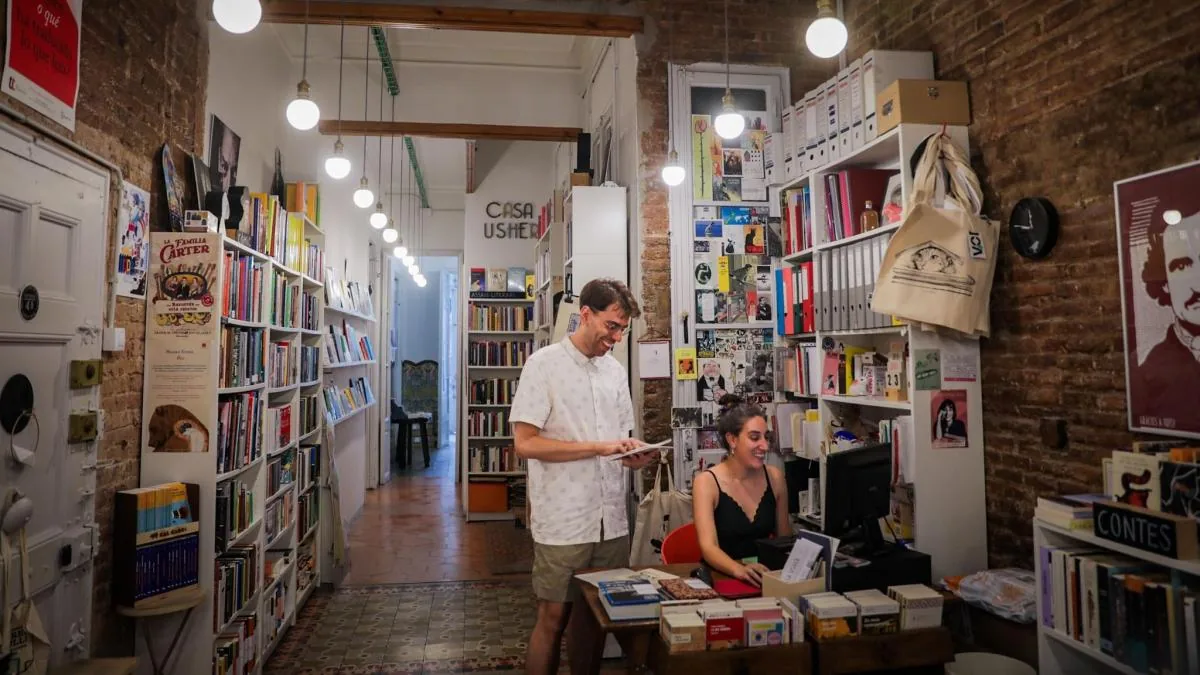
This phenomenon has not gone unnoticed by booksellers, who often find customers showing them novels they have discovered on social media on their phone screens. “They look for a second opinion,” says Anna Arranz, who leads Casa Usher along with Maria Ferra and Asier Heredia, a small bookstore located in the upper area of Barcelona. Social media has joined the traditional newspaper recommendations. “But it’s nothing new. There has always been a double prescription of reading,” says Sergio Vila-Sanjuán, editor-in-chief of the Cultura supplement of La Vanguardia. “One more literary, more cultural route, that of the supplements, and another for broad audiences. In the past, it was certain TV or radio programs, and now it’s on social media, which has a positive effect and has helped relaunch works that were relegated to the back of the closet, like A Little Life by Hanya Yanagihara.”
That a novel is recommended over and over again on social media can generate very high expectations, says Tijerín
The so-called bookstagrammers and booktokers have also boosted sales of more recent titles like They Called Bingo by Lana Corujo, You Will Eat Flowers by Lucía Solla Sobral, or Gratitudes by Delphine de Vigan. “Readings with a strong emotional charge, coming-of-age stories or tales with surprising twists that are easy to recommend in one-minute videos,” says Ana S. Pareja, bookseller at Bartleby & Co in Berlin. “On the other hand, options difficult to condense into a brief format have less presence.”
Ángel Tijerín, at the helm of the Barcelona bookstore On the Road, believes it is positive that the books mentioned are recommended simultaneously on many profiles: “I really liked them. And, in the end, it helps to sell.” Although he also considers that sharing them excessively can be a double-edged sword. “Expectations are generated and some have felt that they are not that great.” The homogenization of users’ literary choices is another drawback not only perceived by booksellers. “Content creators often end up recommending the same thing,” admits Laia Santís, the Catalan teacher behind the Instagram profile @vidaentrellibres. A consequence that, she believes, is explained because many of these prescribers review books sent to them by publishers. However, she insists that she is not pressured to publish what they send her; in her case, about 20 titles weekly. “If a novel from a publisher doesn’t fascinate me, I can say so freely. I have found more uncomfortable situations when it has been the authors themselves who have sent me their works.”
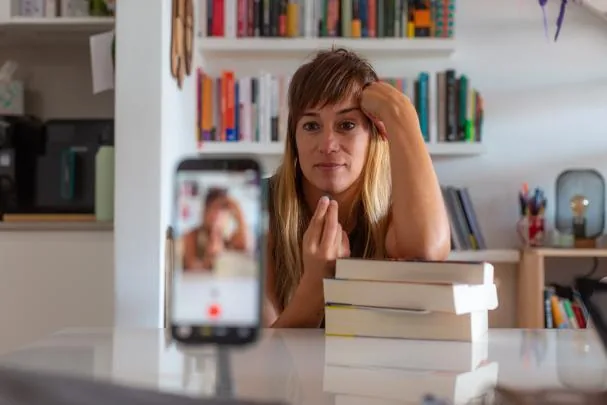
Law 13/2022 General Audiovisual Communication — popularly known as the ‘Influencers Law’ — requires clearly indicating when a post, video, or story is advertising or contains paid collaboration. In the accounts consulted, it is indicated with the hashtags #publi, #regalo, or #envioeditorial. Although, as a general rule, content born from collaborations coexists with more organic posts. Kenya Stephanie, an author and bookstagrammer from Malaga with more than 200,000 followers, explains that she has rejected collaborations because they did not match the type of literature she likes. She also does not publish novels without having read them first. “It wouldn’t make sense. The original goal, to share and collectivize reading experiences, would become blurred and turn into a deception. If we pretend to read, what do we have left? How do we want to relate to literature?”
The journalist and content creator from Seville, Irene Ramírez (@irxxnxx on Instagram), also assures she reads, reviews, and recommends only what she likes, from classics to contemporary novels, essays, and poetry. Precisely, it is each one’s inclinations that give personality to their profiles, creating communities of readers aligned with their preferences. “I have received messages from people who followed me because I don’t recommend the same as others, although I also read trendy books or classics,” adds Ramírez. Santís, for her part, was one of the first prescribers of Catalan literature on platforms. “Today things have changed. There are more influencers focused on this field.”
Although many recommendations may be repeated, the reading community agrees that social media is a window to literature. “My first option is to be advised by the bookstore, but I follow creators like María Gajas (@allegir_lij on Instagram) to learn about new children’s books,” explains Laia Martínez, a 29-year-old teacher. There are also those who value that the algorithm adapts to their literary inclinations. This is the case of Cristina Sanchis, 28 years old: “It shows me readings of my interest, from feminisms to South American authors, who are now experiencing a boom, as well as stories I would never have chosen, and I love it. Also trendy romance and fantasy books, like the Acotar saga, which would be something like the Twilight of now.”
Empíreo and Academia Bloodwing are other successful series included in the romantasy subgenre, especially popular on TikTok. Unlike traditional fantasy, where the love story is secondary, here romance is the main driver of the plot. “The algorithm seems to favor these novels categorized as young adult,” says Sonia Jiménez, another 29-year-old reader. “Very linear stories of boy meets girl with explicit sexual scenes, easy to consume and pointing to clichés.” Publishers have understood that it is attractive content for young people and, besides expanding their offer, they launch eye-catching editions with painted edges, backed by powerful marketing campaigns. “In the end, the numbers have to add up at the end of the year. And the reality is that the bestsellers keep other smaller imprints of the group afloat,” points out Iñaki Lucía, from the legendary Madrid bookstore Rafael Alberti.
In the end, the numbers have to add up at the end of the year. And the reality is that the bestsellers keep other smaller imprints of the group afloat
Iñaki Lucía
Rafael Alberti Bookstore (Madrid)
But most literary agents agree that, far from excluding each other, their roles can complement each other. “Anything that encourages the desire to read is good for bookstores and the publishing sector,” says Arranz. Lucía agrees with her, adding that the bookseller has the ability to expand the recommendations that the reader receives through social media. “We can offer options based on people’s tastes. Propose new releases off the radar.” Tijerín, on the other hand, emphasizes that they must also occupy the virtual space: “Or at least explore it. You don’t have to be a genius. Booksellers have privileged information that goes beyond the summary many influencers make,” he points out.
In the end, social media is a space where literary conversation takes place. “They not only boost this conversation but have become a key point for young people to read more,” Stephanie concludes.