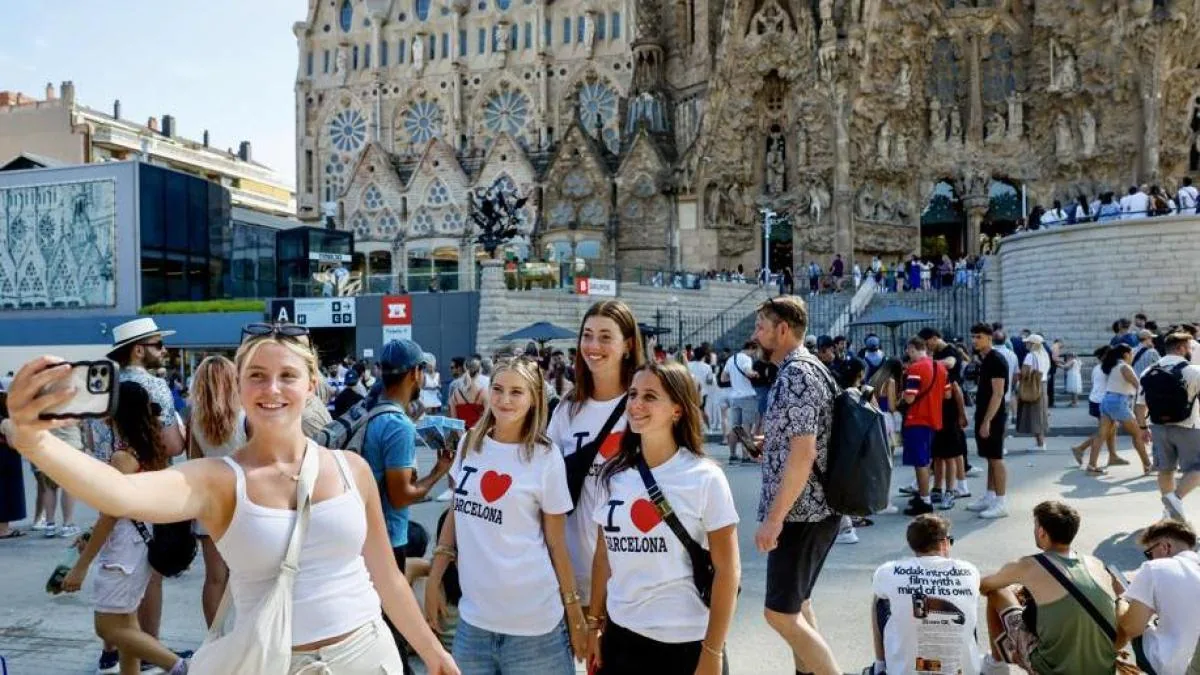
Barcelona aspires to play in the first division of world monumental tourism. And if it has these aspirations, it is because last February, the Sagrada Família crowned the 172.5 meters of the Jesus tower, the tallest of the temple that Antoni Gaudí began to build in 1882 and which, one hundred years after his death, has become one of Barcelona’s great economic and cultural drivers. “I don’t know if we are fully aware of it, but we now have a global icon on a par with the Eiffel Tower, the Taj Mahal or the pyramids of Egypt,” reflects the director of Turisme de Barcelona, Mateu Hernández.
Read more Queen Letizia avails herself of the privilege of white with a Spanish design to see the Pope
If its expectations are met, Barcelona will soon enter the short list of “must-see” cities for world travelers, amplifying the economic impact of the architect whose legacy acts today, de facto, as if he were one of the great patrons of the Catalan capital.
2025, 134.5 million euros in revenue
The Sagrada Família is the monumental space with the highest revenue in the State
Until now, Gaudí’s work had already consolidated itself as one of Barcelona’s main sources of income. The Sagrada Família closed the 2025 financial year with 4.87 million visitors (89% of them foreigners) and 134.5 million euros in revenue, almost all from ticket sales, half of which revert to the works of the expiatory temple itself. It is the monumental space with the highest revenue in the State, ahead of museums such as El Prado (85.2 million in revenue, of which 48 million are public aid).
Park Güell explains another side of the business around Gaudí: the monetization of an iconic public space. Since payment for its visit began in 2013, it has been a source of resources for the City Council. Its collection stands at around 36.3 million euros (according to 2024 figures) – 215 million euros in accumulated collection since access control – and it is visited by 4.9 million people, 89.5% international.
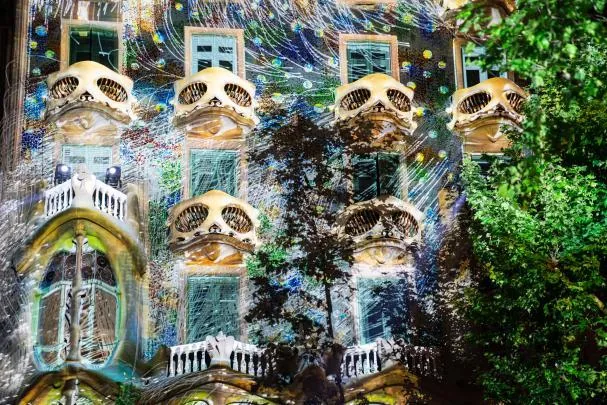
Between these two poles, the great modernist houses close the golden triangle of the Gaudí business. Mainly Casa Batlló and La Pedrera (Casa Milà), both on Passeig de Gràcia, which have gone from being bourgeois residences to becoming true profitability machines. The first, owned by the Bernat Serra brothers (heirs of the founding family of Chupachups), leads the ranking as the most profitable private monument in the country, with 65.2 million euros in revenue and 1.9 million visitors in 2024. La Pedrera, managed by the Fundació Catalunya La Pedrera, does not break down such detailed figures, but it is part of the group of Gaudí spaces that together exceed 240 million euros annually in revenue and sells tickets between 25 and 40 euros, which clearly places it in the high end of Barcelona’s cultural business.
The latest to join this group has been Casa Vicenç, in the Gràcia neighborhood, owned by the Andorran group Mora Bank, which converted this early work by Gaudí into a museum in 2017. In a few years, it has gone from being an almost invisible piece to becoming a profitable medium-scale facility, with 262,600 visitors in 2024 and a turnover of 4.8 million euros.
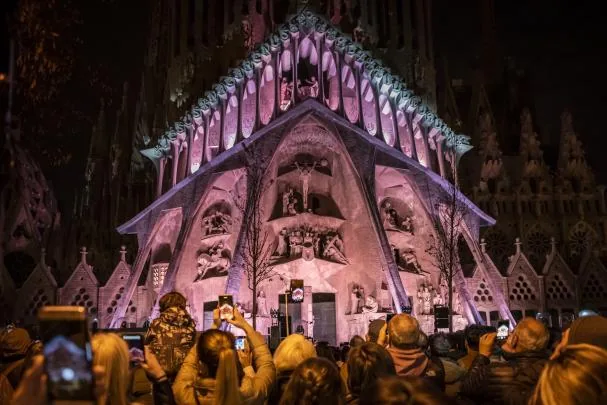
Gaudí’s ability to generate business is not limited to architecture alone. In its shadow, an almost infinite offer of thematic tours, 4D experiences, and immersive products has flourished, promising to “enter the architect’s mind.” According to data from GetYourGuide, one of the most important online platforms, bookings for Gaudí-related activities on the platform have grown by double digits
year-on-year and now account for more than 60% of total bookings in Barcelona, to the point that 7 out of 10 of the most booked experiences in the city include a monument by the architect, compared to 5 out of 10 the previous year. “The extraordinary thing about Barcelona is that its cultural identity can be experienced firsthand. Gaudí is perhaps the best example: his legacy is alive in every corner of the city,” comments Toni Bennasar, regional director of GetYourGuide for Spain and Portugal, a platform that will be the official collaborator of the Sagrada Família celebration program.
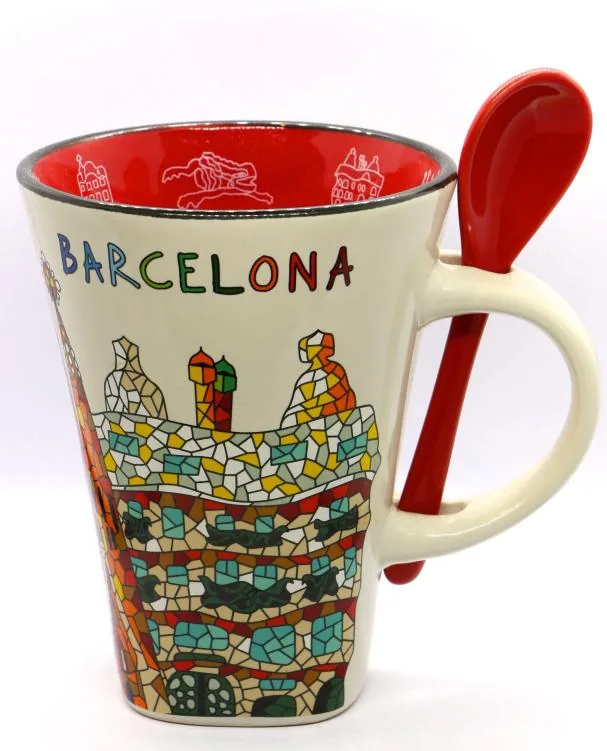
“Tell me a souvenir that is from Barcelona without saying Barcelona,” challenges Fabio Nardella, director of the Souvenir Expo Spain, a unique souvenir fair that brings together the best of the sector in Barcelona. Easy question: any object made with the typical modernist and Gaudí “trencadís” points to the Ciutat Comtal without mentioning it. Also the flower of its “panot”, but to a lesser extent. In Barcelona there are about 500 strictly souvenir shops, but many more sell souvenirs to tourists.
“I would dare to say that 100% of the tickets registered daily include something by Gaudí,” says Nardella; whether it’s the salamander from Park Güell converted into a ceramic figure or a magnet, or a lamp, a coaster or a t-shirt that reinterprets his mosaics. A range of possibilities that the sector itself estimates accounts for between 10% and 15% of the objects sold in these stores.
“A city with a beach ran the risk of being seen as a holiday city. Thanks to Gaudí, Barcelona has highlighted all its heritage,” summarizes Hernández. A value of decisive figures.
Read more Half a million young people embrace the Pope on his first big Madrid night