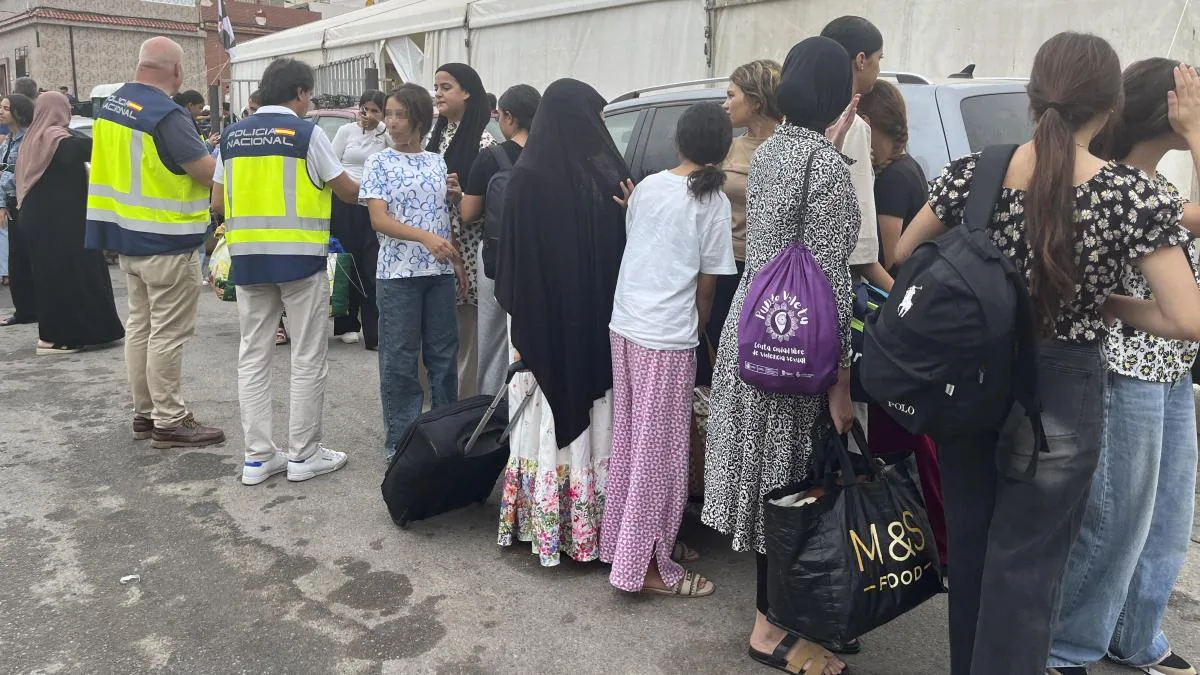
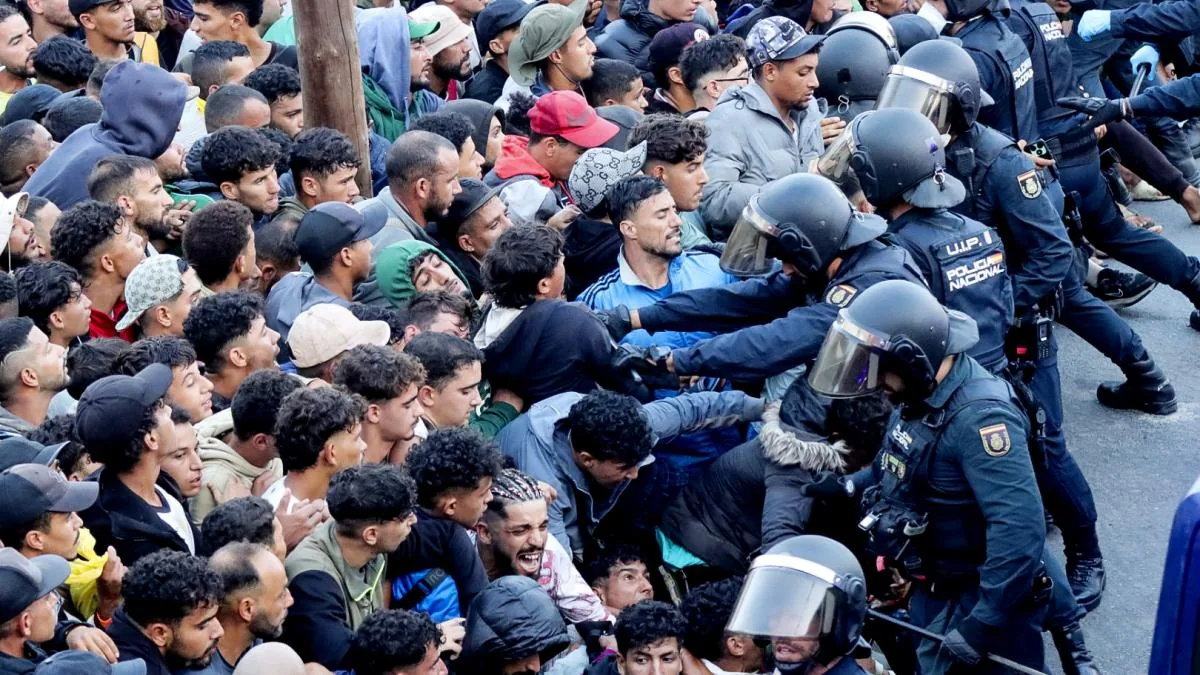
The President of the Government, Pedro Sánchez, will finally appear before the Plenary of the Congress on September 3 to report on the Government’s management of the migratory crisis in Ceuta, following the serious incidents recorded since July 30. The setting of the date culminates an undisguised standoff in the Board of Spokespersons, where the initial intention of La Moncloa — which requested to set the appearance for the 9th — clashed with the pressure from several parliamentary groups, led by the PNV. Jeltzale sources demanded that the appointment be “immediate” and “without the need to reschedule already planned appearances,” once the “situation of interest for national security” was declared in the autonomous city.
Read more U.S. temporarily suspends visa application appointments worldwide
In that internal debate, the position of the Popular Party has drawn attention. Despite having spent weeks denouncing the Government’s inaction in the face of the border emergency, the main opposition force did not take a position during the Board meeting: it neither supported the PSOE proposal for the 9th nor backed the PNV and other groups’ intention to bring it forward to the 3rd.
The Government has quickly tried to downplay the significance of the calendar adjustment. The Minister of the Presidency, Justice and Relations with the Courts, Félix Bolaños, framed the appointment on the 3rd within the usual parliamentary control deployment and emphasized through social networks that the president’s intervention at his own request will be preceded by an intense ministerial parade: “Before that day, 9 ministers will have appeared to report on the management carried out. We are working to restore normality in Ceuta,” Bolaños stated to nuance the perception of a retreat before his partners.
Sánchez will report “on the Government’s management regarding the events that occurred in Ceuta since July 30”
Sánchez’s appearance will take place under the umbrella of the single command activated in Ceuta, which will initially be in effect until December 31. This responsibility will fall on the Minister of Territorial Policy and Democratic Memory, Ángel Víctor Torres, in charge of coordinating eleven ministries in permanent dialogue with the regional government.
Before the president, the Minister of Health, Mónica García, will appear this Thursday before the Health Commission of the Congress to report on how the health system has functioned in the autonomous city of Ceuta during the migratory crisis. The appointment will be at 12:00 at her own request “to explain the actions being carried out by the Ministry of Health” following the entry of thousands of migrants into the autonomous city.
Although health professionals have denounced work overload to attend to migrants and Ceutans, García herself has denied that there is a “collapse.” During her visit to Ceuta a week ago, she admitted that the city was experiencing a “strained health situation” as a consequence of the influx of immigrants but denied that there was a “collapse” and stated that “associating immigration with disease, crime, and danger is unfair and xenophobic.”
The Minister of Health, Mónica García, appears this Thursday before the Health Commission of the Congress
Torres has made his first statements after taking on the task of managing this crisis nearly a month after the assault on the border with Morocco, in which controversy has been stirred by the humanitarian situation in which immigrants still wandering the autonomous city live and the conflicting versions between the Minister of the Interior, Fernando Grande-Marlaska, and the Minister of Defense, Margarita Robles, regarding the role of the CNI in warning about the massive arrival of immigrants in the days prior.
In statements to Cadena Ser, Torres sided with Marlaska, who stated this Tuesday that there had been no communication about the scale of the arrival that finally occurred. According to his words, “the situation” in Ceuta “is reported every day” and, although there had been an increase in entries of about a thousand immigrants per day in the days prior to the assault, “in no case was there communication that we were going to have an arrival of thousands of people.”
Also read
The Minister of Territorial Policy recalled that the version offered by Marlaska “was an almost on-the-spot response to the intervention of Minister” Robles in Congress, and that “if we had been aware” of the advent of an avalanche like the one that occurred on July 31, “the action would have had to be different.”
Torres also made some self-criticism about the central Government’s management. Although he highlighted the success that in just 48 hours the vast majority of immigrants who crossed the border were returned, “90% or 95%,” as he estimated, “things can always be improved, but it is not easy to face a crisis like this.”
Still, Torres does not share the opposition’s criticisms and maintains that “the Government has not abandoned Ceuta.” And faced with the urgency of the autonomous city to recover normality, the Minister of Territorial Policy showed understanding: “I understand Ceuta, its complaints, but we have come to solve this.”
According to the figures handled by the Government, about 1,800 adult immigrants and another 1,410 minors have been registered – taking or recording the personal and identity data of a person – “but many others remain unregistered,” according to Torres, who wander the streets of Ceuta.
Read more Two women injured by the collapse of a wall due to rain in Roda de Berà die