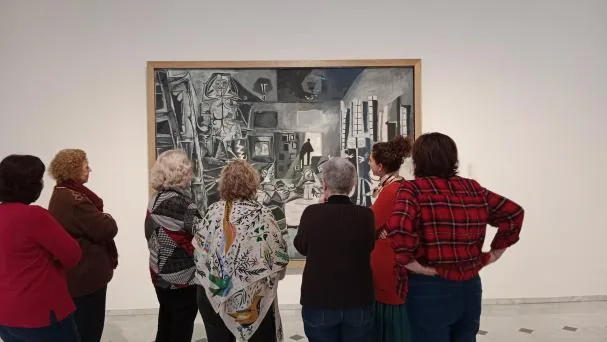
Encarnació Bosch is 91 years old and lucky to have kept the same friends since she was 12. Of this group of six women, she claims to be the most mentally agile and, aside from genetic factors, she is convinced it is because she is a very active woman. “I sign up for anything,” she tells La Vanguardia by phone, as she cannot meet in person because “soon I’ll see a friend, and tomorrow we’re going out again.” Neither her age nor having a disability stops her from getting up at 7 to go to tai chi classes or carry out a whole string of activities, including going to a museum from time to time. The Picasso is one of her favorites, especially after having discovered it in depth thanks to ArtGran, a social program promoted by the Agència de Salut Pública de Barcelona whose goal is to reduce unwanted loneliness and improve the well-being of older people through art and culture.
Read more “Cuba is not Venezuela, because there was no revolution there”
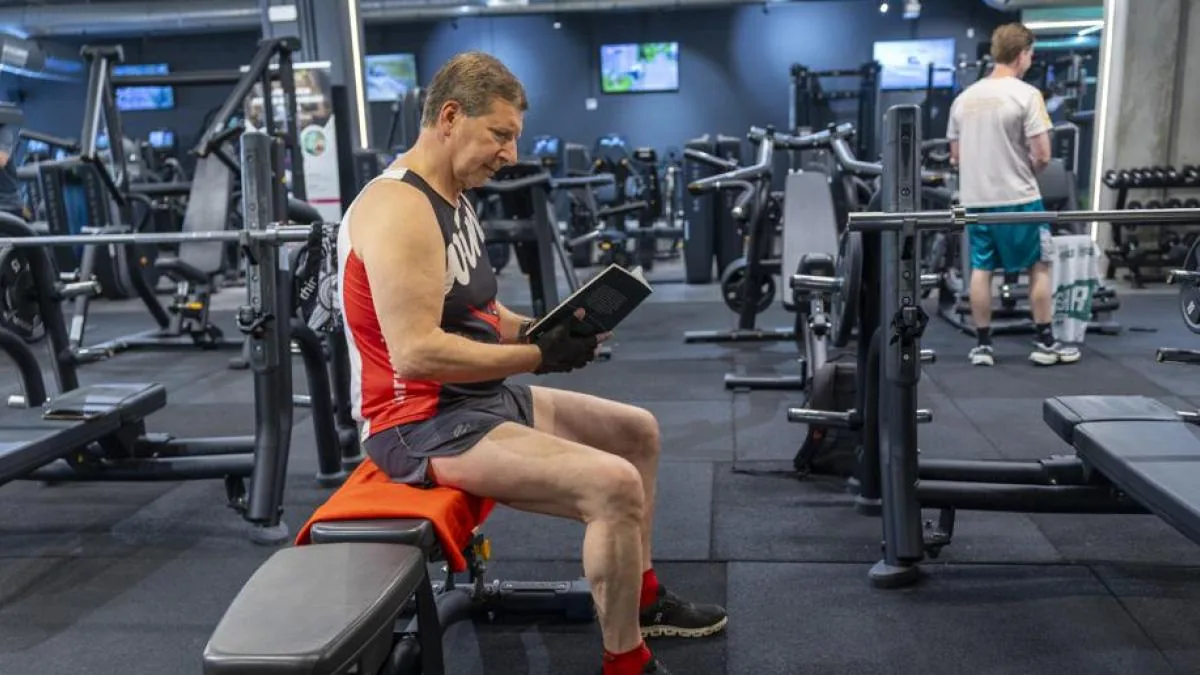
No expert will tell her that both things, morning physical exercise and the mental gymnastics she performs every time she visits an art gallery, are bad. Now, even this second part can be supported with data, as a new study from University College London (UCL) published in the journal Innovation in Aging in early May indicates that regularly participating in artistic activities could help slow the pace of biological aging.
The results are similar to those obtained by people who regularly exercise”
David Bartrés-Faz
Professor of Medical Psychology at the Faculty of Medicine and Health Sciences of the UB
“Our findings suggest that both the frequency of participation and the variety of activities performed are important factors. Going to a museum at least three or four times a year, for example, is already beneficial, but the results are more consistent if visits are monthly or weekly,” specifies Dr. Feifei Bu from the UCL Institute of Epidemiology and Health Care, and one of the authors of this study, which was conducted after analyzing data from 3,556 adults in the United Kingdom. She explains that both she and the other researchers compared chemical changes in DNA that influence biological aging, but without altering the genetic code, taking into account the artistic and cultural activities they performed.
David Bartrés-Faz, Professor of Medical Psychology at the Faculty of Medicine and Health Sciences of the University of Barcelona, acknowledges to this newspaper that the study is a good starting point since “there are not many works that consider the relationship between exposure to artistic aspects and markers of biological growth,” hence the global interest.
“One of the interesting conclusions drawn is that the results are similar to those observed in people who regularly exercise,” although the expert adds that there are other points that still need to be resolved: “The first is that it should be supported by other interventional studies and not only observational ones. And then, does the fact that an individual performs a certain cultural activity specifically produce a beneficial effect on aging? Or are there more factors, such as, for example, stress release, which is more clearly associated with biological aging?”
The idea of this work is to raise awareness and encourage future public policies”
Dr. Feifei Bu
One of the authors of the study
Dr. Bu responds: “Unfortunately, we do not have repeated measurements of biological aging to properly unravel the cause-effect relationship, but it is something we plan to do in future research. The idea of this work is to raise awareness and encourage future public policies.”
Read more Lamine Yamal, about his injury: “I was afraid it was serious and that I would miss the World Cup”
Clinical neurophysiology specialist Estela Lladó-Carbó, who has dedicated more than two decades of her life to neurosciences and longevity, explains that “any activity that involves activating different brain regions will be good for the body, as it will have a neuroprotective, anti-inflammatory effect and improve the cardiovascular system, among other things.”
She argues that this improves even more if you sleep well, do aerobic and strength exercise, and follow a Mediterranean diet, and even if that cultural activity is taken to the next level: “Reading bilingually or trilingually, for example, helps even more to improve cognitive abilities,” and she adds one more curiosity: “During a master’s degree I did at the UB on longevity, I studied supercentenarians, and I say it in the feminine because they were all women. I mean those who surpass 110 years. They all read the newspaper and were socially active, which made them the center of their families.”
Lola Picazo still has six years to become a supercentenarian, but she always shows a photograph of her last birthday, where she is seen smiling posing with a large bouquet of flowers and giant golden balloons indicating her age: 104. She was also a great newspaper devourer, although now she admits that it is difficult for her to read the typography of most of them because it is too small. “But I do see puzzles and word searches well! I love solving them, it keeps my mind active, just like movies and series, which I also watch a lot.”
Reading bilingually or trilingually helps even more to improve cognitive abilities”
Estela Lladó-Carbó
Clinical neurophysiology specialist
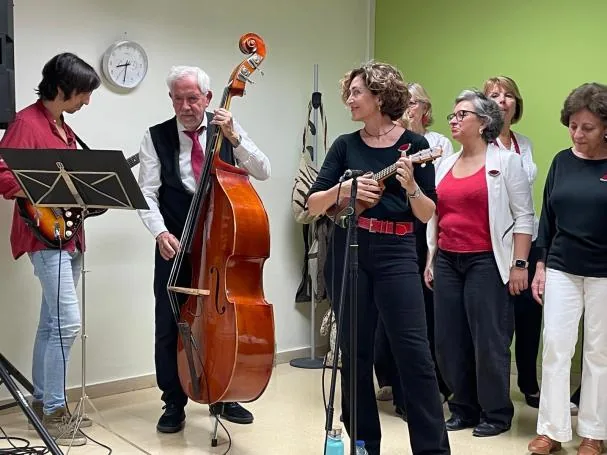
Joselo Galmes admires Picazo’s vitality and hopes to one day reach that age with the same sharp mind. He is on the right track, as he is already over 70 and, in addition to singing weekly in a gospel choir from Baix Llobregat, the Gospel Link Singers, he has decided to learn to play the double bass. “I started guitar lessons with my teacher, Jesús Olivares, until one day I admitted to him that my lifelong dream was to play the double bass, but that I was too old for that. He told me it was never too late and helped me find a second-hand instrument and we started.” Today it has been three years since he fulfilled this goal and he does not regret it: “It helps me stay more focused and, above all, it makes me happy,” he concludes.
Cultural initiatives for seniors
There is an increasing artistic offer designed exclusively for seniors. One example is ArtGran, “an intervention to reduce loneliness and improve the quality of life of people over 70 through art workshops held in museums in Barcelona,” explains to La Vanguardia Rosa Puigpinós, one of the promoters. Vanesa Rojas, education technician at the Picasso Museum, one of the affiliated centers, says that the collection helps users talk about their interests.
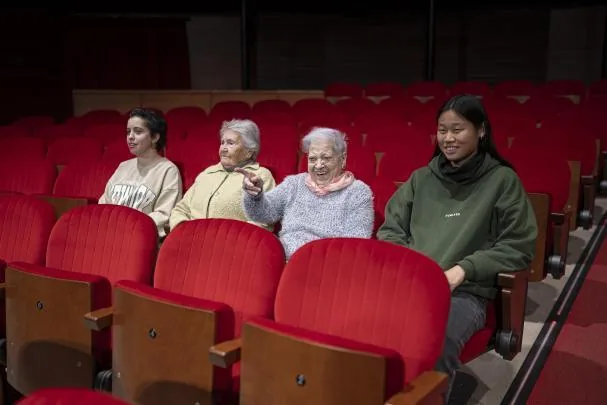
In theater, the intergenerational project Grans teatrerus stands out, which pairs people under 30 with those over 75 to go together to see a play at the Romea and the Goya.
If they prefer to immerse themselves in reading, libraries will always be the solution. There are home reading services or even telephone ones, like the one offered by A cau d’orella, aimed at people over 65. And regarding music, do not miss the many courses offered by the Conservatori Liceu to seniors, which do not require prior experience but do require a desire to learn and enjoy.
Read more Atlético loses its charm (and memory)