The term rock’n’roll is attributed to radio host Alan Freed, who popularized it associated with the musical style that emerged in the mid-50s in the U.S., an accelerated and electrified rhythm & blues that changed popular music forever. Rock suggested the idea of rhythm, of pulse; roll, fluidity, the sensation of continuous movement.
Read more Trump, Macron and the chlorinated chickens
Decades later, Rolling Stones musician Keith Richards gave a new twist to the expression when he stated that his partner Mick Jagger represented the rock, while he considered himself the embodiment of roll. Celebrated inventor of cryptic aphorisms, the long-lived guitarist did not clarify what he meant by such a statement, but it was interpreted that he claimed for himself the swing, fluidity, cadence of the band, as opposed to the more abrupt and syncopated attitude of the singer.
Regarding these concepts, and at the time of taking stock of Emmanuel Guigon’s work at the head of the Museu Picasso (October 2016-April 2026), we ask ourselves: Can cultural management be defined in musical terms? Does it make sense to use terms like swing or roll to describe the work of a museum director?
Since no one’s life, fortune, or prestige is at stake, we dare to answer yes, that from the beginning, the Swiss-born art history doctor Emmanuel Guigon insisted on directing the institution as if it were a jazz concert: with its standards (the unmissable exhibitions), its solos (his very personal shows), its musical prelude and its finale.
Barcelona would do well to maintain the link with Guigon, well connected with Picasso’s family
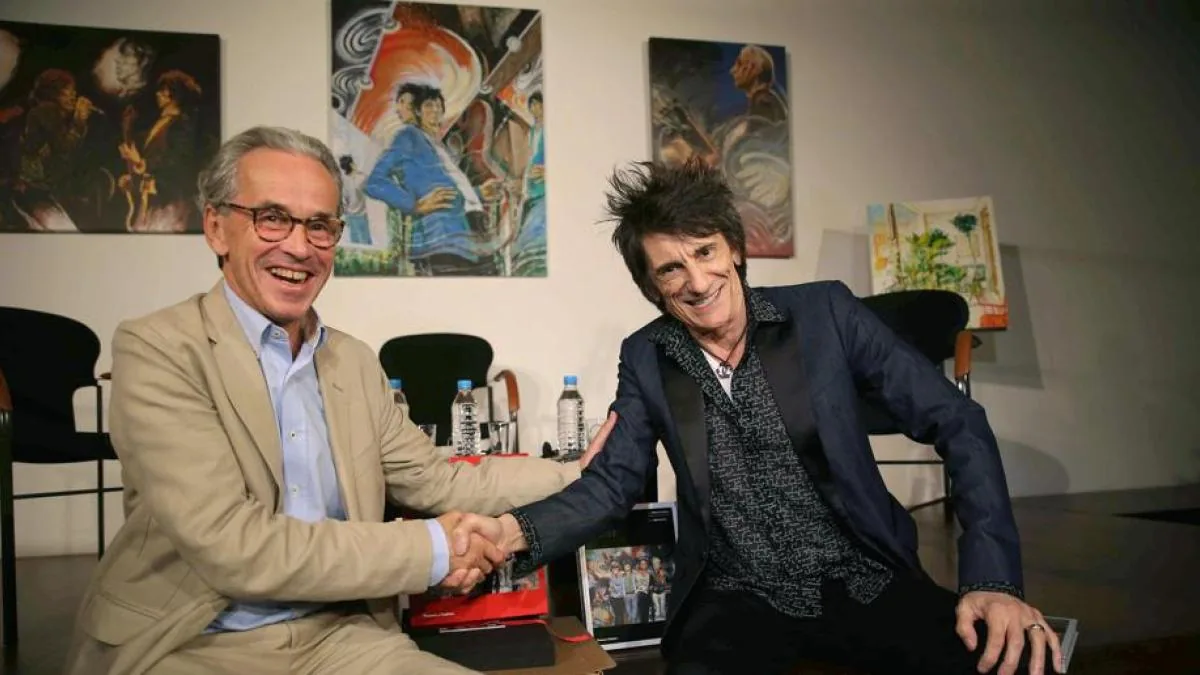
And with a clear leaning towards swing. Not for nothing, Guigon became known in Barcelona, above all, at the event he held in his museum alongside Ronnie Wood, another Rolling Stones guitarist who also has a lot of roll. The director discovered that the musician was his neighbor in the Eixample and invited him to present a book with his paintings of rock portraits at the Picasso. It was a breath of fresh air in an institution that had been in a very discreet second plane for a few years.
After that prelude, high-level exhibitions followed, such as Picasso-Miró, jointly organized with the Foundation directed by Marko Daniel; Picasso discovers Paris; Sabartés for Picasso for Sabartés; Els Quaderns; Kahnweile r o, the most recent, Ubú Pintor.
Read more The first book by Iván Redondo
Among the rarities (the solos led by a Guigon who feels passion for the jazz of Charlie Parker, Charles Mingus, Thelonius Monk or Miles Davis) are two in particular: La cuina de Pi casso, which featured a brilliant cameo by Ferran Adrià, and Jamais. Óscar Domínguez and Pablo Picasso, an eccentric exhibition around a prodigious gramophone that, in the midst of the pandemic and for very little money, gave the museum international projection.
On Guigon’s credit is precisely his good press in leading European media, which has helped Picasso. Also the museum’s publications during his tenure (he himself is a bibliophile); providing the institution with a good restaurant, together with Romain Fornell; having focused attention on the Picasso-Barcelona relationship or his good work with the genius’s family. On the debit side, perhaps his difficulty in managing the relationship with the City Council. It is known that brilliant and bohemian personalities fit poorly into the excel grid.
Also read
Backed by his professional profile and his work at the Reina Sofía during a splendid period of the Madrid center, it is very likely that Guigon’s successor, Rosario Peiró, will bring valuable ideas and new directions to the Barcelona museum. Good directors leave their own imprint and cultural institutions benefit from that in the long run. But the city would do well to maintain some link with the outgoing director. For his attachment to Barcelona and for those good contacts he maintains with Picasso’s relatives.
And the musical epilogue? Guigon, who had debuted with Ronnie Wood, said goodbye with Ubú revisitat, an exquisite piano concert by his friend Alain Planès, with repertoire by Terrasse and Satie. Let the music not stop.
Read more The rift between Florenci and Jordi Pujol comes to light