Aliança Catalana (AC) currently constitutes a unique political phenomenon in Spain. It is the party that is indisputably growing, according to all polls. More than Vox, since some surveys and the elections in Castilla y León point to a certain stagnation of Santiago Abascal’s formation, pending what the Andalusian elections on the 17th may dictate. But the case of AC is a perfect assembly in demographic terms, as it is gaining potential voters not only from abstention but from several parties. If it continues like this, it could also disrupt the entire distribution of seats in the Parliament. Why has Aliança Catalana managed to gain ground so decisively, above Vox?
Read more A tourist from the United States on vacation in Mallorca requests political asylum for fear of Trump
Let’s look at eight main reasons:
1/ It is a purely Catalan product, which always guarantees a better reception in a territory with a strong national identity such as Catalonia. Sílvia Orriols must sense this because so far she has always denied that her party will run in the general elections. We will see what she does when the time comes. Other regionalist parties are becoming a refuge for left-wing voters at a time when Podemos and Sumar are in crisis, as has happened with Chunta Aragonesista, for example. It is also expected to happen with Adelante Andalucía, according to polls. At a time of weakness of the traditional nationalist right in Catalonia, it is AC that benefits. But if there is a community where a narrative with a strong identity component can take hold, it is Catalonia.
2/ Aliança is better introduced among the Catalan electorate because it does not identify with Francoism or the Spanish far-right. This is a deeply rooted stereotype in this community that worked in favor of the procés, when all the parties that participated in that movement, including Convergència, leaned to the left and portrayed the defense of the unity of Spain as a symptom of far-right nationalism. Aliança defends far-right positions, but many voters do not consider it a “facha” (fascist) formation.
Also read
3/ It is a new party, without baggage. It cannot be reproached for a past. The rest of the forces present in the Parliament have suffered the wear of the procés or management or both. Aliança has not governed any relevant administration beyond Ripoll.
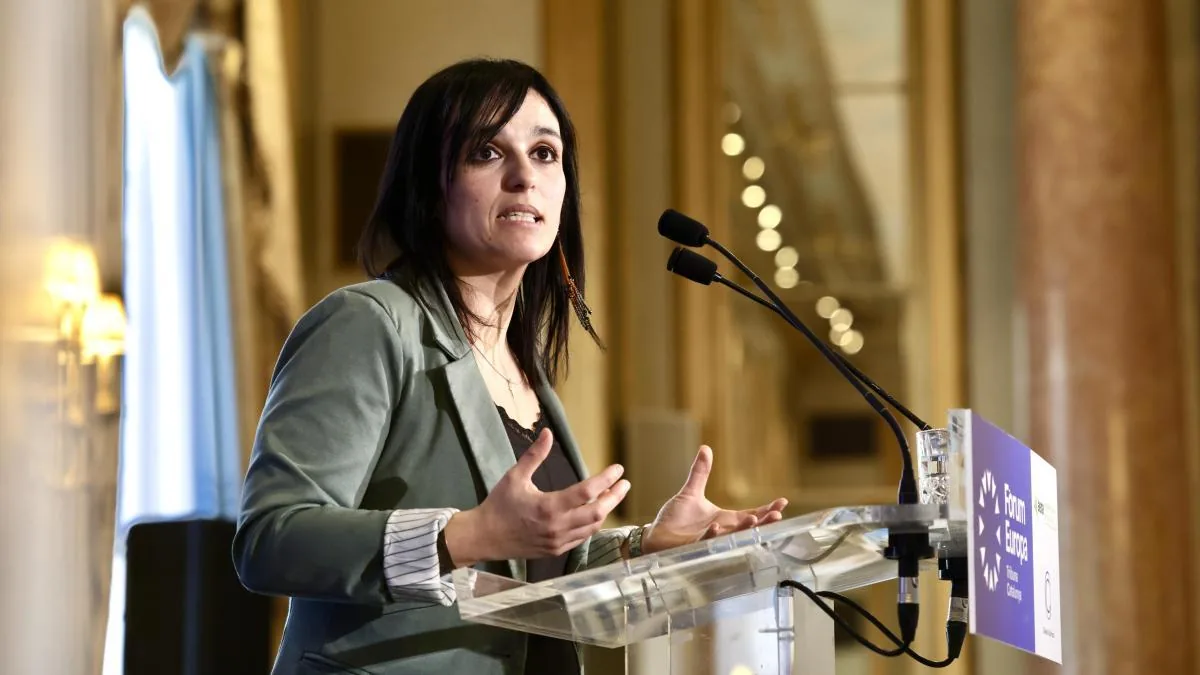
4/ Its leader is a woman, Sílvia Orriols, who presents herself as a defender of women’s rights. A recent example: the Ripoll City Council recently closed a bar run by Moroccans due to lack of sanitary conditions, documentation deficiencies, and because the women’s bathroom was locked, according to the municipal file. But she emphasized on social media that access was being denied to women in the bar and that is why action was taken.
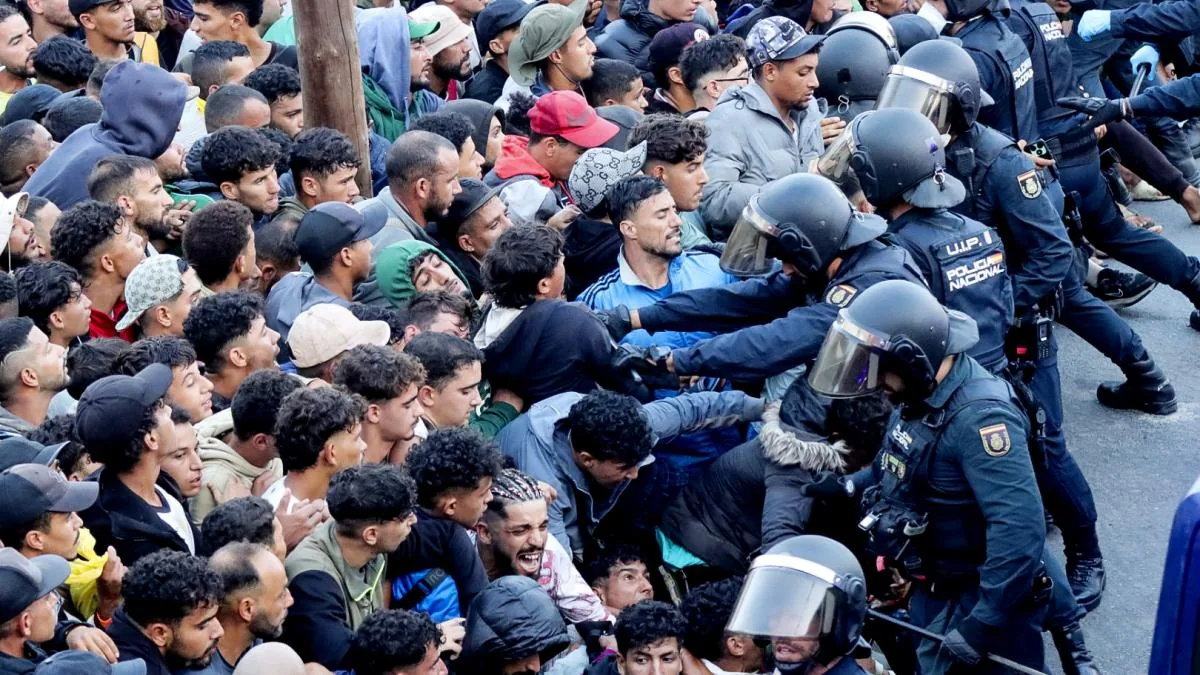
5/ It does not even need to talk about national priority for the rejection of immigration to be clear because in its case it is not only about the pressure of population increase on public services, but also a factor of cultural and linguistic identity comes into play. Except in specific territories, Vox finds it harder to exploit the replacement theory with an average of 14% immigration in Spain, part of which is Latin American, that is, with a very close culture and language. In contrast, Orriols can more efficiently exploit the fear of the marginalization of a minority language like Catalan compared to Spanish. Also, in the areas where AC grows there is a higher quota of immigration from Africa, which causes a more evident cultural clash.
Jordi Pujol’s Catalan nationalism sold an inclusive slogan summarized in the phrase “Catalunya, un sol poble” (Catalonia, one single people), although realities were diverse. The independence movement put Catalonia at the center, not so much the Catalans originating from that territory. The aim was to achieve a state so that Catalonia would enjoy the maximum decision-making capacity in a world where power is increasingly globally distributed, and the leaders of that movement bet on the collective illusion to which everyone was invited, whether with the slogan of the “revolution of smiles” or the huge popular demonstrations that marked the milestones of the procés. That communal exaltation was supposed not to exclude immigration because it intended to convince it. At least on paper. Aliança Catalana proposes a Catalonia first and Catalans first.
Read more Trump and Lula smooth over differences in a low-profile meeting at the White House
The message of Vox, like that of the other reference parties in that orbit, received its first boost as a reaction to Catalan separatism. It was wrapped in the Spanish flag. But as the procés has faded, Vox emphasizes the discourse against foreigners, especially those who do not have abundant economic resources. Thus, it is no longer only Spanish nationalism its distinctive sign, but national priority, that is, that public services attend to Spaniards first. Which is nothing but an implicit admission of the impossibility of expelling immigrants who are already working in Spain, which was what that formation initially defended, by the way.
6/ The dissatisfaction with the lack of results from more than a decade of procés is another factor that boosts Aliança. A sector of the independence movement does not forgive its leaders for not going all the way in their challenge to the Spanish State. Orriols does not need to promise anything about the advent of independence. She knows her voters are not willing to hear more promises, but her boldness in raising the issue appeals to those who see Junts or ERC as parties that have folded to the PSOE to obtain amnesty for their leaders.
7/ The lack of clear leadership in the opposition in Catalonia favors Orriols’ figure in the Parliament gaining weight as a counterpoint to Salvador Illa. Orriols’ interventions in the Catalan Chamber are replicated on social networks and have given her great notoriety.
8/ All these ingredients allow her to gather votes at least from abstention, from Junts, from ERC, or from Vox. Some emphasize one point or another more, but voters from all of them have some element to latch onto from the range Orriols offers.
Finally, Orriols is becoming the best-known figure of the opposition in the Parliament, since neither Junqueras nor Puigdemont are seated in the chamber because amnesty has not yet been applied. Every fortnight there is a duel between Salvador Illa and Sílvia Orriols that at first the PSC leader did not avoid, on the contrary. But the phenomenon keeps growing and now the socialists try to prevent the omens from becoming reality and the president tries to give her less room. But no one has found the formula. The complexity of Catalan politics is evident again. If AC becomes the third or fourth force in the Parliament it will be because the distribution of seats suffers an unprecedented earthquake that could alter the political board as never seen before. And what happens in Catalonia always has consequences in Spanish politics.
Read more Josep Corbella: “There is no risk of hantavirus spreading uncontrollably around the world”