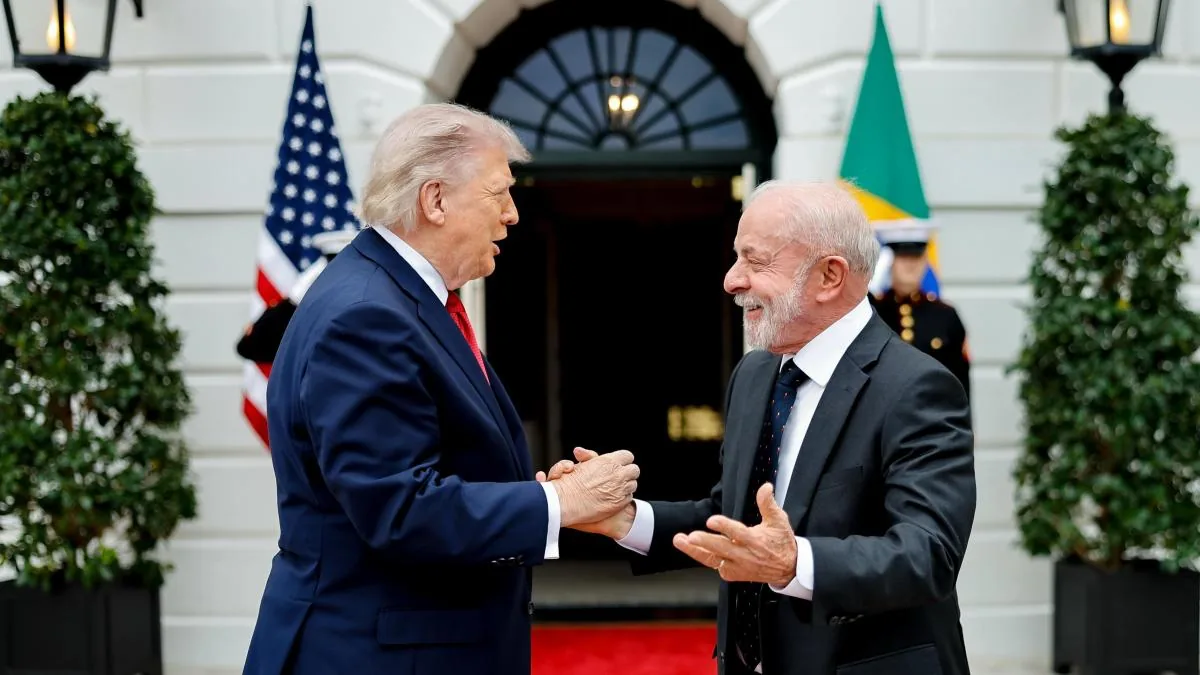
The presidents of the two most populous countries in the Western Hemisphere, Luiz Inácio Lula da Silva and Donald Trump, staged their reconciliation this Thursday in an unexpected meeting at the White House, after a year marked by tension between Brazil and the United States over tariffs and mutual insults between their leaders, who are ideological opposites.
Trump welcomed his counterpart with a red carpet at the south entrance of the presidential residence, and then met with him for two hours in the Oval Office. Although an intervention by both in front of the cameras was initially planned, the meeting was ultimately kept low-profile, at the request of the Brazilian delegation, to prevent their responses to the press from undermining the delicate diplomacy between the leaders.
“We discussed many issues, including trade and, specifically, tariffs,” Trump posted on his platform, Truth Social, at the end of the meeting. “The meeting went very well. Our representatives are scheduled to meet to discuss certain key elements. Additional meetings will be scheduled in the coming months, as needed.”
In one of the worst crises in the history of bilateral relations, Trump imposed high tariffs on Brazil last year with a political goal: to force the country to drop charges against his political ally Jair Bolsonaro, the far-right former president, who was ultimately convicted for his attempted coup to remain in power, an attack inspired by the 2021 U.S. Capitol assault. At the same time, Trump also imposed sanctions on the Brazilian Supreme Court judge who oversaw Bolsonaro’s case. Lula then considered it an unacceptable violation of Brazil’s sovereignty.
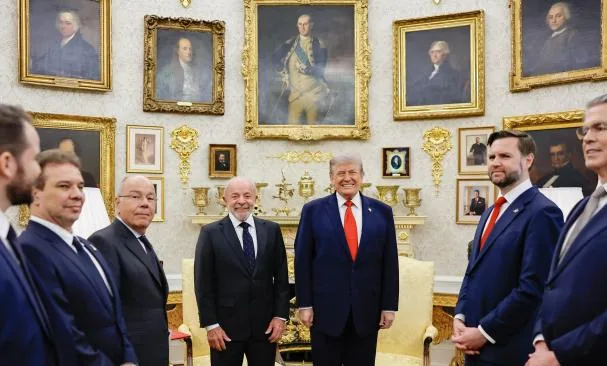
Finally, the two leaders, who share a close and populist style and are only one year apart in age, signed a truce after their last meeting at the end of last year on the sidelines of an Asian summit in Malaysia. The U.S. eventually withdrew tariffs on numerous key Brazilian exports, and relations between the two countries have since experienced a tense ceasefire period.
In recent months, however, Lula has been one of the international leaders who has most vocally opposed Trump’s interventions in Venezuela, Iran, and Cuba, as well as his imperialism throughout the hemisphere, defending the multilateral order that the U.S. leader is trying to sideline.
The U.S. is considering designating Brazilian cartels as terrorists, a move that could help opposition Bolsonaro in the elections
The Republican has used drug trafficking as an excuse to intervene in Venezuela, where he captured its dictator, and to expand his military presence in the region, with special attention to the Caribbean Sea, where the Pentagon’s Southern Command has killed hundreds of people it accuses of being “narco-terrorists.”
He has also threatened to attack Mexico and Colombia, whose cartels have been designated as terrorist organizations, and is considering a similar step with drug trafficking groups in Brazil (such as Primeiro Comando da Capital or Comando Vermelho), which would open the door to sanctions and a possible attack on its territory.
Lula’s position is clearly antagonistic. He believes that to combat drug trafficking, intelligence cooperation must be increased, as well as addressing drug demand in the U.S., but under no circumstances does he want aggression from a third country against his sovereignty. Furthermore, in Brazil’s electoral context, such a designation could benefit his adversary, Flávio Bolsonaro, son of his authoritarian predecessor, who is focusing his campaign on Lula’s handling of crime.
Both presidents have met at a time of respective political crises, where it may be more beneficial for them to smooth over differences than to open new fronts with such an important partner. Trump faces the worst approval ratings of his decade in politics, partly due to his unpopular war in Iran, which this Thursday pushed the price of a gallon of gasoline in the country to $4.56, the highest since 2022. Lula, for his part, arrives weakened by last week’s parliamentary defeats and with polls showing a rise in support for Bolsonaro.